


There’s a reason boutique hotels feel so memorable. And it’s not just the nice bedding or the moody lighting.
It’s the way everything works together, from the scent in the hallway to the way a bedside lamp falls just right at night.
The good news is that most of these choices aren’t out of reach.
They’re deliberate, layered decisions that prioritize comfort, consistency, and a bit of quiet luxury over flash. The kind of details that don’t scream for attention but subtly elevate the entire experience.
Below are 21 design moves that can shift a home from “nice” to “this feels like a stay.”
Layered lighting that adapts to the moment
Boutique hotels never rely on a single overhead light. Instead, they build lighting in layers: ambient (ceiling), task (reading lamps), and accent (wall sconces, hidden LEDs).
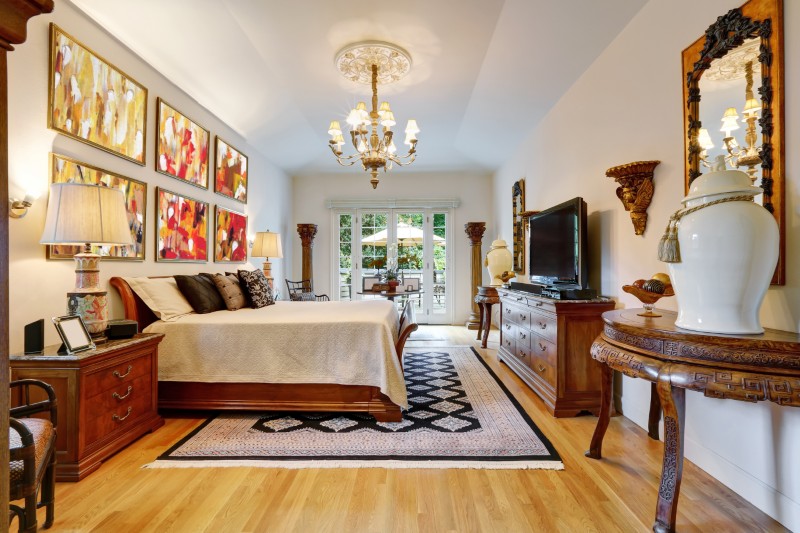
At home, this means swapping out reliance on ceiling fixtures and adding multiple light sources per room. Dimmers are key.
The goal is to control mood throughout the day, not just brightness.
A defined entry moment, no matter the size
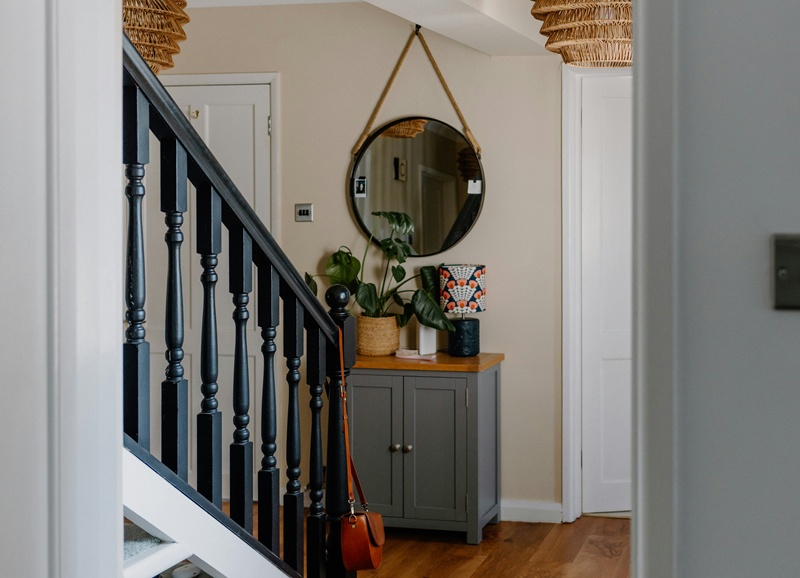
Even the smallest boutique hotels create a sense of arrival. There’s always a visual pause point: a console table, a mirror, a piece of art.
At home, this can be as simple as a narrow table with a lamp and a tray. It signals that you’ve “arrived” somewhere intentional, not just walked into a room.
Built-in or seamless storage that hides clutter
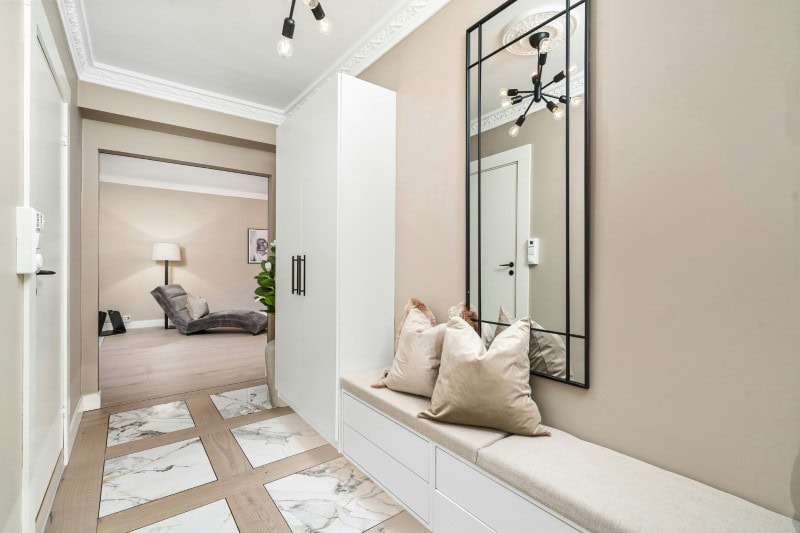
Boutique spaces rarely show everything. Storage is integrated, concealed, or minimal.
At home, this means reducing visual noise. Closed cabinetry, under-bed storage, or even better closet organization can dramatically change how a space feels.
Hotel-style bedding that feels crisp, not overdone
Think white or neutral sheets, layered with a duvet, a lightweight throw, and a restrained number of pillows.
The key is structure. Tightly made beds, clean lines, and high-quality fabrics make a bigger impact than decorative excess. You’re aiming for “inviting” rather than “styled for photos.”
Oversized headboards that anchor the room
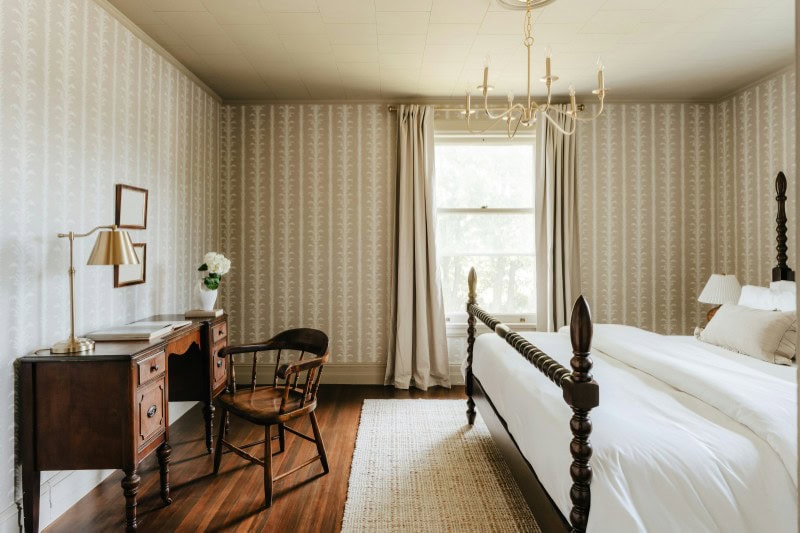
Boutique hotels often use large headboards to create a focal point and add a sense of scale.
At home, extending a headboard wider than the bed or going taller than expected instantly makes the bedroom feel more considered and architectural.
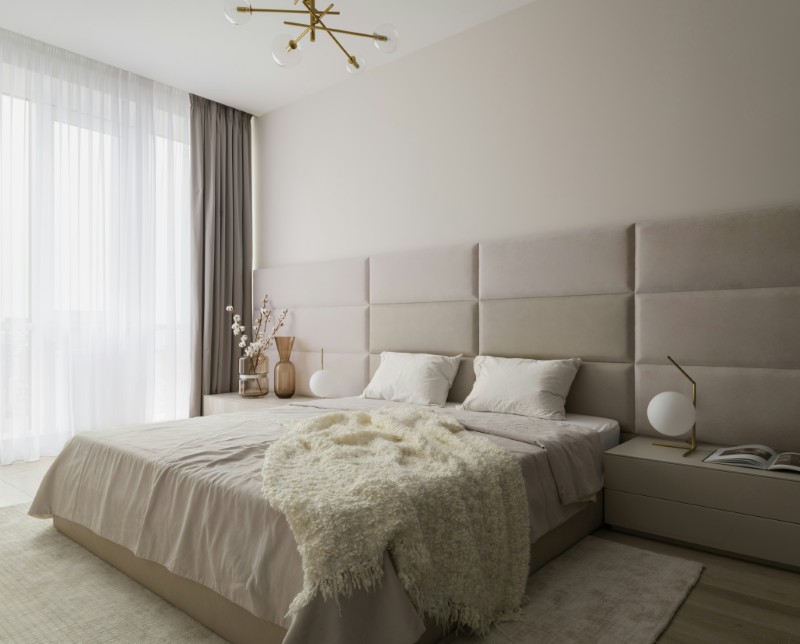
Symmetry in the bedroom
Matching nightstands. Matching lamps. Even spacing.
This kind of symmetry creates calm. It’s one of the easiest ways to make a bedroom feel intentional and balanced without adding more decor.
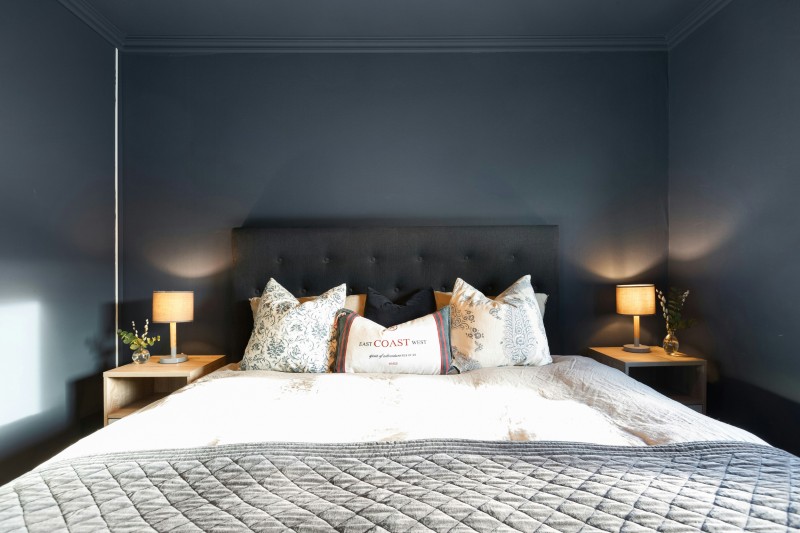
Blackout curtains paired with soft sheers
Hotels always give you control over light. You get full blackout for sleep, plus lighter layers for daytime privacy.
Replicating this at home instantly upgrades the bedroom. It’s both functional and quietly luxurious.
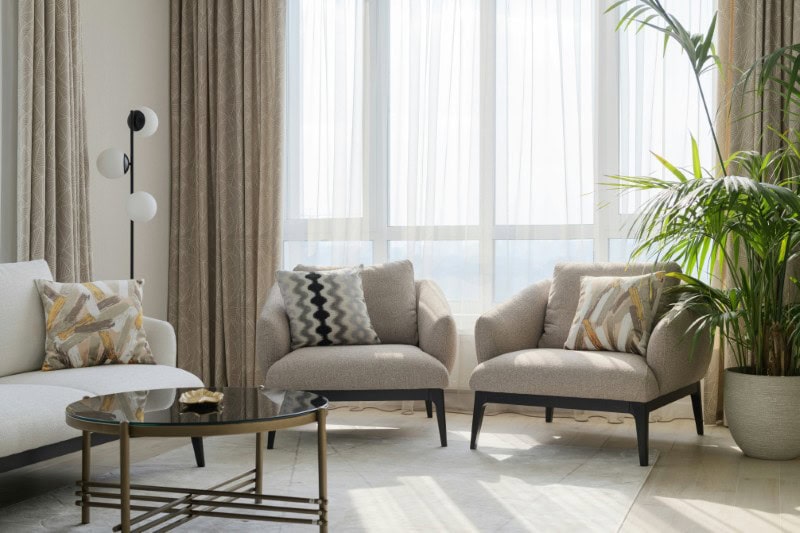
A consistent color palette throughout the home
Boutique hotels tend to stick to a tight palette, even across different rooms.
At home, limiting your color story helps everything feel connected. It doesn’t mean every room looks the same, but the transitions feel smooth rather than abrupt.
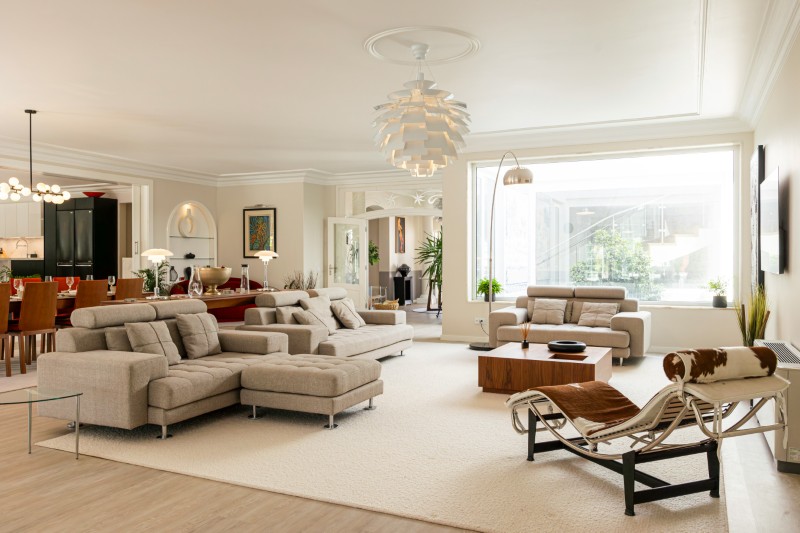
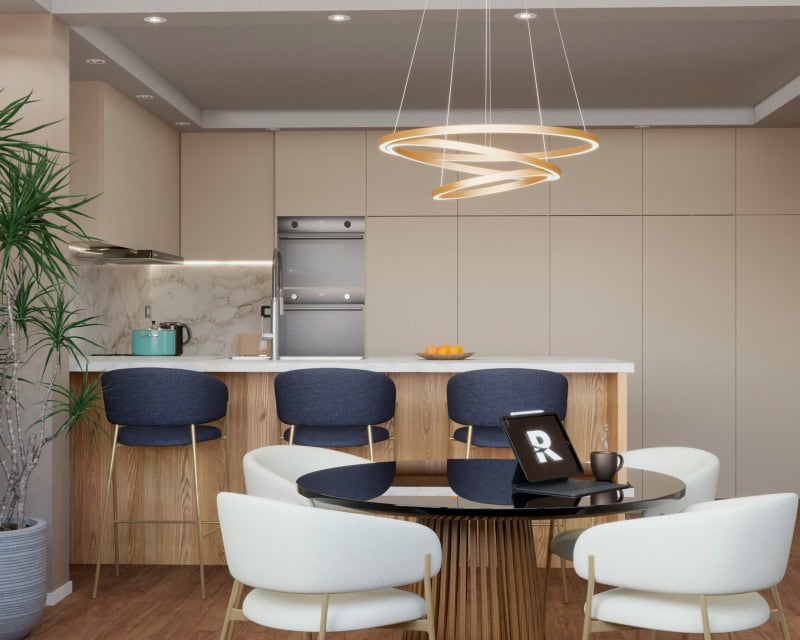
Statement lighting that doubles as sculpture
Instead of generic fixtures, boutique hotels often treat lighting as a design feature.
A sculptural pendant, a bold floor lamp, or even an unusual sconce can act as a focal point and elevate the entire room without adding clutter.
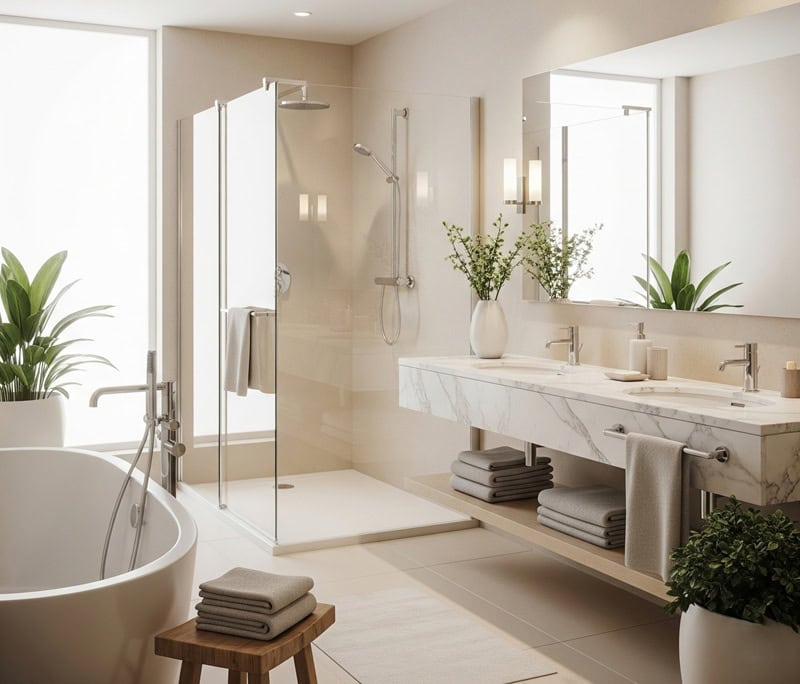
Spa-like bathrooms with minimal visual noise
Think fewer products on display, more intentional placement.
Decanting toiletries into matching bottles, adding trays, and keeping surfaces mostly clear can transform even a standard bathroom into something that feels more like a retreat.
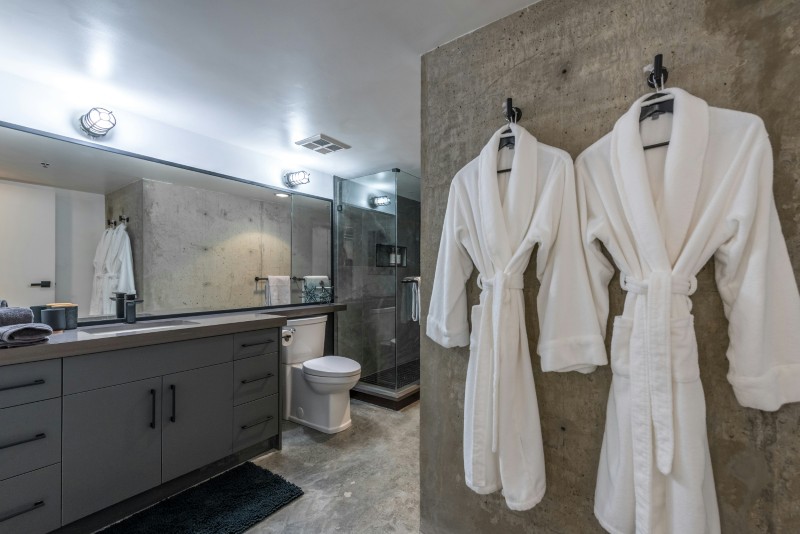
High-quality towels and robes on display
Hotels don’t hide their best textiles. They showcase them.
Stacked towels, neatly folded or rolled, add both function and visual softness. Upgrading materials here makes a bigger difference than most people expect.
A signature scent that defines the space
Many boutique hotels are instantly recognizable by scent.
At home, a consistent fragrance, whether through candles, diffusers, or essential oils, can create that same association. The key is subtlety and consistency, not overpowering the room.
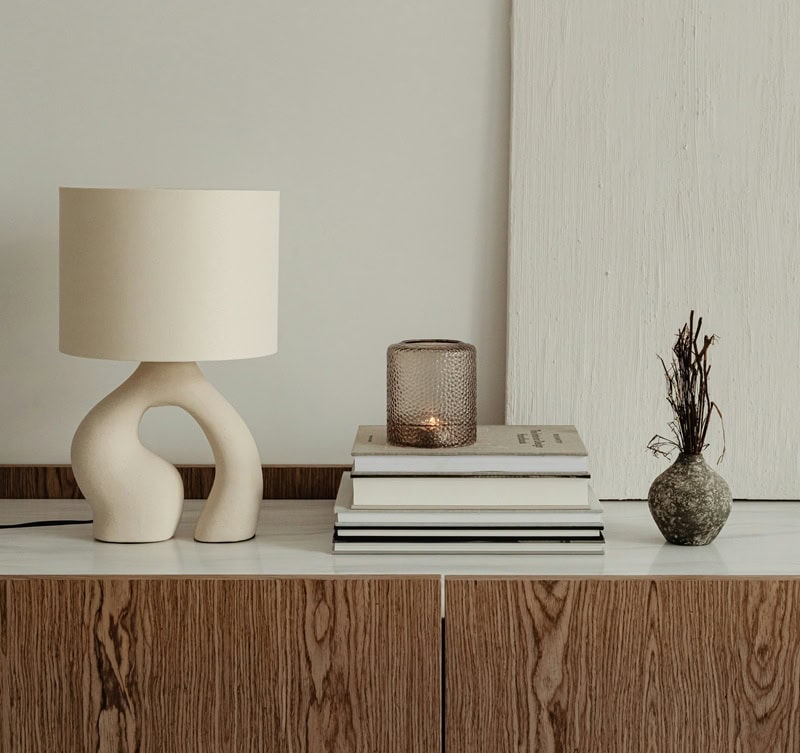
Thoughtful bedside setups
Hotels get this right almost every time: a place for a book, a glass of water, a phone, and a lamp that’s easy to reach.
At home, simplifying the nightstand and making it functional rather than decorative shifts the experience immediately.
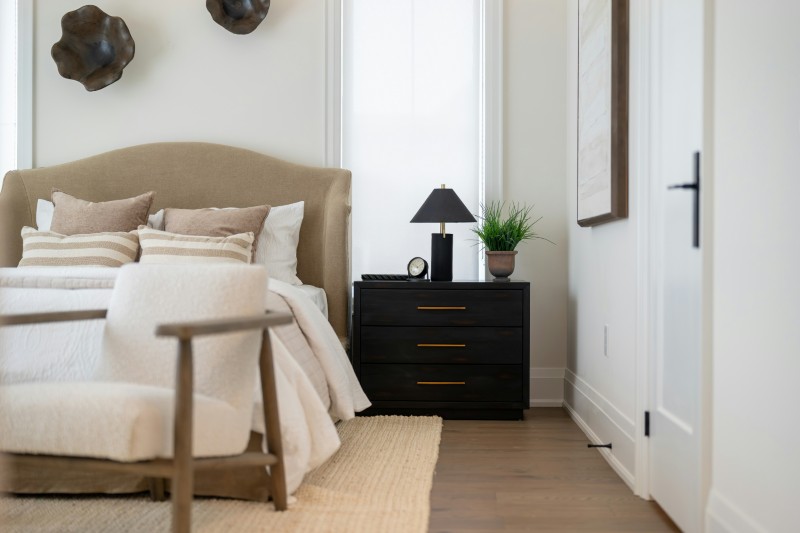
Art that feels curated, not crowded
Boutique hotels tend to choose fewer, larger pieces rather than many small ones.
At home, editing your walls can make a space feel more refined. Let artwork breathe instead of filling every inch.
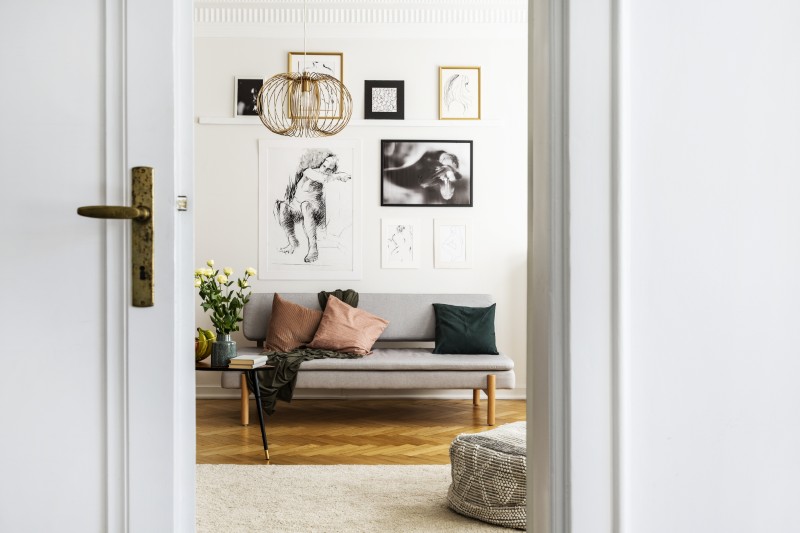
Comfortable seating that invites you to linger
A chair in the corner. A small sofa at the foot of the bed.
Hotels often include secondary seating to encourage use beyond just sleeping. Adding even one well-placed chair can change how a room functions.
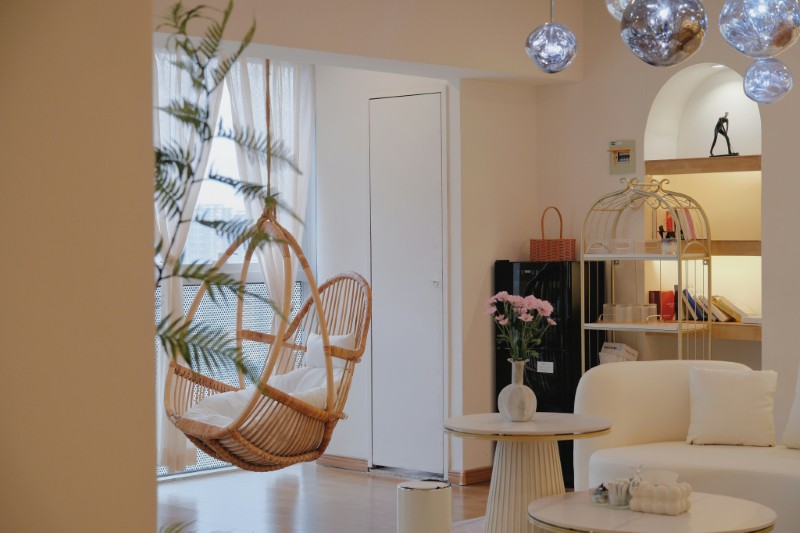
Soft, layered textiles underfoot
Rugs in boutique hotels are rarely an afterthought.
Layering rugs or choosing larger ones that extend beyond furniture creates a sense of warmth and cohesion. It also subtly improves acoustics.
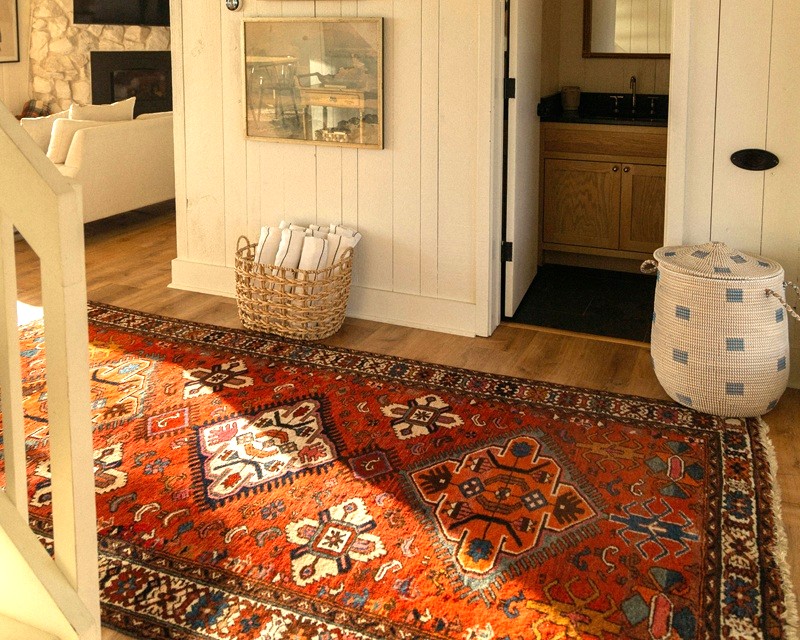
Quiet tech that doesn’t dominate the room
You’ll notice that boutique hotels hide or minimize technology.
At home, this can mean concealing wires, choosing less intrusive TV placements, or integrating speakers so they don’t become the focal point.
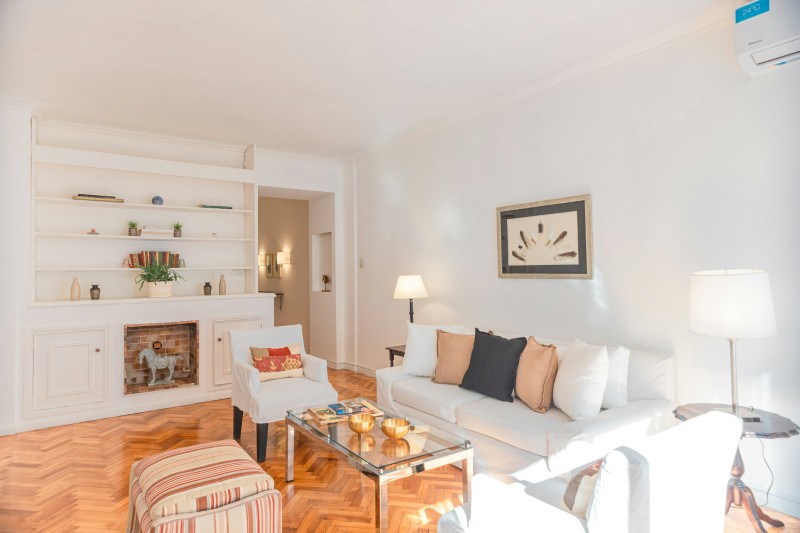
A focus on acoustics and quiet
Soft materials, rugs, curtains, and upholstered furniture all help absorb sound.
The result is a calmer, more intimate environment. It’s one of the least talked-about aspects of hotel design, but one of the most noticeable when it’s done right.
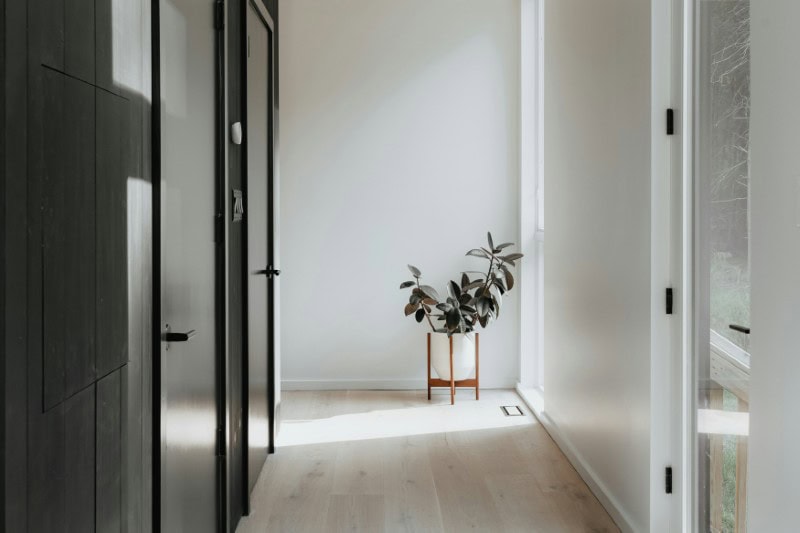
Intentional negative space
Not every surface needs something on it.
Boutique hotels leave room for the eye to rest. At home, resisting the urge to fill every corner can make a space feel more elevated and less cluttered.
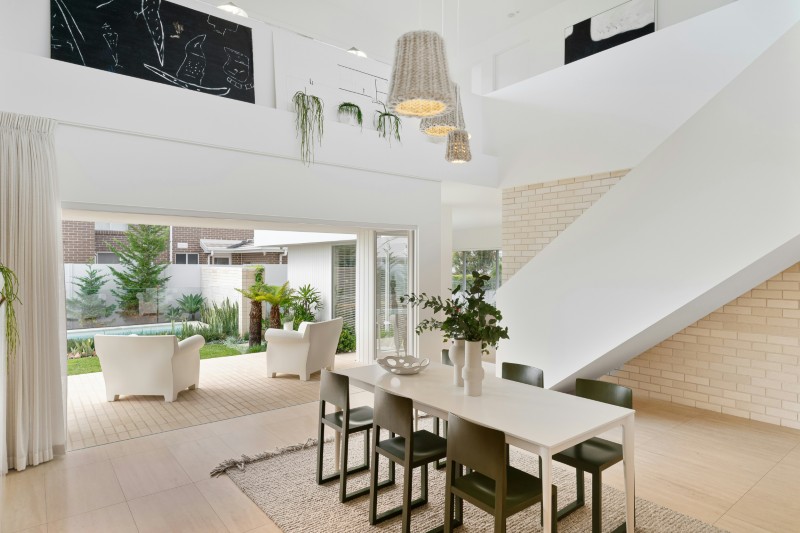
Small hospitality touches throughout
A tray with water and glasses. A throw blanket within reach. A place to set down a bag.
These details aren’t about decor, they’re about usability. They make a space feel considered and welcoming.
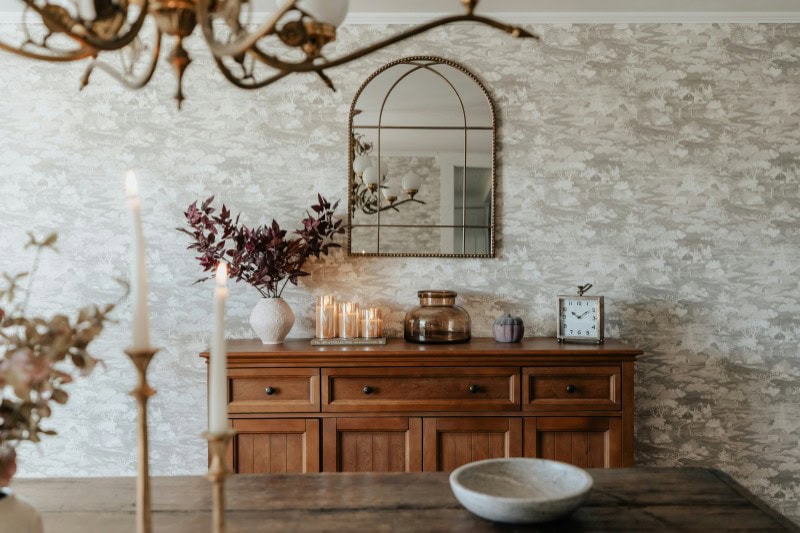
A sense of flow from room to room
Perhaps the most important element is how everything connects.
Boutique hotels think about transitions, how one space leads into another, how materials and colors carry through.
At home, paying attention to these transitions can make the entire space feel cohesive rather than segmented.
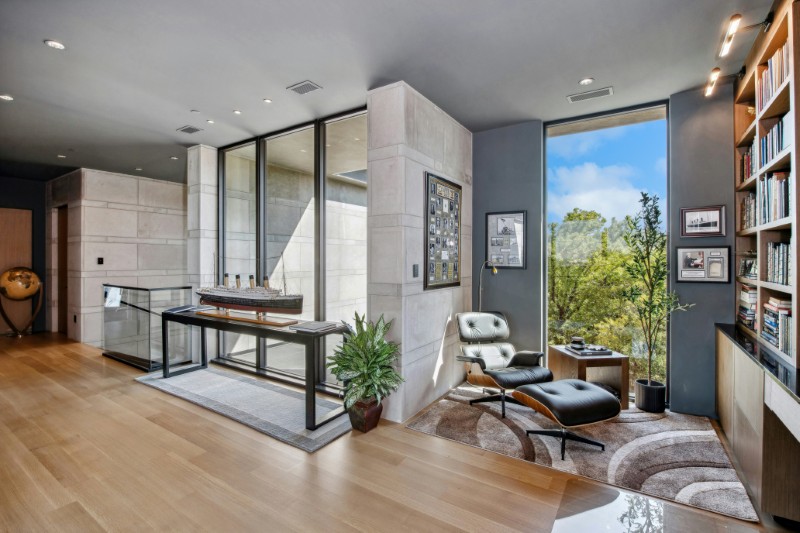
Creating the “boutique feel” at home, one small choice at a time
Taken individually, none of these choices are groundbreaking.
But together, they create a very specific feeling, one that’s hard to describe but easy to recognize the moment you walk in.
That’s really the difference. Boutique hotels don’t rely on one standout feature. They rely on consistency, restraint, and a series of small, well-executed decisions that add up to something memorable.
More stories
16 Design features that make a house feel thoughtfully built
Why some expensive homes don’t feel luxurious at all
15 details that make a house feel off (even when it’s gorgeous)
The post 21 design choices that make a house feel like a boutique hotel appeared first on Fancy Pants Homes.

 English