


Some upgrades don’t just improve a house, they change the entire vibe.
The room suddenly feels more expensive, more intentional, more “someone designed this,” even when the actual spend was fairly modest.
That’s because high-end homes don’t necessarily look expensive because everything costs a fortune. They look expensive because the details are resolved. Proportions are right. Lighting is flattering. Surfaces are calm. Nothing looks flimsy or accidental.
And the good news is: a surprising number of those “this house feels expensive” cues can be replicated for under $500 — especially if the goal is visual impact, not a full renovation.
Here are 15 five-figure-looking upgrades that actually cost under $500, the kind of changes that instantly make a house feel more custom, more elevated, and far less builder-grade.
#1 Replace one light fixture that’s ruining the room
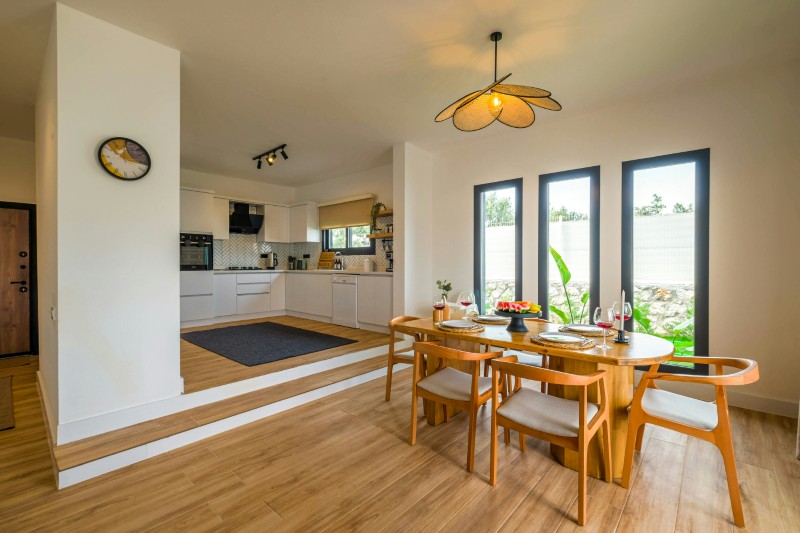
Every house has at least one fixture that drags the whole space down — the generic flush mount, the dated chandelier, the overly shiny “builder special.”
Swapping a single fixture (entry, dining, kitchen island, primary bedroom) can completely reset the room’s perceived quality. The goal isn’t necessarily dramatic, it’s intentional. A well-proportioned fixture signals design confidence immediately.
#2 Install dimmers (and reclaim the mood of the house)
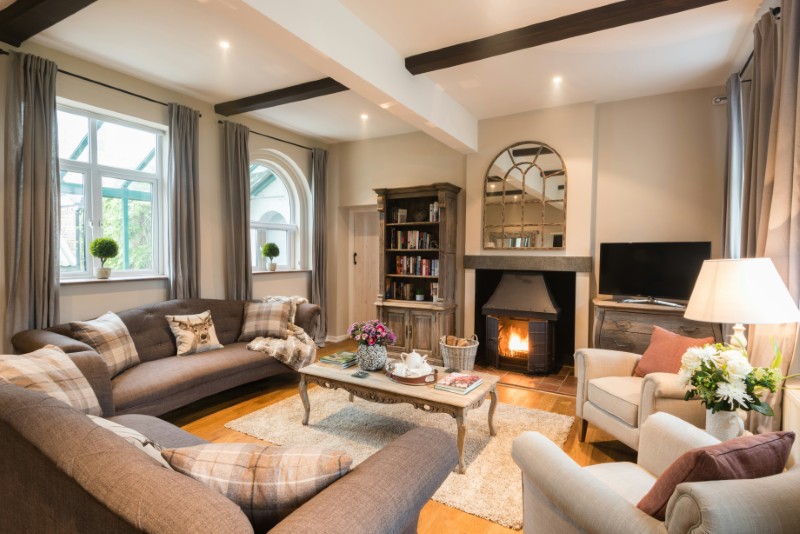
Dimmers are one of the most underrated luxury upgrades, and they’re a dead giveaway in expensive homes. Good lighting isn’t just about brightness, it’s about control.
Being able to shift a room from “day mode” to “evening glow” makes everything feel higher-end: the furniture, the paint, even the people standing in it.
#3 Upgrade cabinet hardware so it feels custom
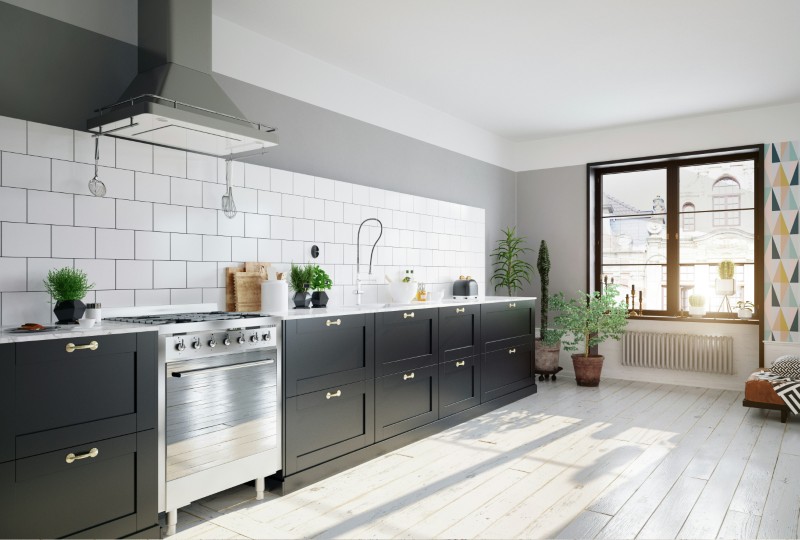
This is one of the most reliable under-$500 upgrades in existence. Builder-grade hardware makes cabinetry look cheaper than it is. Replacing it instantly makes kitchens and bathrooms feel more tailored.
The best part: even inexpensive cabinets look more expensive with weighty, well-chosen pulls and knobs, especially when finishes are consistent throughout the home.
#4 Hang curtains the expensive way (high, wide, and full)
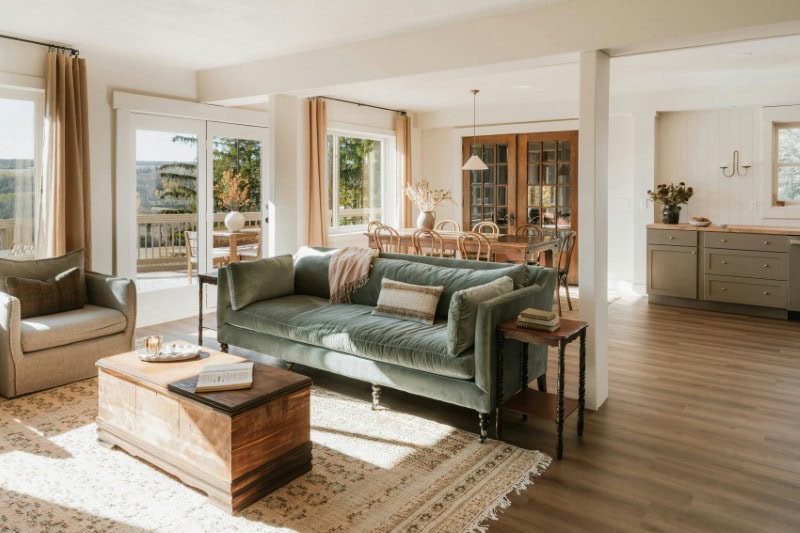
Luxury homes have drapes that actually frame the room. The panels are tall, generous, and wide enough to look plush even when closed.
This isn’t about fabric cost — it’s about placement and fullness. Hanging curtains higher and wider makes ceilings feel taller, windows feel grander, and rooms feel finished in a way blinds never can.
#5 Swap cold bulbs for warm, consistent lighting
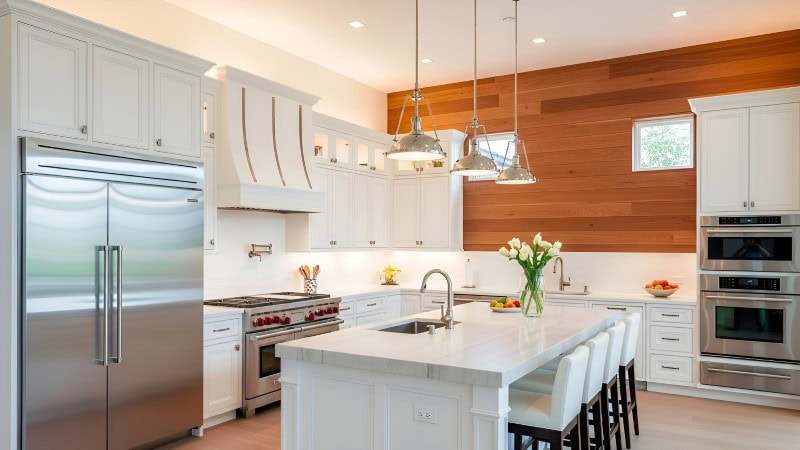
Nothing kills “luxury” faster than harsh, cool bulbs. Or worse, mismatched bulb temperatures in the same sightline.
Switching to warm, consistent lighting across the home is an instant atmosphere upgrade. It makes walls look richer, furniture look softer, and rooms feel calmer.
This is one of those changes that feels expensive even though it’s shockingly simple.
#6 Use one oversized rug instead of two small ones
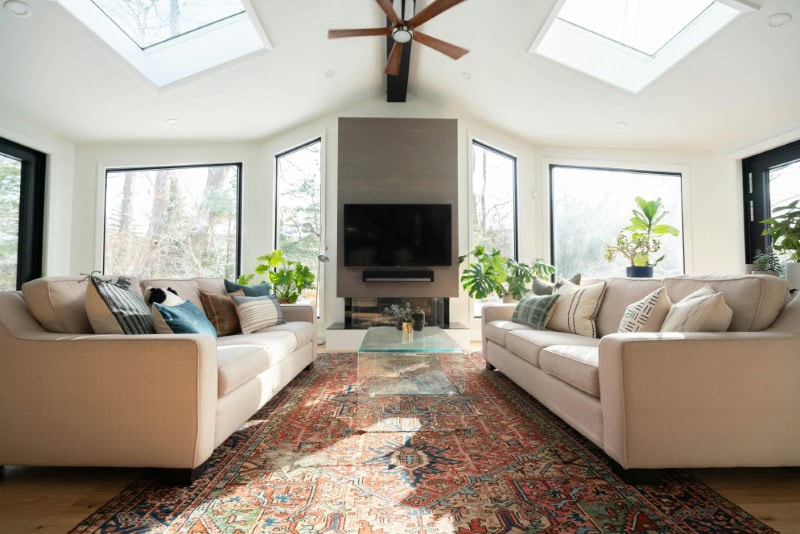
Small rugs are one of the biggest “budget” tells, even in otherwise nice rooms. The wrong rug size makes everything look like it’s floating awkwardly.
A properly sized rug anchors furniture, improves proportion, and makes the room feel intentional. This is why staging works: scale is half the trick.
#7 Replace a mirror with something dramatic and architectural
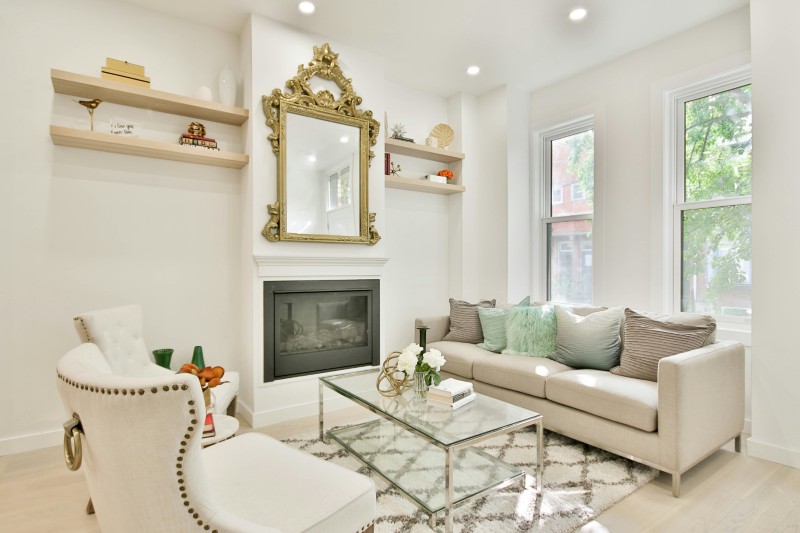
Mirrors can look either generic or stunning, rarely in between. Builder-grade mirrors, especially in bathrooms but not only, often look like they were chosen to be invisible.
A statement mirror (arched, vintage-inspired, brass-framed, oversized) instantly reads as design. It makes the entire space feel elevated, not upgraded.
#8 Add wall molding to one room (for instant architecture)
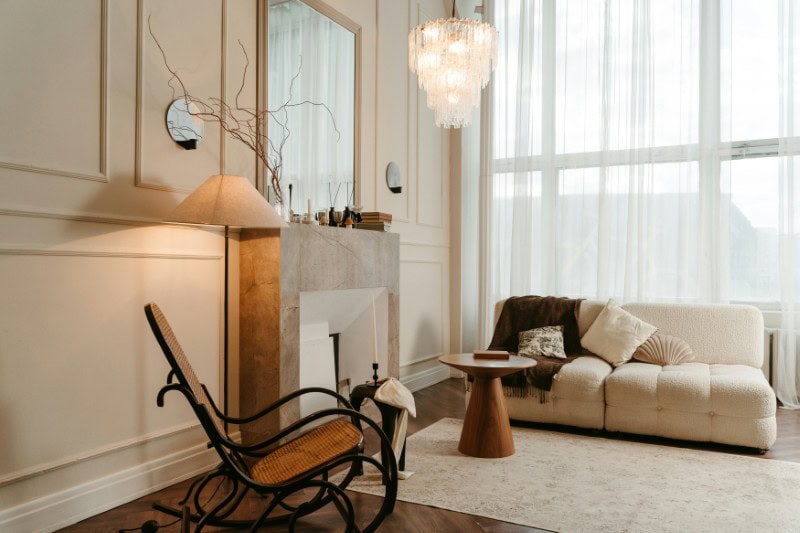
Adding panel molding, picture-frame molding, or wainscoting is one of the most “five-figure” looking upgrades you can do cheaply — especially if it’s DIY-friendly.
It creates shadow, depth, and that old-home richness that builder-grade spaces lack. The room feels like it has bones, not just paint.
#9 Replace a basic faucet with something that looks designer
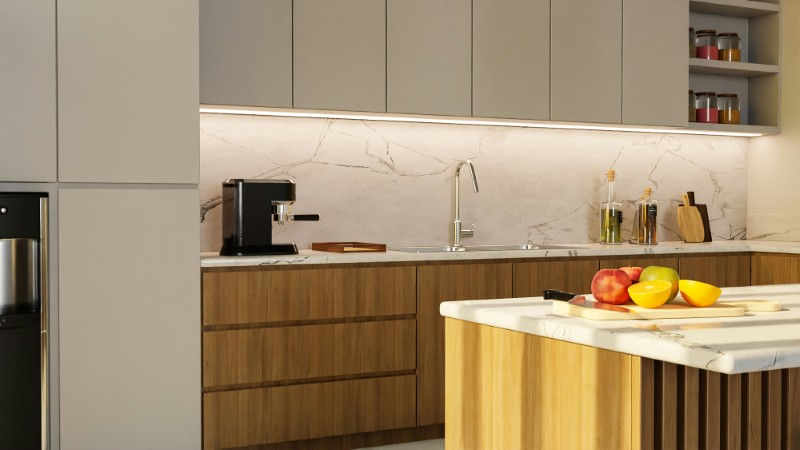
A faucet is a small object with huge influence. The wrong one can make even a renovated space feel forgettable.
A more refined faucet — in a finish like brushed brass, unlacquered-style tones, or matte black — instantly reads custom. It also makes sinks and vanities look better without touching anything else.
#10 Update switch plates and outlet covers
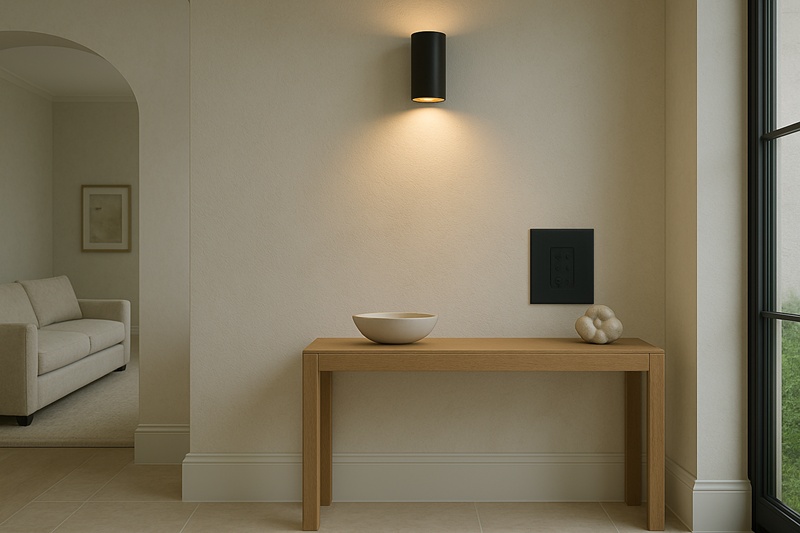
This one is deeply unglamorous, which is why it works. High-end homes have tiny details handled. Builder-grade homes don’t.
Swapping plastic covers for cleaner versions (or matching finishes) removes visual clutter in a way most people never consciously notice — but designers always do.
#11 Install a hotel-level showerhead (and matching accessories)
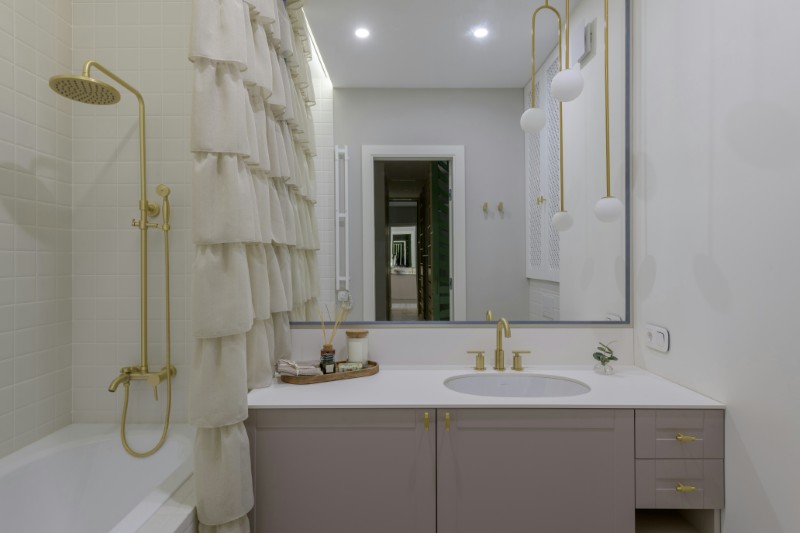
A lot of bathrooms don’t need full remodels — they need better touchpoints.
A rain-style showerhead, upgraded handheld, or simply a more substantial fixture can make a bathroom feel far more high-end without altering tile or plumbing layout. Bonus points if accessories match and the finish is consistent.
#12 Add under-cabinet lighting in the kitchen
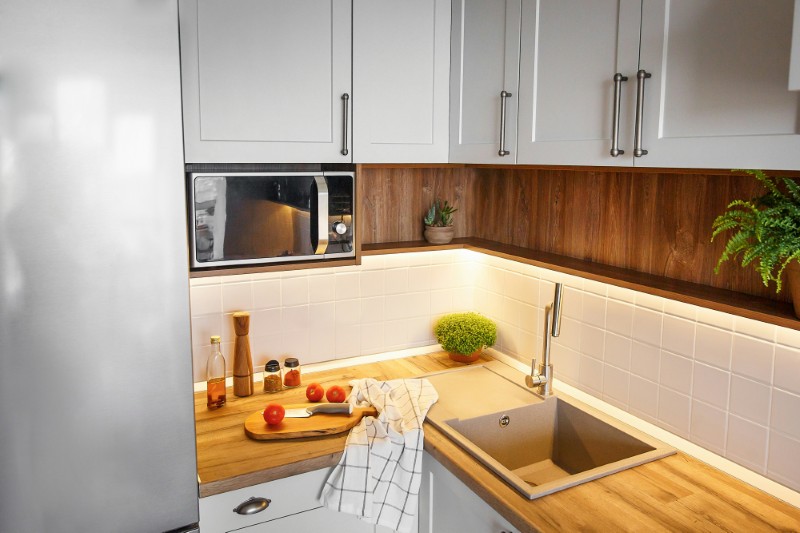
Under-cabinet lighting is an instant “custom kitchen” cue. It makes counters glow, improves function, and adds depth at night — which is when expensive kitchens really shine.
Even modest kitchens look dramatically more refined with soft counter lighting. It makes the room feel designed, not merely equipped.
#13 Upgrade lampshades (yes, really)
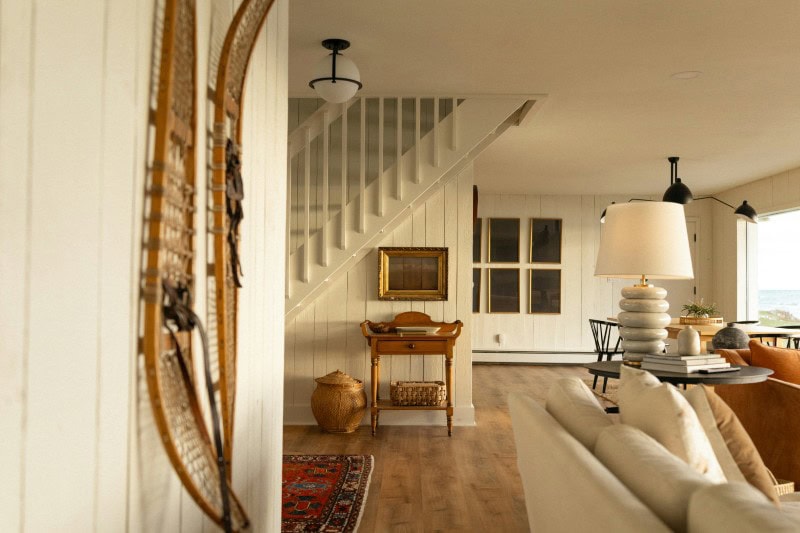
This is one of those sneaky designer tricks: bad lampshades make rooms look cheaper. Wrong shape, wrong color temperature, too small — it affects everything.
Upgrading lampshades (larger, more structured, linen, neutral tones) makes lighting feel softer and more elevated without buying new lamps.
#14 Add a large piece of art (not a small one trying its best)
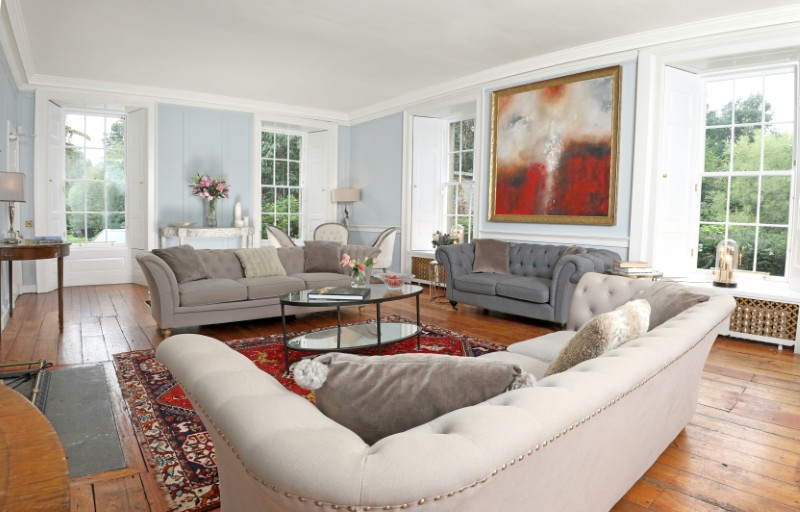
Nothing says “trying to decorate” like tiny art on a big wall. High-end homes tend to have properly scaled art, pieces that feel intentional and confident.
Large art doesn’t have to be expensive. It can be a great print, vintage poster, photography, or even thoughtfully framed textile — the key is scale and framing.
#15 Make select surfaces look calm and styled, not busy
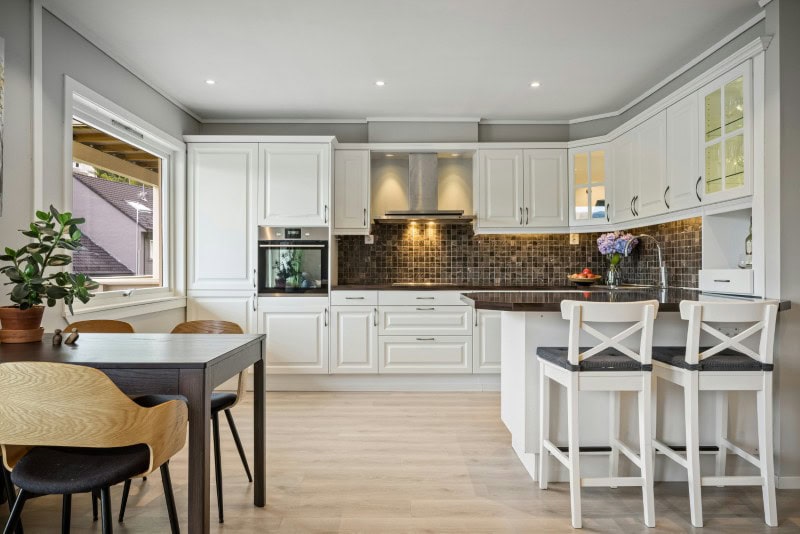
Luxury homes aren’t clutter-free because they’re empty, they’re clutter-free because they’re controlled.
One of the most “five-figure” upgrades is visual editing: a cleared kitchen counter, a well-styled entry console, a coffee table with only a few purposeful items. It costs almost nothing, yet it’s one of the biggest shifts in perceived quality.
It’s the difference between “someone lives here” and “this house has a standard.”
#15 Upgrade the house numbers (and make them oversized + architectural)
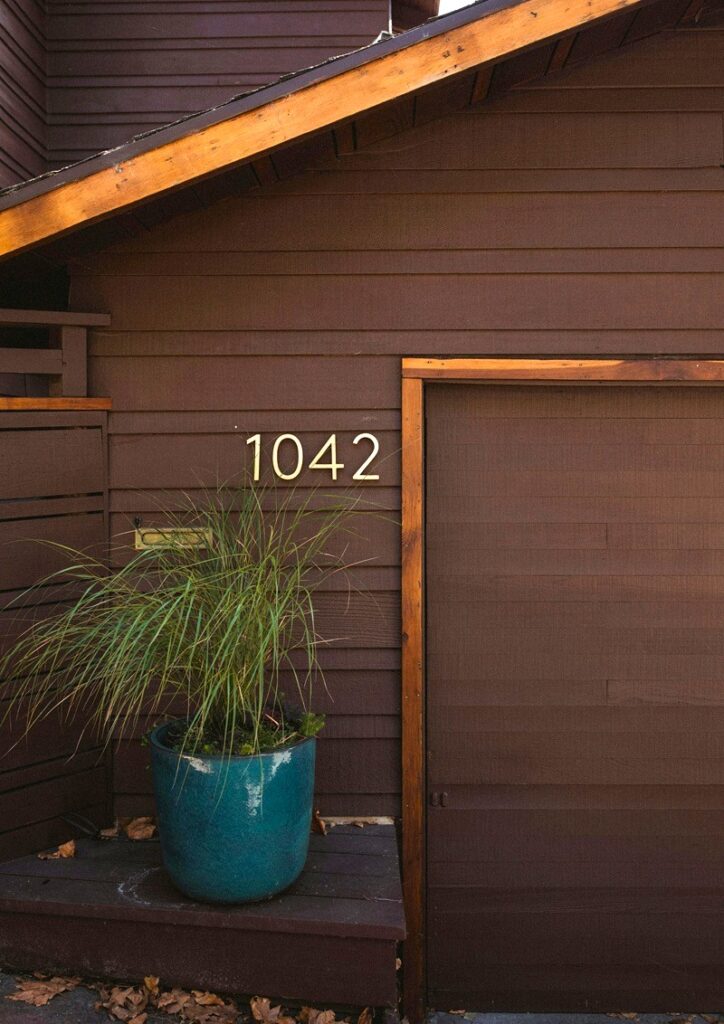
House numbers are one of those tiny details that quietly make a home feel generic. Swapping them for modern, oversized numbers in matte black, bronze, or brushed metal is a surprisingly high-impact upgrade.
This is one of the easiest ways to give a home that “designed” look from the street — the kind of detail people associate with architect-designed houses and high-end flips (the rare good ones).
#16 Replace the porch light with something substantial
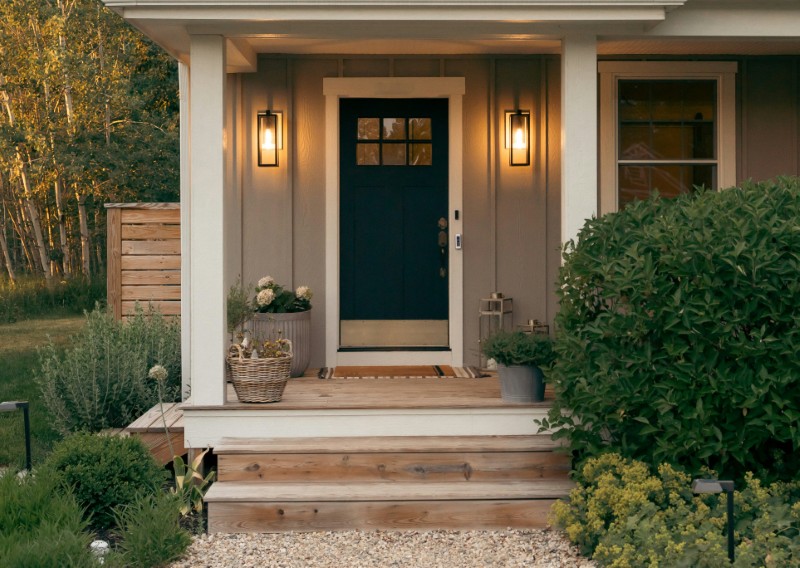
If the entry light is a small, generic lantern, the house instantly reads basic, even if everything else is pretty.
A larger, well-proportioned porch fixture (especially in black metal, aged brass tones, or classic copper) creates a real “arrival moment.” It’s the outdoor equivalent of upgrading a chandelier.
#17 Add landscape lighting along the walkway
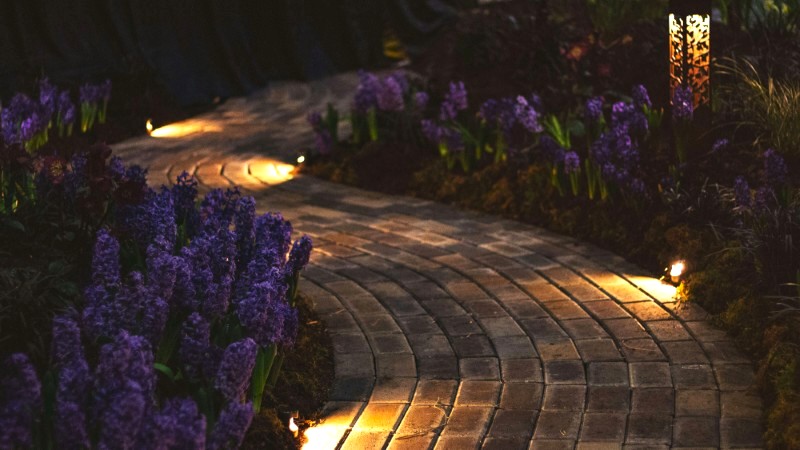
This is such a quiet-wealth move and it instantly makes a property feel like it belongs to someone who plans ahead.
A few simple path lights or uplights on trees makes a home glow at night in a way that feels professionally landscaped. It gives “estate energy,” even when the yard is modest.
#18 Wrap an outdoor seating area in warm fairy lights
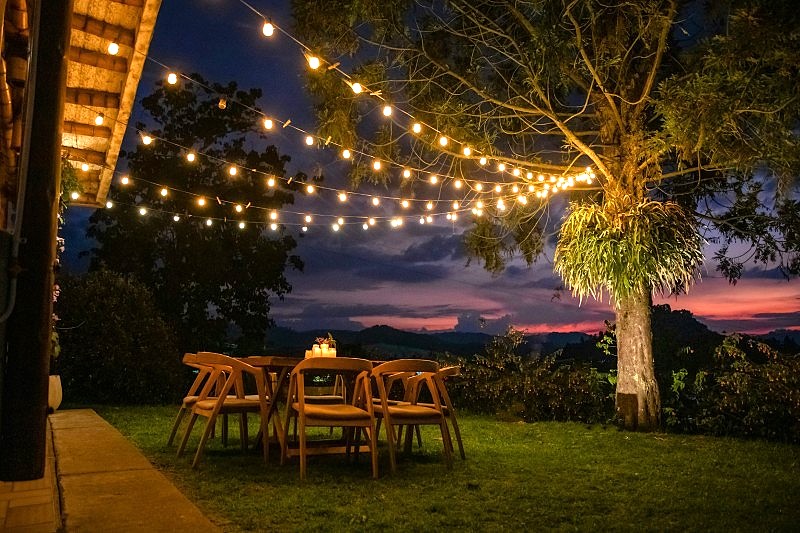
Warm fairy lights (or café string lights) instantly create that “private event” glow, the kind of ambiance usually associated with restaurants, garden parties, and high-end outdoor entertaining setups.
The key is placement.
Instead of one random strand draped awkwardly along a fence, the more elevated approach is to wrap lights around a pergola, thread them across a patio ceiling, or outline the perimeter of a seating area so the space feels framed. It turns even a basic backyard into something atmospheric and finished — and it photographs beautifully, too.
#19 Paint the front door (and choose a serious color)
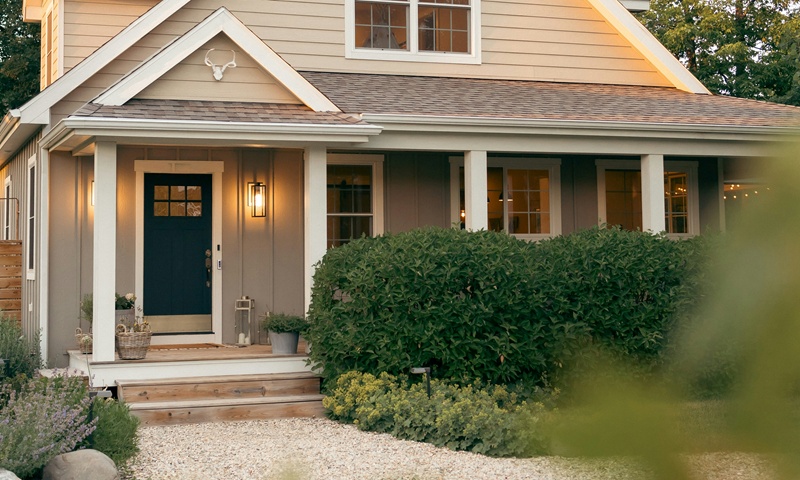
A fresh front door color can make a whole house look more expensive, more tailored, and better cared for.
The best five-figure-looking choices tend to be moodier and deeper than typical bright front doors: inky navy, charcoal, deep green, oxblood, or a rich black. Paired with clean hardware, it looks instantly high-end.
More stories
18 Things designers would change first in a builder-grade house
13 features that quietly tell you the homeowner has exquisite taste
15 things older homes do much better than new builds
The post 19 Five-figure-looking home upgrades that actually cost under $500 appeared first on Fancy Pants Homes.

 English