


Set high on a bluff at Wing Point, this Bainbridge Island house reads less like a single residence and more like a carefully composed art installation.
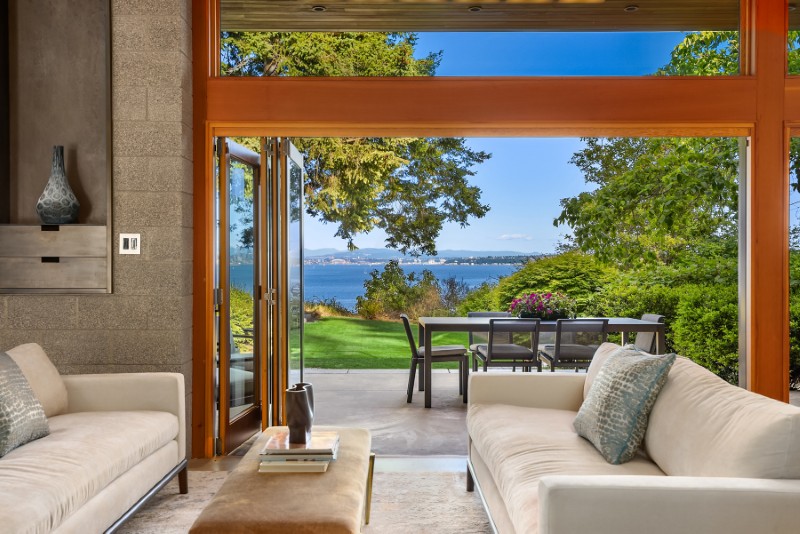
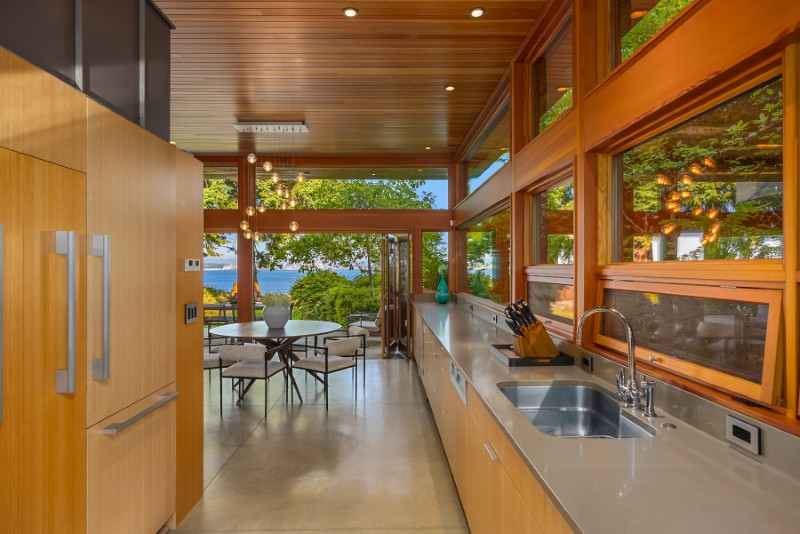
From the water-facing rooms, the view unfolds in layers: the deep blue of Puget Sound, the Seattle skyline centered across the bay, and — on clear days — Mount Rainier and the Cascade Range rising in the distance.
What sets the property apart isn’t just the setting, but the way the architecture engages with it.
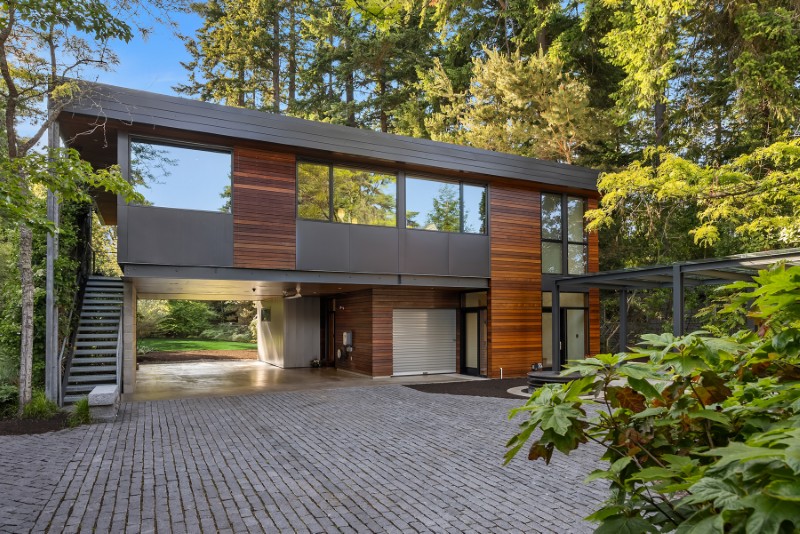
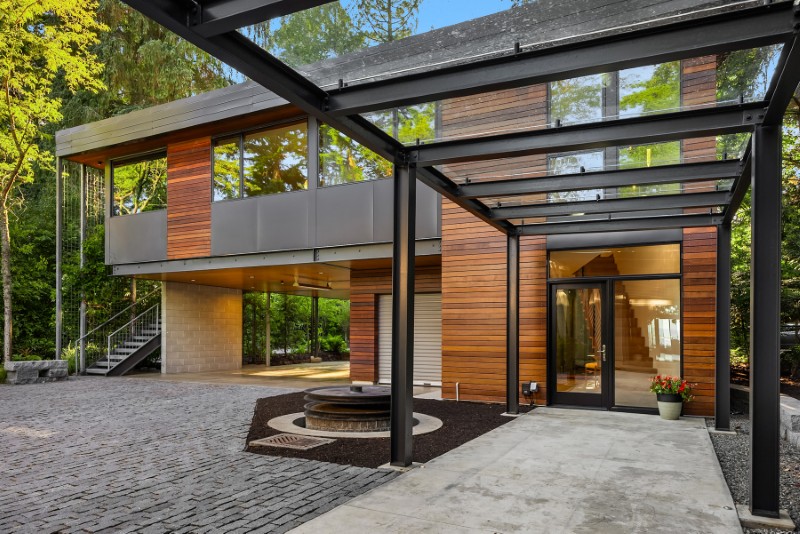
Spread across roughly 4,958 square feet, the estate is composed of two architecturally distinct wings, each representing a different moment in time, connected by a steel-and-glass breezeway that turns movement between them into part of the experience.
Including six bedrooms and six baths across nearly 5,000 square feet, the exquisite home is on the market for $5.8 million, listed by Shannon Morgan of The Agency Bainbridge Island and Gabrielle Ritter of Charter Real Estate.
A Wing Point setting with commanding bluff-top views
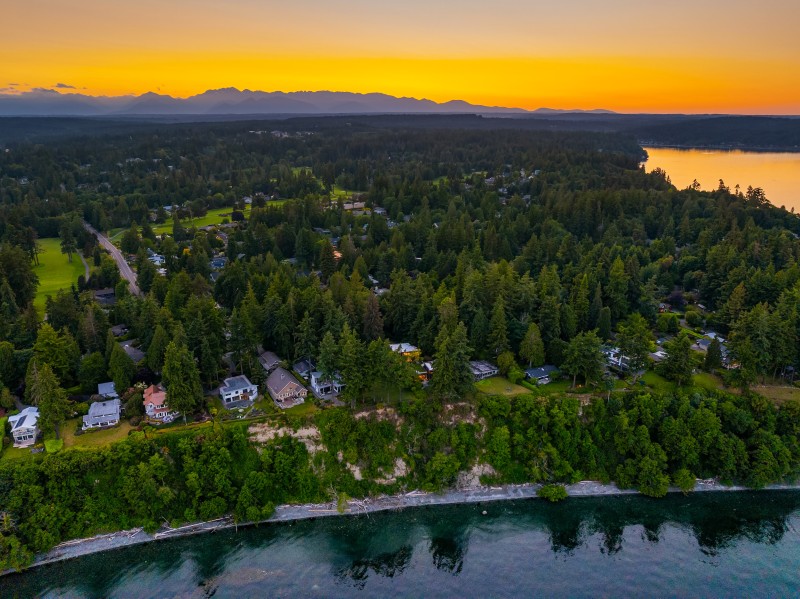
The home sits along Madrona Drive in Wing Point, one of Bainbridge Island’s most established waterfront enclaves. Elevated above the shoreline, the property enjoys open sightlines across the Sound toward downtown Seattle, with the water, sky, and mountains forming a constant backdrop.
Despite the dramatic setting, the location remains closely tied to everyday island life. Wing Point Golf & Country Club lies nearby, while Winslow’s shops, restaurants, and ferry terminal are just minutes away, offering direct access to the city without sacrificing privacy or quiet.
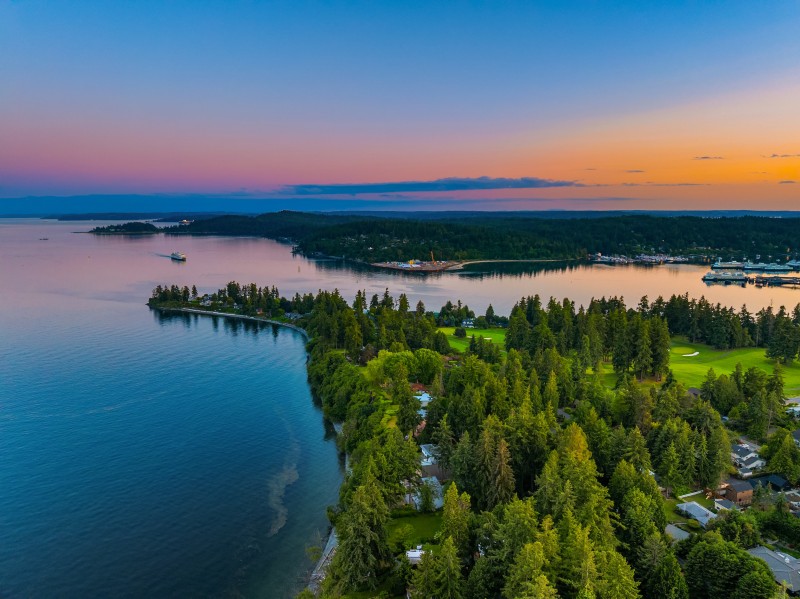
Two architectural wings connected by light and transparency
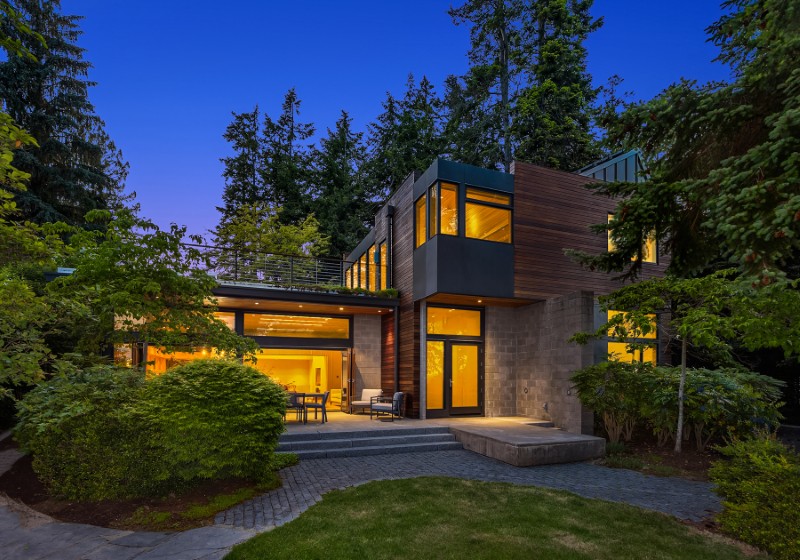
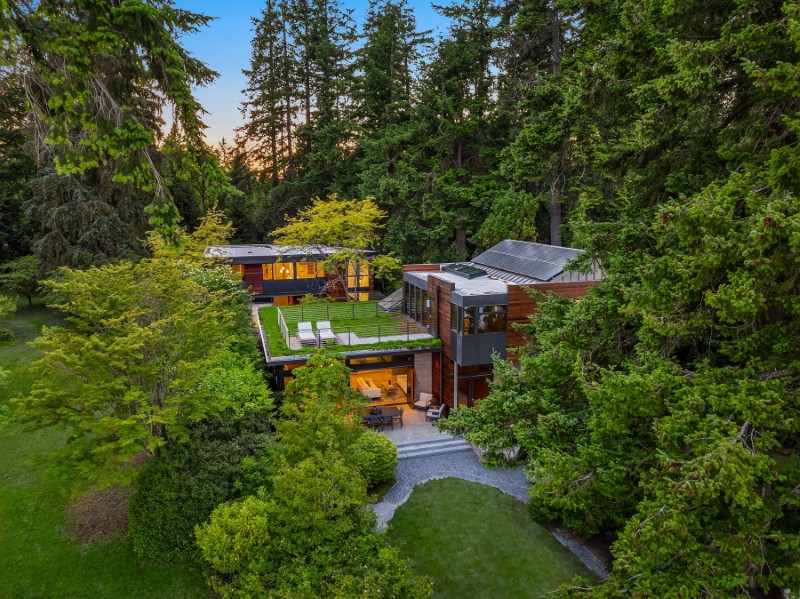
Rather than expanding a single structure, the estate was conceived as two separate volumes. The original East Wing and the newly completed West Wing are joined by a transparent breezeway, allowing the landscape to remain visually present even as one moves through the home.
The connection does more than link square footage. It emphasizes the idea that this is a residence designed to evolve — with architecture that acknowledges time, change, and continuity rather than attempting to freeze a single aesthetic.
Washington’s first LEED-certified home outside Seattle
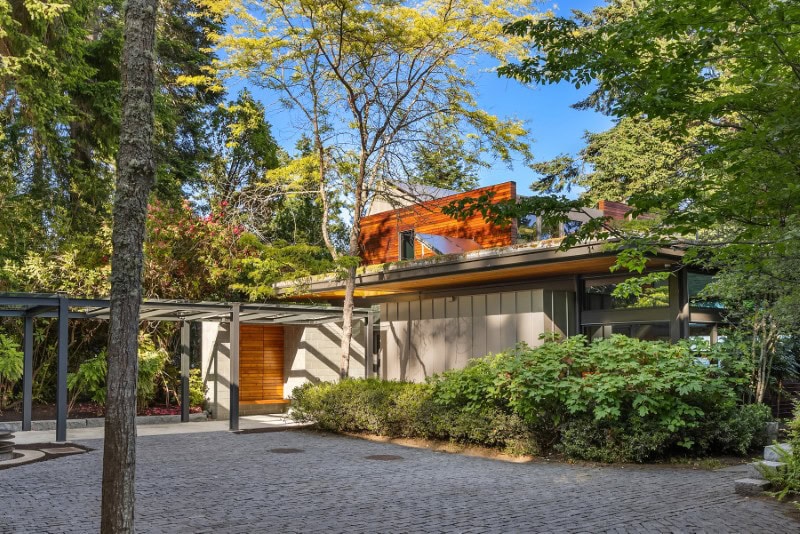
The East Wing holds a notable distinction: it was Washington’s first LEED-certified residence outside Seattle. Designed by architect Matthew Coates, the structure set an early benchmark for sustainable residential design in the region.
Rather than feeling dated, the wing remains remarkably current. Its proportions, materials, and orientation reflect an approach to sustainability rooted in restraint and long-term thinking, rather than trend-driven technology.
Sustainable systems integrated into the architecture
Environmental performance is built into the bones of the estate. Solar power and geothermal systems support daily living, while advanced energy strategies reduce reliance on external utilities.
Native landscaping further reinforces the connection to place, allowing the grounds to blend naturally with the surrounding environment rather than reading as a manicured overlay.
Interiors shaped by fir, bamboo, and natural light
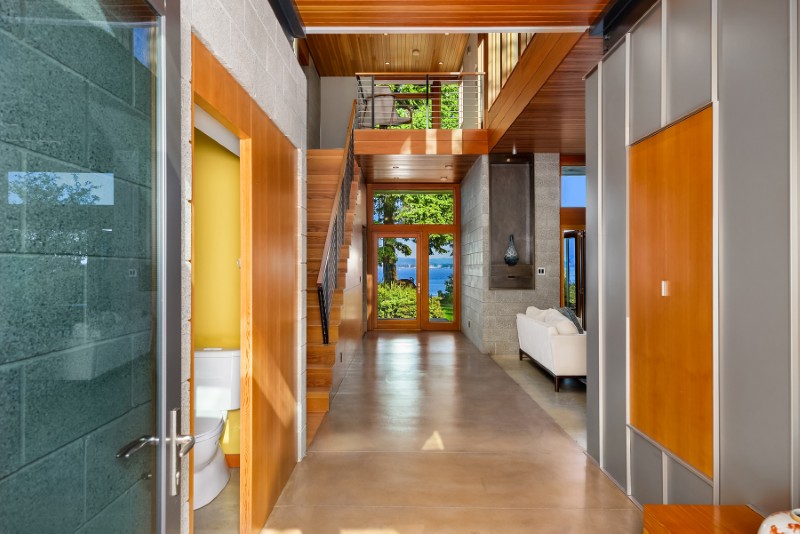
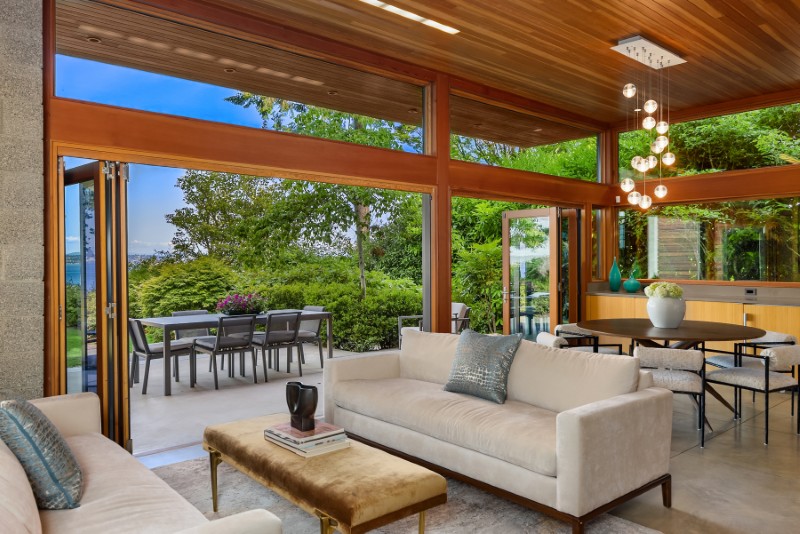
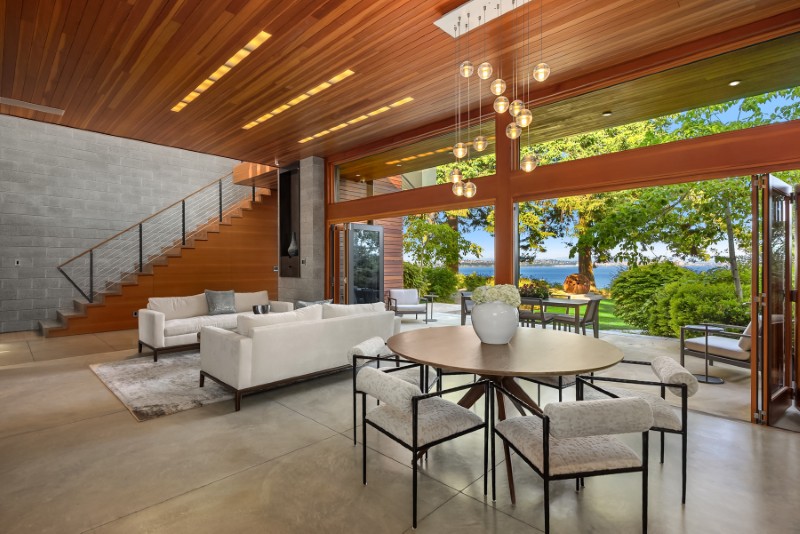
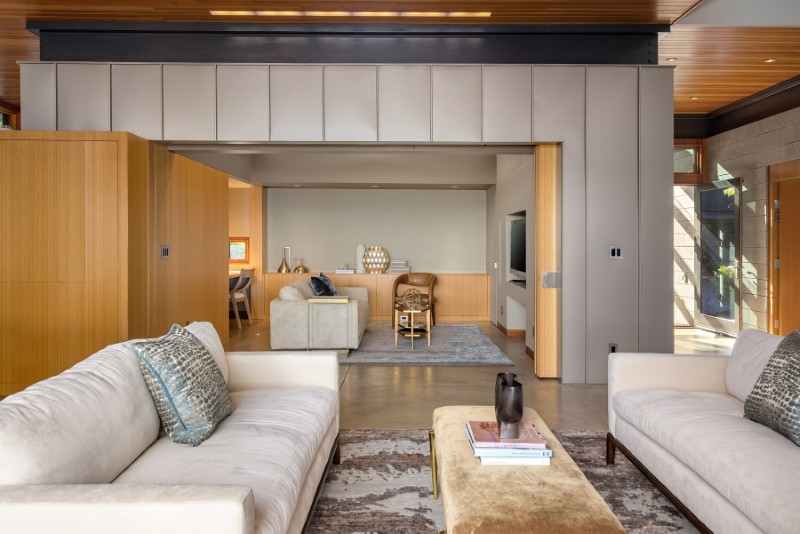
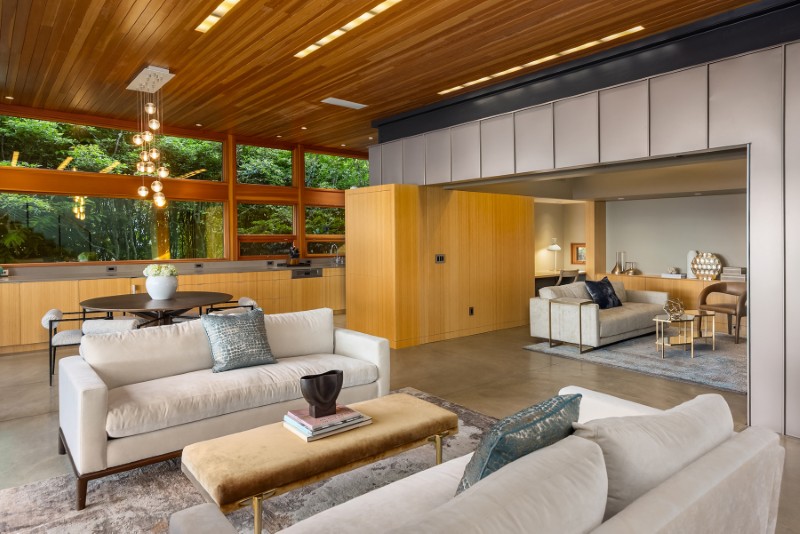
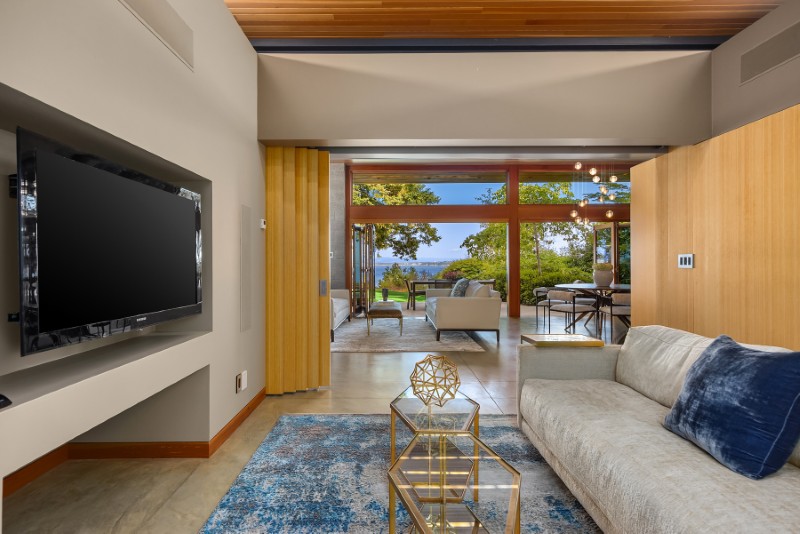
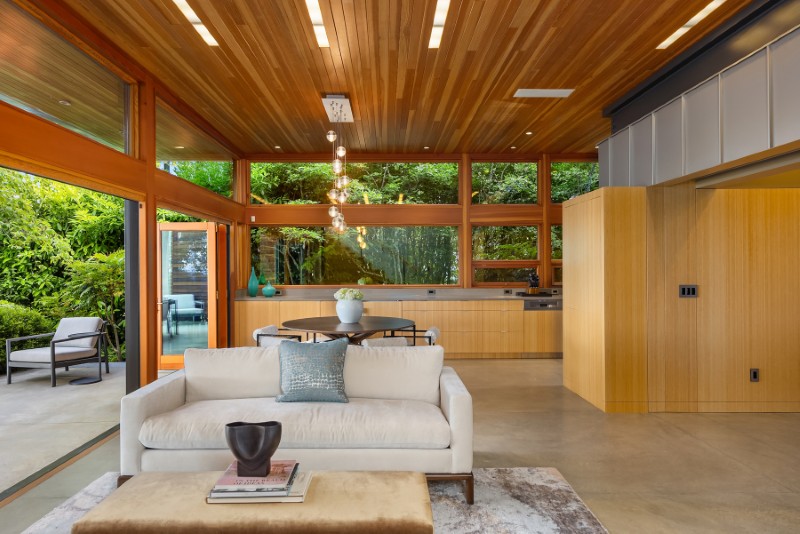
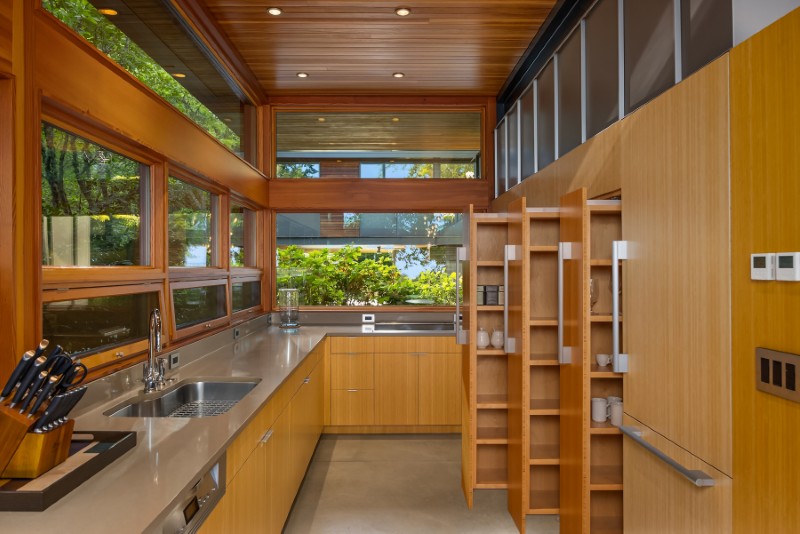
Inside, the East Wing’s interiors are defined by custom fir and bamboo finishes, materials chosen as much for their warmth as for their renewable qualities. Radiant floors add comfort without visual clutter, while large expanses of glass draw the landscape inward.
Light plays a central role throughout the day, shifting across walls and floors in a way that reinforces the home’s gallery-like quality without tipping into austerity.
A home that lives like a gallery but functions day to day
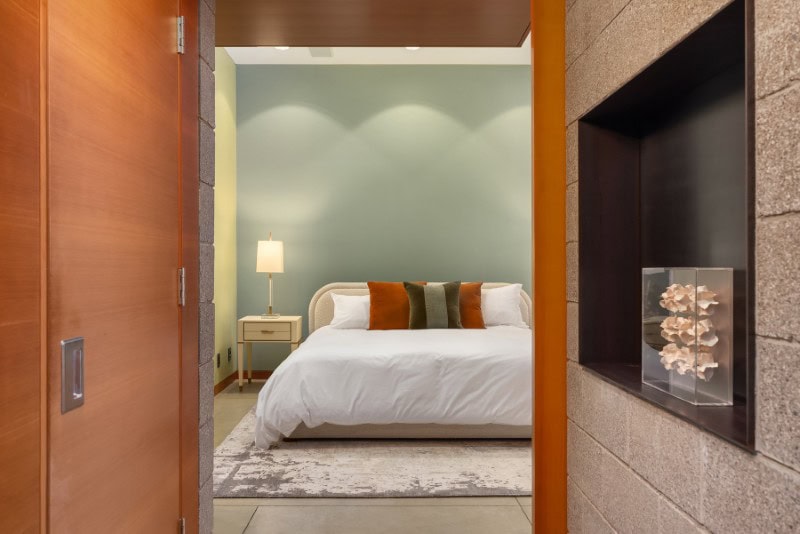
Despite its architectural rigor, the estate is designed for real use. Living spaces flow easily to outdoor terraces, bedrooms are positioned for privacy, and the overall layout supports both everyday routines and larger gatherings.
The main house is offered fully furnished, allowing the interiors — already carefully considered — to be experienced as intended.
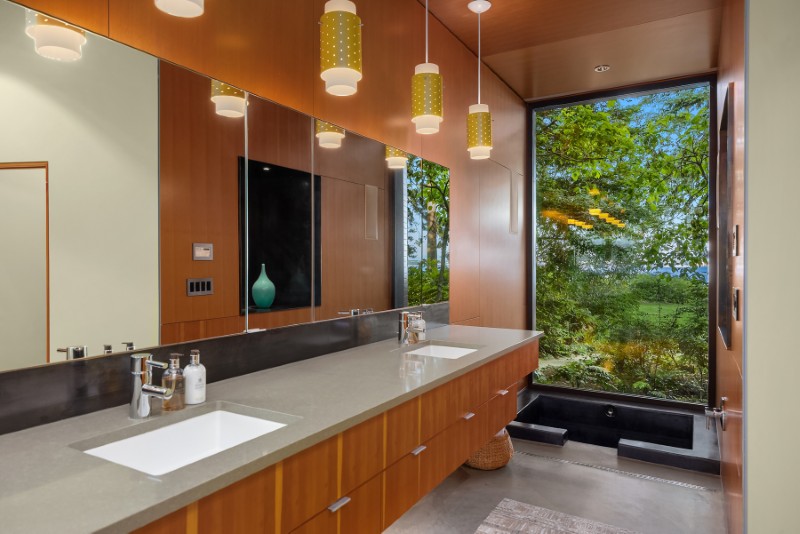
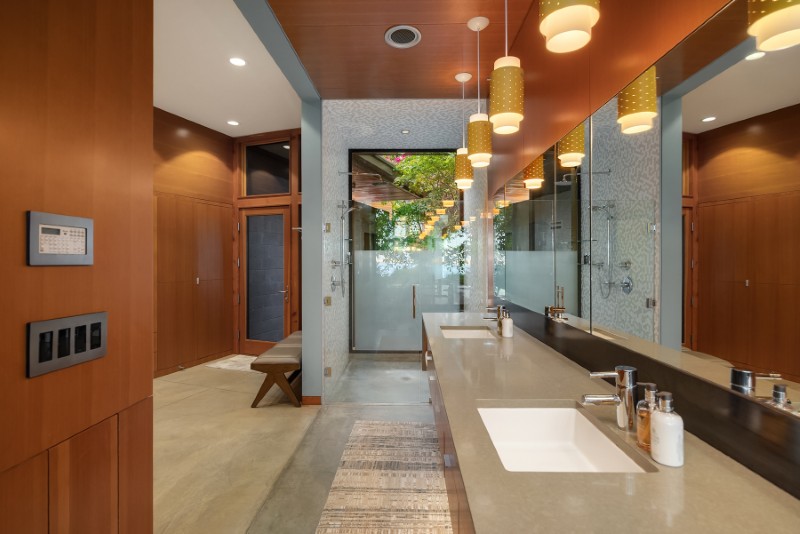
A rooftop garden that doubles as living infrastructure
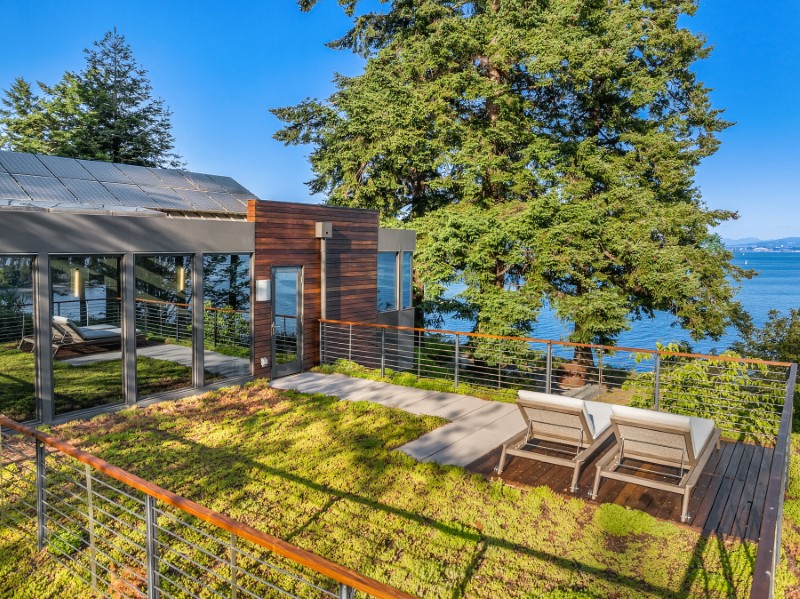
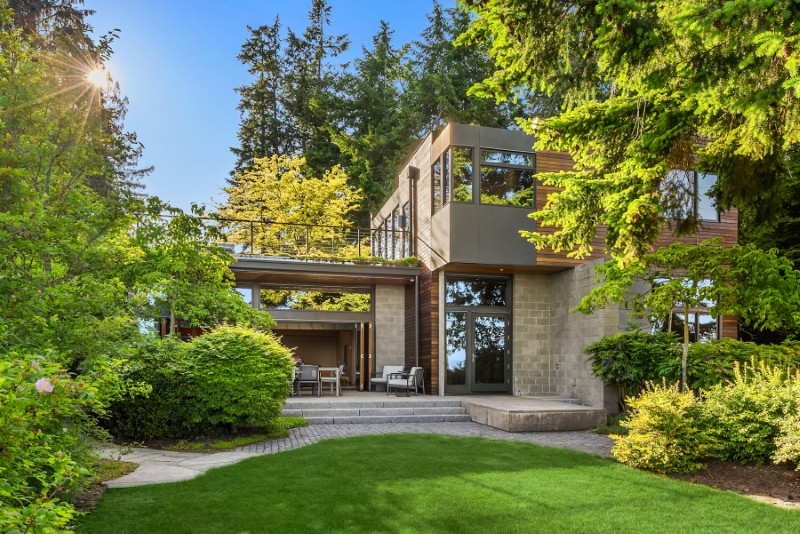
Above the original structure, a rooftop garden serves both aesthetic and functional roles. Visually, it softens the home’s profile when viewed from above or across the water. Functionally, it contributes to insulation and stormwater management, reinforcing the estate’s sustainability goals.
It’s a feature that feels purposeful rather than ornamental — part of the architectural system rather than an add-on.
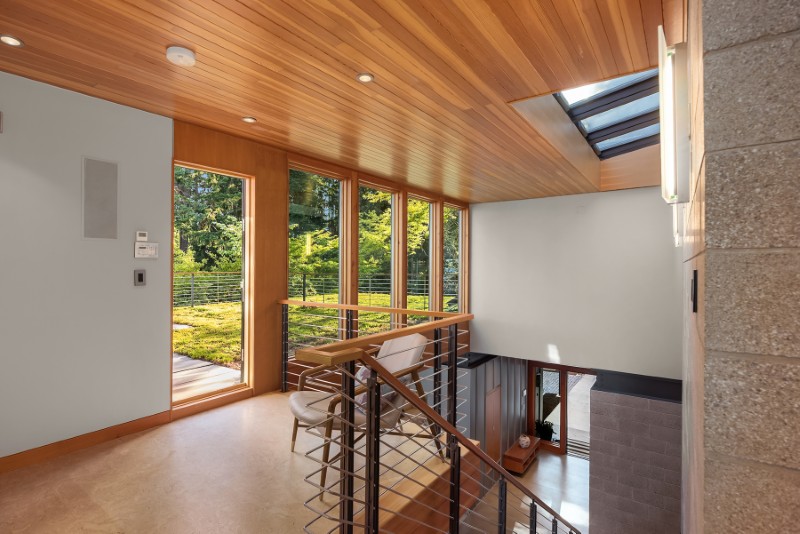
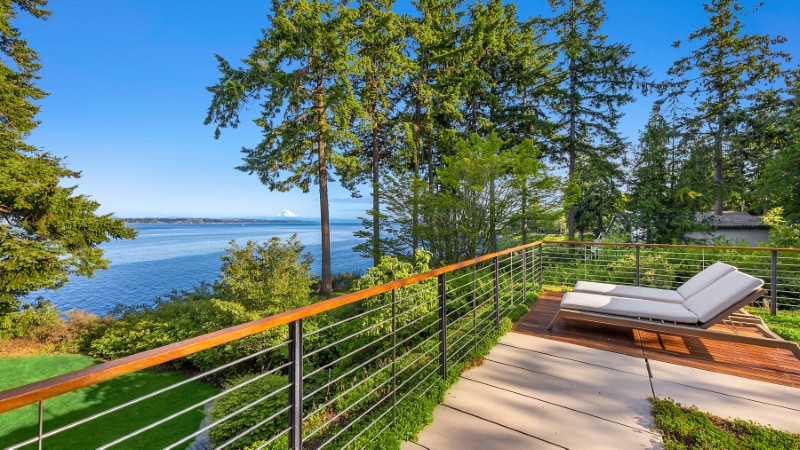
With indoor-outdoor living spaces
The generous rooftop terrace is complemented by several outdoor areas and terraces that take in the water views, easily accessed from the main living space.
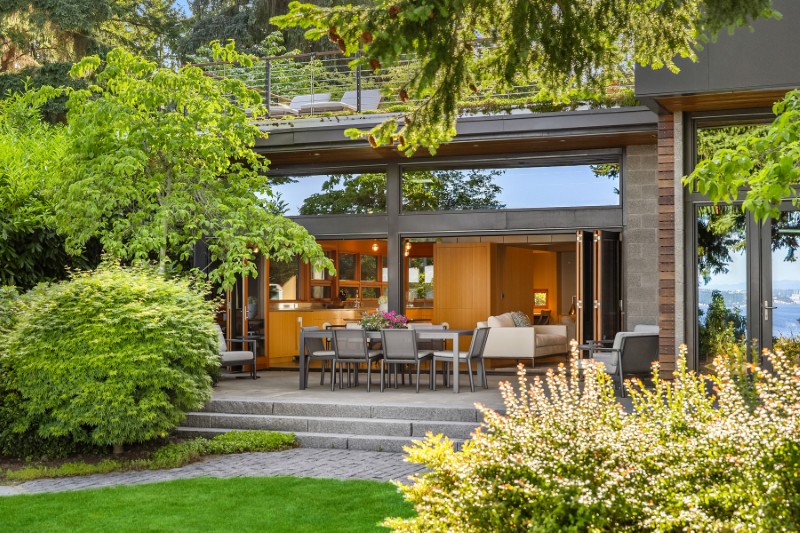
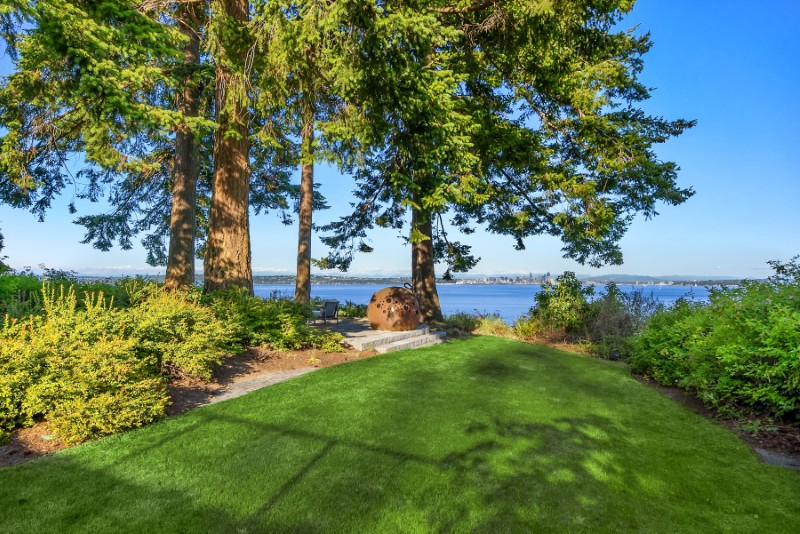
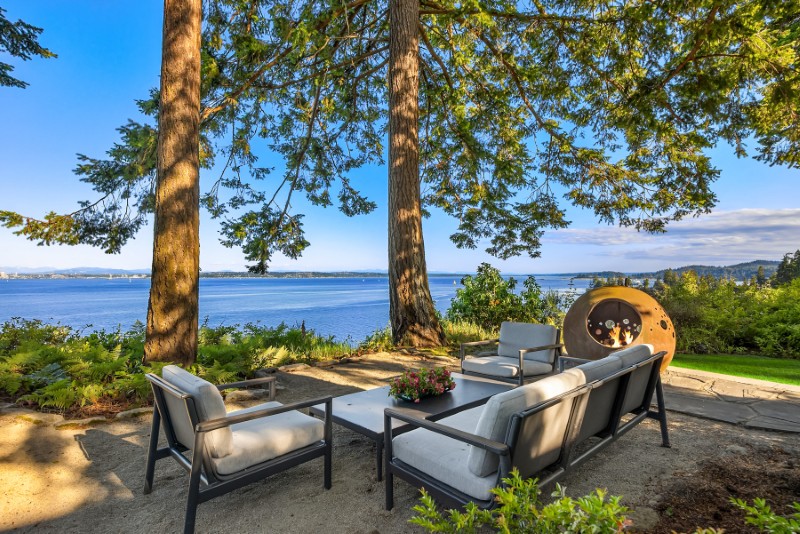
The 2025 West Wing expands the original vision
Completed in 2025, the West Wing adds new living space while respecting the design language of the original home. Rather than mimicking the East Wing outright, it introduces its own warmth and spatial rhythm, creating a dialogue between the two structures.
The result is a residence that feels layered rather than repetitive, with each wing offering a distinct atmosphere while remaining clearly part of the same composition.
Close to Winslow, the ferry, and the best of Bainbridge Island
While the property feels secluded, it remains well connected. Winslow’s waterfront, cultural venues, and dining scene are nearby, as is the ferry terminal providing regular service to downtown Seattle.
The balance between design-driven seclusion and practical access underscores the estate’s appeal: a home that operates as a work of art, without losing sight of how it’s lived in.
More stories
Bill Gates’ house near Seattle, nicknamed Xanadu 2.0
The Office’s Rainn Wilson pays tribute to his humble childhood home on the outskirts of Seattle
Bold by design: 19 homes that are anything but ordinary
The post $5.8M Bainbridge Island house is split into two architectural wings, built to frame Puget Sound appeared first on Fancy Pants Homes.

 English