


Los Angeles occasionally produces a real estate story that feels like a plot twist, and the rediscovery of the Jules Salkin Residence is one of them.
Designed in 1948 by John Lautner, one of California’s most distinctive architectural voices, the home was considered “lost” for decades — known only through an archival model photographed and stored at the Getty.
That changed in 2014, when the home surfaced on the market for the first time in 65 years, sparking curiosity and disbelief in the design world. Among those captivated by the news were fashion designer Trina Turk and her husband, photographer Jonathan Skow, who immediately recognized the importance of the find.
What others dismissed as a costly teardown, they viewed as an irreplaceable piece of California modernism ready to be reborn.
Now listed for $2,395,000 with Brian Linder, AIA, and Mark H. Mendez of Compass, the residence stands as a fully rehabilitated example of Lautner’s early work — historically anchored, thoughtfully updated, and protected for generations to come.
An early Lautner design hidden in plain sight for decades
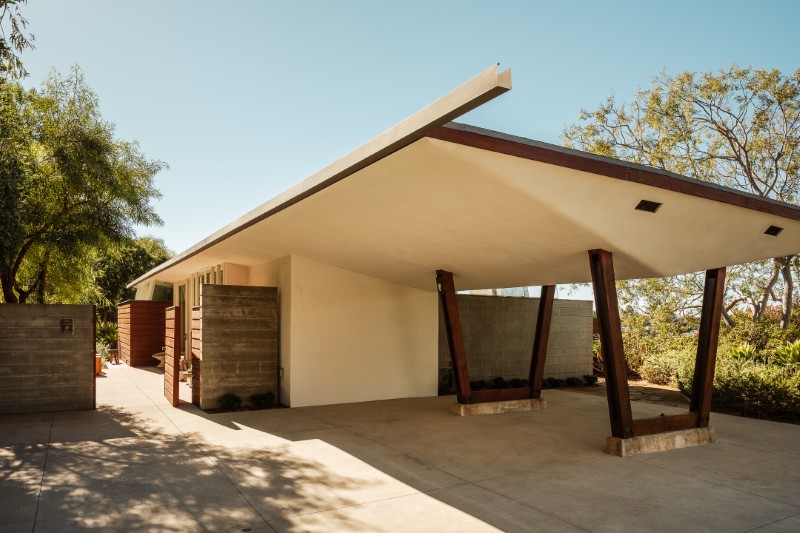
The Jules Salkin Residence was conceived during Lautner’s early career, shortly after his six-year apprenticeship under Frank Lloyd Wright.
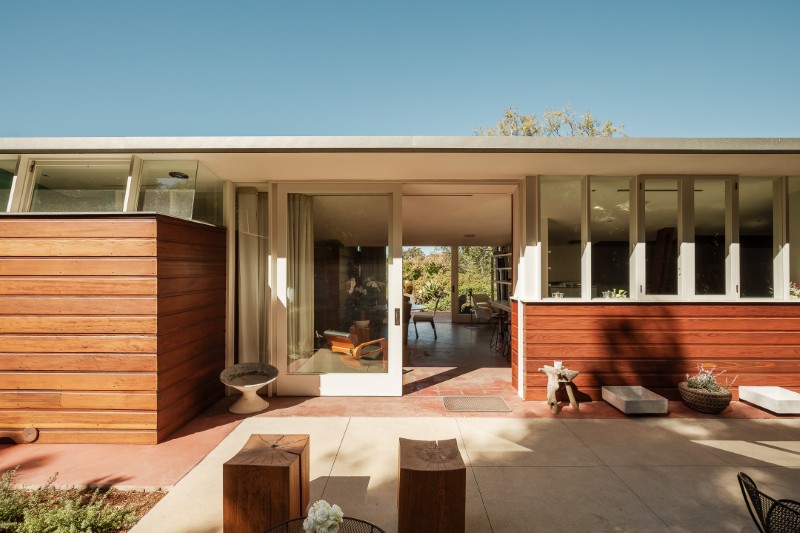
The influences are unmistakable: a compact footprint, horizontal expression, redwood siding, and a tight materials palette all echo Wright’s principles of the Usonian home.
But even at this stage, Lautner was already pushing boundaries. His interest in dramatic geometries, unconventional rooflines, and structural daring emerge in the home’s expressive form — elements that would later define his mature work.
Quietly unnoticed until 2014

Yet for more than half a century, none of this was widely known.
The house remained privately held by the original family. Without published photographs or academic documentation, it went essentially unnoticed until the 2014 sale brought it back into architectural conversation.
A designer’s eye for rediscovery
When the listing appeared, accompanied by a Curbed article referencing the Getty model, it quickly gained attention from architects, preservationists, and curious onlookers.
Turk and Skow attended the broker’s open, saw past the deterioration, and understood the significance of the structure beneath the wear. Their perspective was rare — where many saw a problem, they saw an architectural opportunity.
Recognizing the rarity of a newly uncovered Lautner, they moved quickly to acquire it.
Followed by a meticulously researched rehabilitation

To restore the home’s original intent, Turk partnered with architect Barbara Bestor, FAIA, whose reputation for thoughtful, historically sensitive work made her a natural fit. Their process began with extensive research, including original drawings, archival materials, and period documentation.
The rehabilitation became an academic project as much as a construction effort. Every move was measured against Lautner’s ideas rather than contemporary reinterpretation.
That peeled back unnecessary additions that didn’t match the original
Unsympathetic additions were peeled back until the original structure could be understood again. Bestor and Turk then began the careful work of reconstruction — reviving what had been lost and correcting what had been altered.
Recreating Lautner’s design language
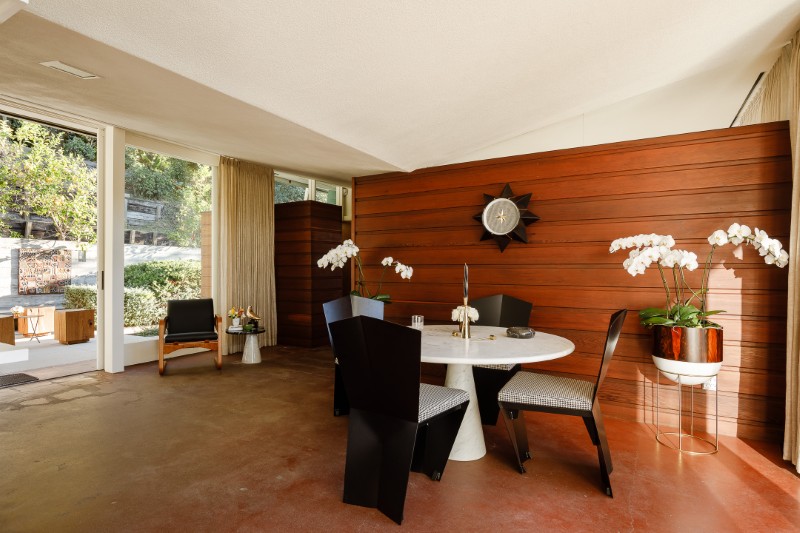
The home’s most significant architectural features were restored or rebuilt, allowing the structure to regain its clarity. Elements revived with historical accuracy include:
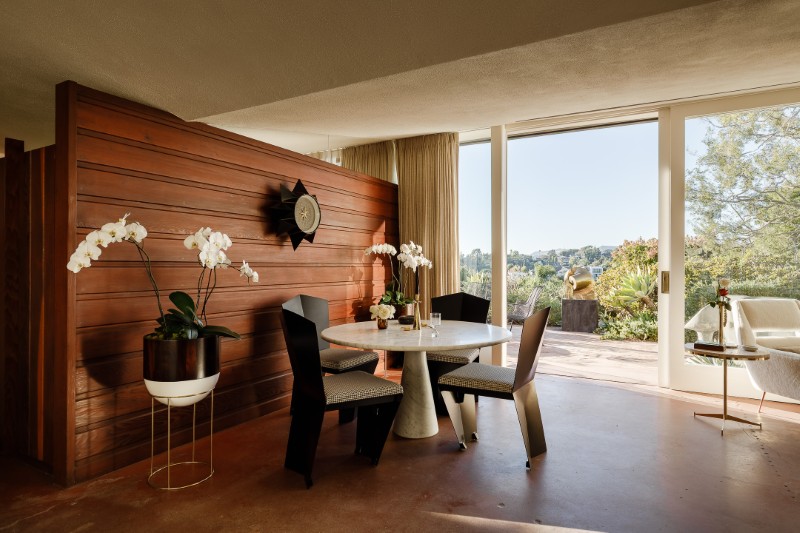
- Butt-glazed clerestory corners, rebuilt using archival reference
- Corrected chimney and fireplace profiles, matching Lautner’s intended geometry
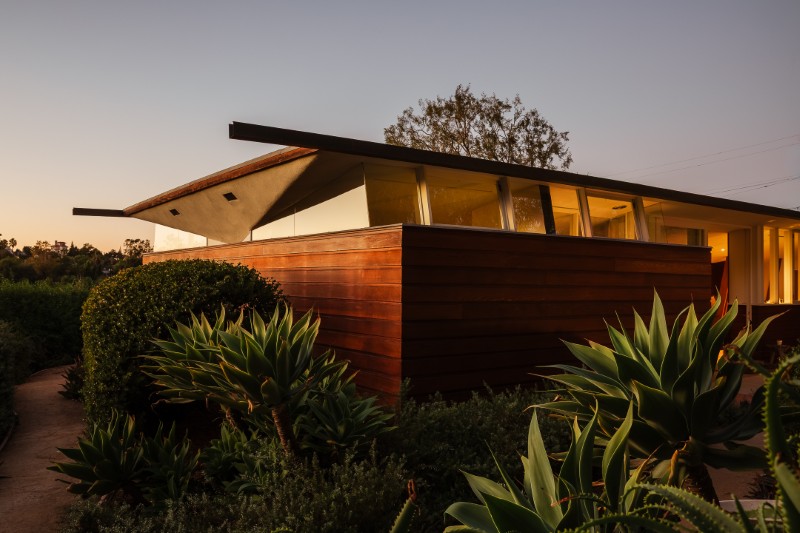
- Restored redwood siding, stripped back to its original board-and-batten expression
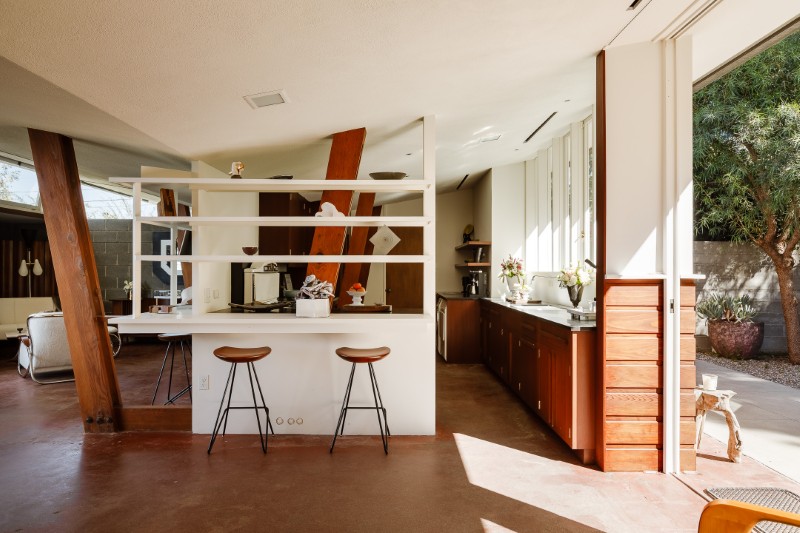
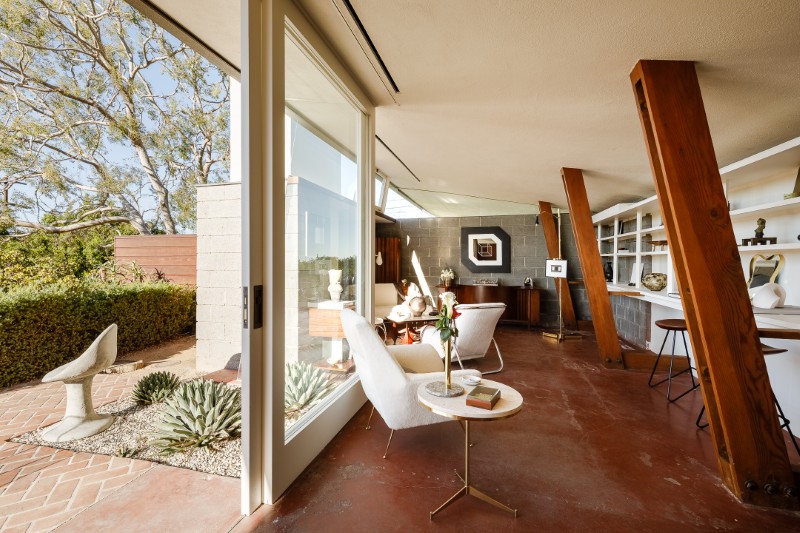
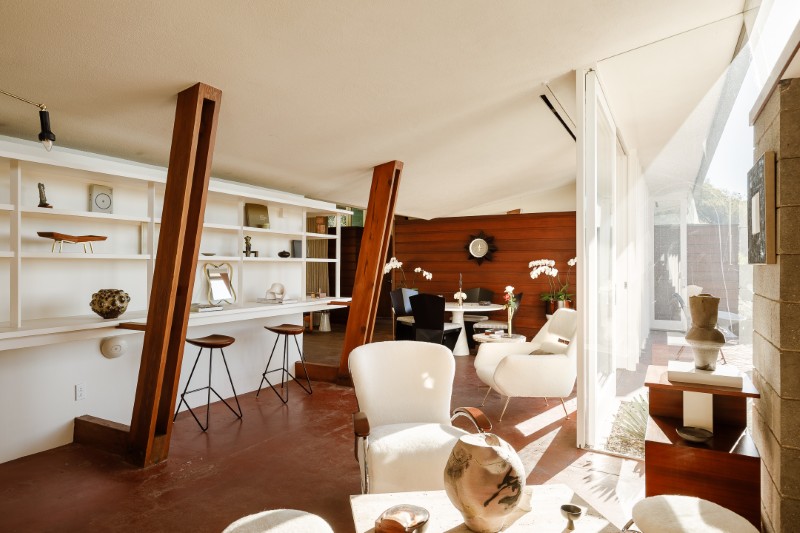
- Seven pairs of Douglas fir timbers, forming the home’s distinctive triangular structural spine
- Cherokee red concrete floors, preserved rather than replaced
These efforts reestablished the home’s architectural identity and brought its dramatic geometry back into focus.
A roofline that defines the entire experience

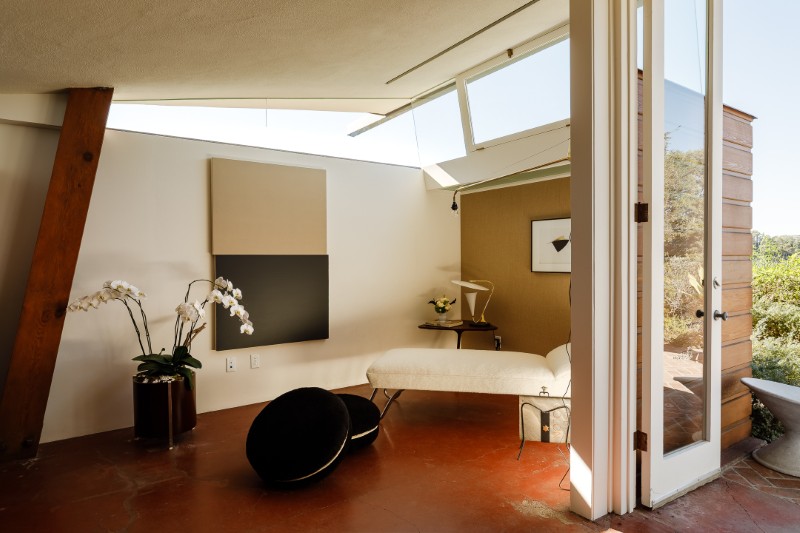
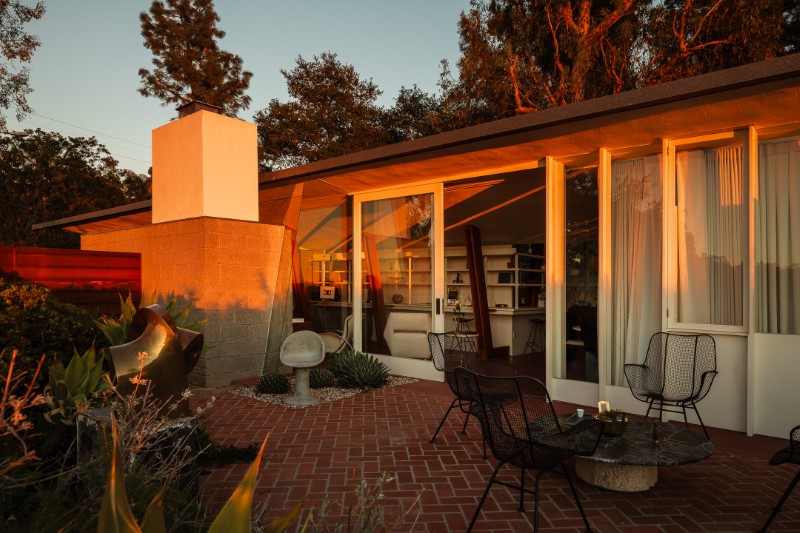
The most striking feature remains the upside-down triangular truss roof, supported by the angled Douglas fir timbers. The shape pulls the ceiling upward at the perimeter, creating a floating effect that opens the space to the landscape.
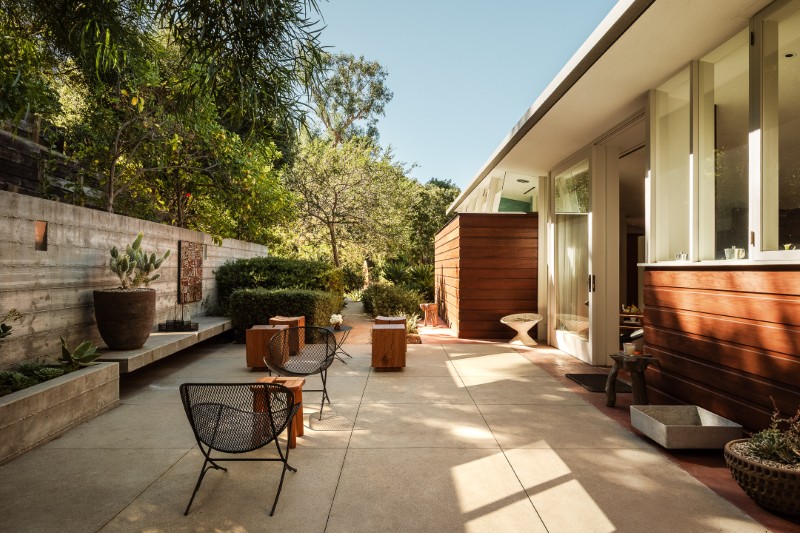
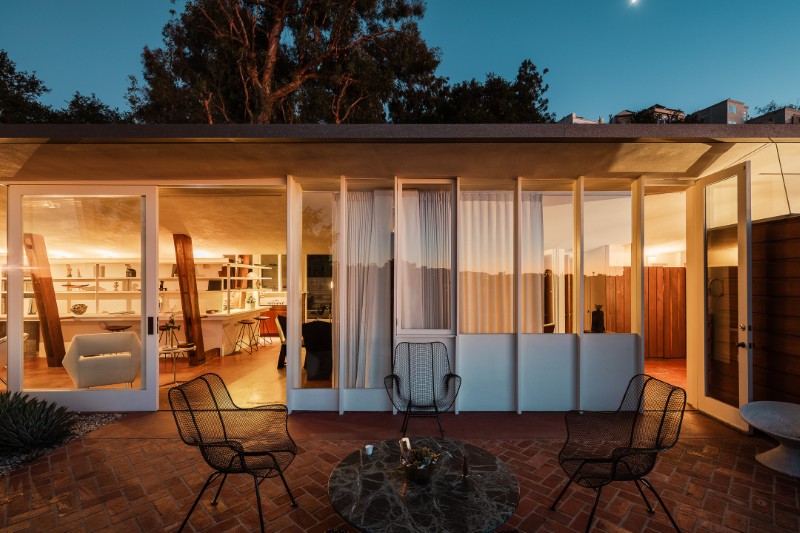
With so little structural need at the edges, glass walls and sliding doors form much of the perimeter, merging indoor space with the canyon surroundings. This kind of structural experimentation — light at the edges, mass at the center — foreshadows much of Lautner’s later work.
Contemporary updates that stay respectfully quiet
While the restoration focused on accuracy, the home still needed to function in the present. Bestor introduced contemporary finishes only where required, and always with restraint.
The kitchen and baths received the most significant updates, with materials chosen to harmonize rather than compete. Black phenolic resin countertops, hand-made ceramic tile, and modern built-in appliances sit discreetly against the restored mid-century surfaces.
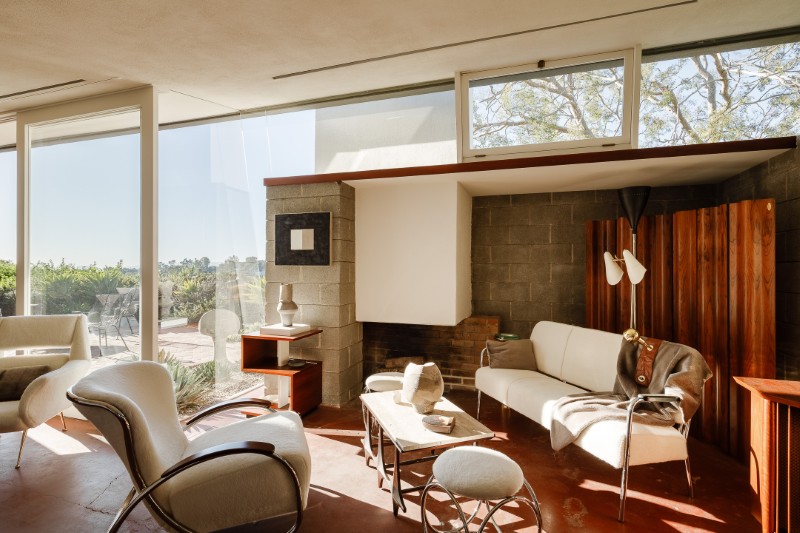
These touches ensure livability while allowing Lautner’s architectural voice to remain dominant.

Panoramic views across Echo Park and beyond
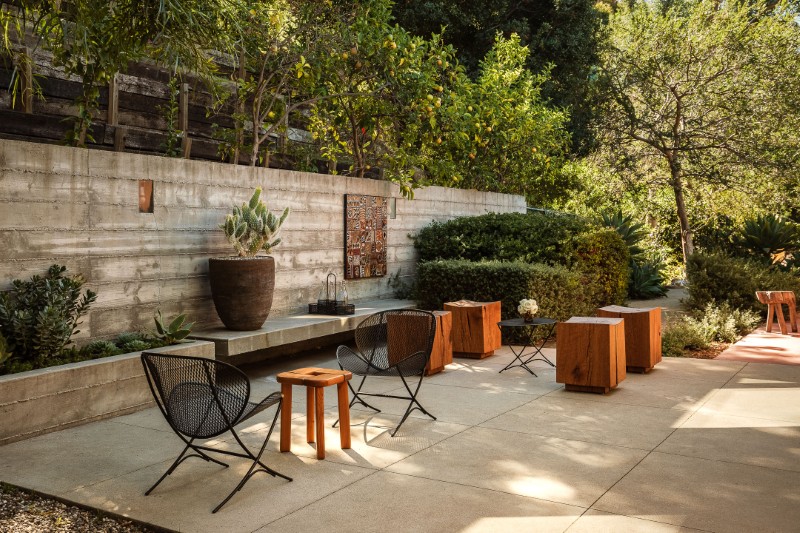
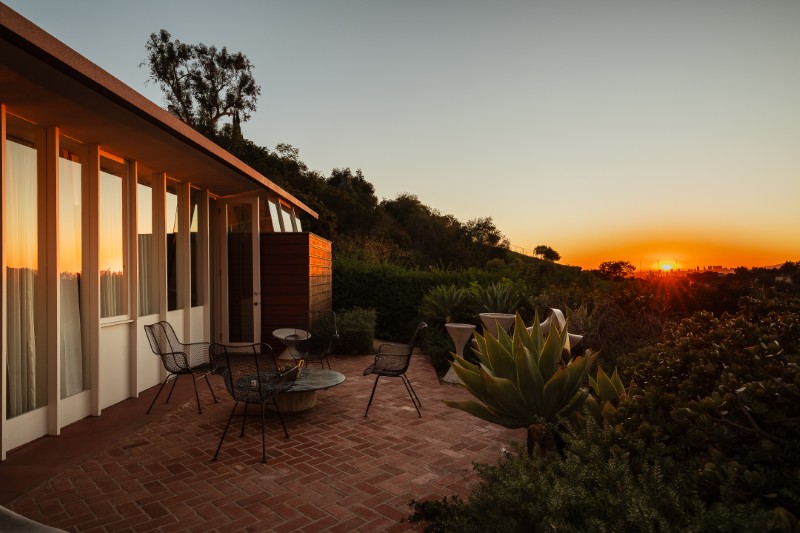
Unusual for a home of this size, the residence spans more than one-third of an acre in the hills of Echo Park. The site gives it sweeping views down green canyons and out toward the Pacific Ocean in Santa Monica.
The home’s geometry and glazing take full advantage of the vantage point, allowing natural light and long sightlines to define much of the interior experience.
A protected piece of architectural history
The home carries the designation of Los Angeles Historic-Cultural Monument No. 1111, cementing its status as a significant piece of the city’s architectural fabric.
Turk further secured a recorded conservation easement with the LA Conservancy, meaning the home’s interior and exterior architecture are permanently protected. Future owners inherit not just the home but its responsibility and legacy.
Depending on the new owner’s plans, the home may also qualify for a Mills Act application, potentially offering substantial property tax savings while supporting continued preservation.
An award-winning restoration with national recognition
The painstaking work paid off. In 2018, the project received the LA Conservancy Preservation Award, celebrating the accuracy and depth of the rehabilitation. The New York Times profiled the property as the resurrection of “the long-lost Lautner,” cementing its position as one of the most compelling architectural rediscoveries in California.
Now, for the first time since its revival, the home becomes available to a new steward — someone who wants not just a residence but a true piece of Los Angeles architectural history.
More stories
Inside Richard Neutra’s only Case Study home — with ties to The Simpsons and a global fashion empire
Inside the Lechner House, a brilliantly restored piece of L.A. design history
Lloyd Wright-designed house in Glendale channels ancient Mayan temples
The post Fashion designer Trina Turk lists “long-lost” John Lautner home in L.A.’s Echo Park appeared first on Fancy Pants Homes.

 English