


Pasadena has an unusually deep bench of architectural landmarks, but only one of its homes carries the name of John Lautner.
The legendary California architect behind such fantastical creations as the Chemosphere and Sheats-Goldstein Residence designed just one house in Pasadena: the Dahlstrom House, an intimate 1949 residence that predates many of the gravity-defying buildings for which he would eventually become famous.
Now, that house is on the market for $2.675 million.
Located at 780 Laguna Road, the two-bedroom, two-bath residence spans just under 1,900 square feet and has survived its first 77 years in remarkably intact condition. Robert Moore of Compass holds the listing.
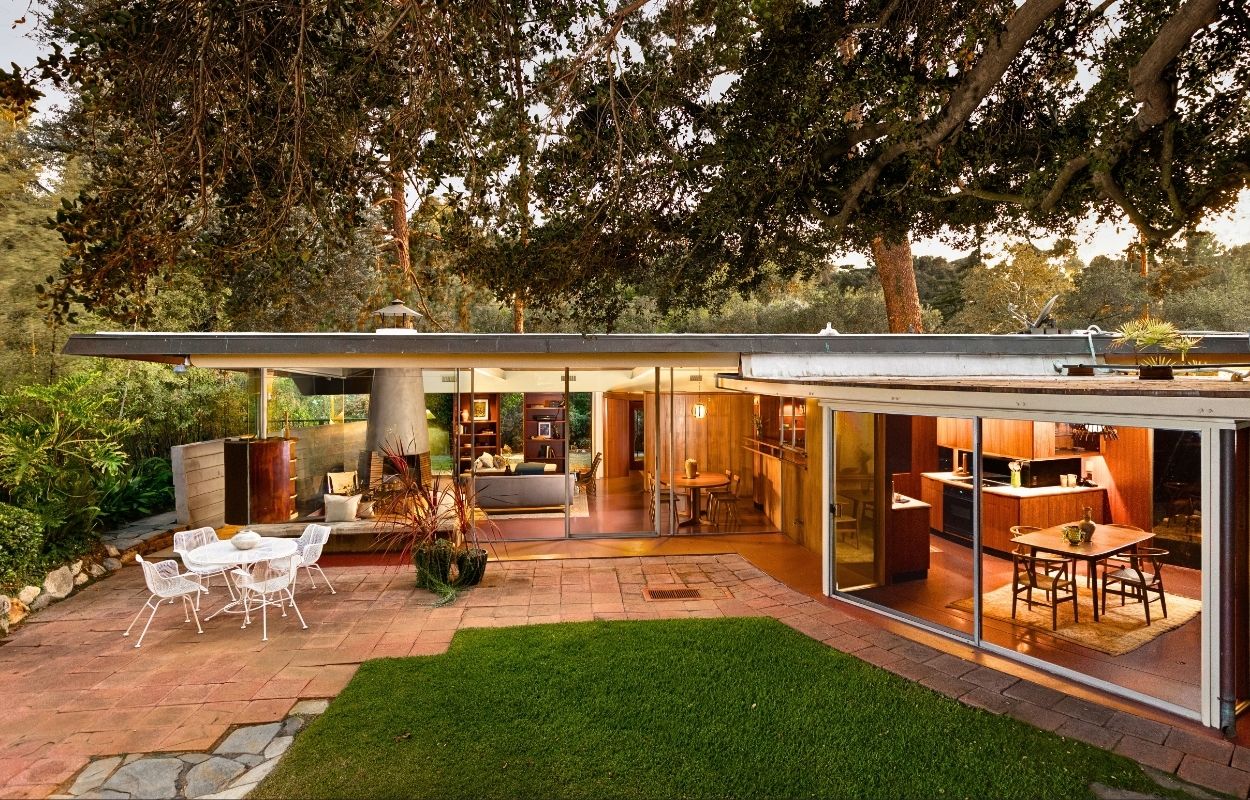
The Dahlstrom House dates to an early chapter in Lautner’s independent career.
Before establishing himself as one of Southern California’s great architectural individualists, he spent years working with Frank Lloyd Wright, joining the first group of apprentices at Taliesin in the 1930s.
By the time the Dahlstrom House was completed in 1949, Lautner was beginning to develop an architectural language distinctly his own — one that rejected conventional boxes in favor of unusual geometries, dramatic structural ideas and buildings shaped around their surroundings.
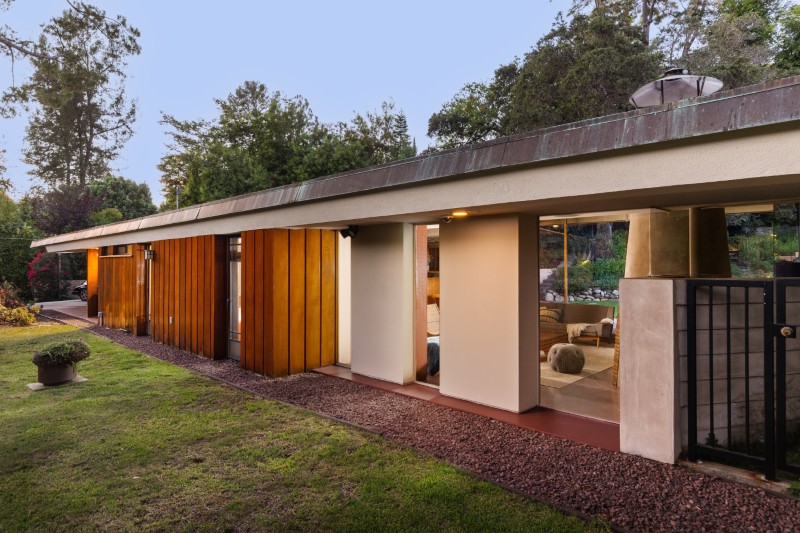
All three are already evident here.
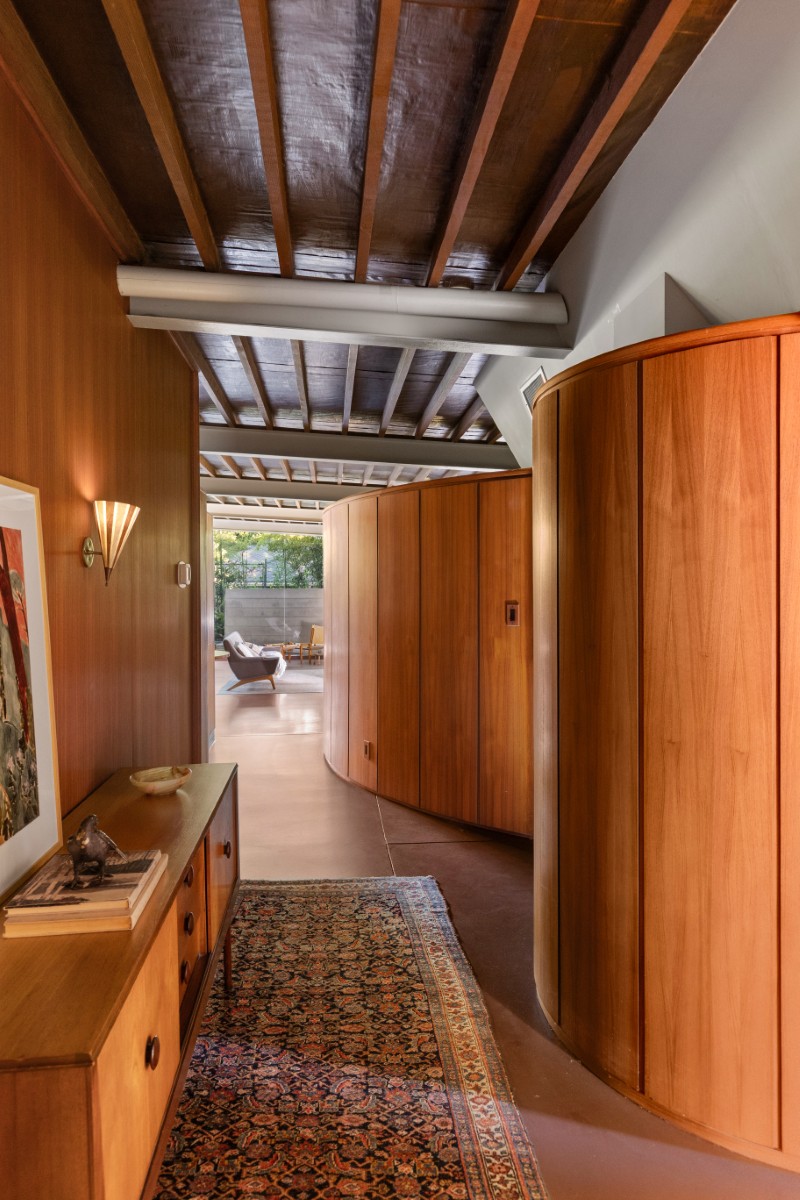
The experience begins with a wood-clad foyer that funnels into a hallway lined with curving wood paneling. Rather than revealing the entire house immediately, the passage gradually leads into the living room, where the architecture suddenly opens up.
Overhead, a cantilevered steel ceiling appears to float above walls of glass, while a cylindrical concrete fireplace anchors the room.
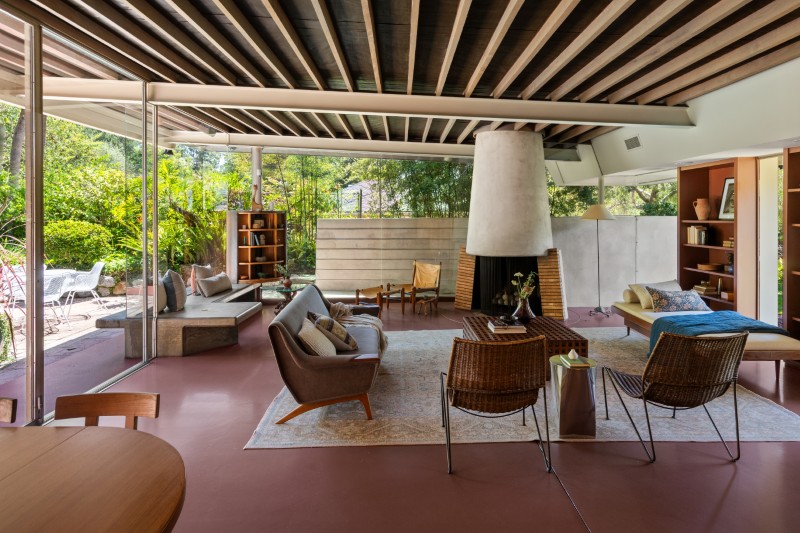
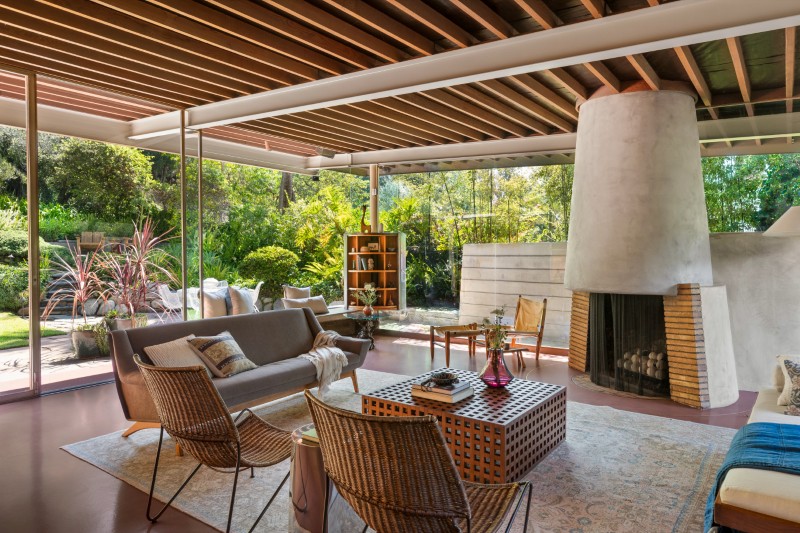
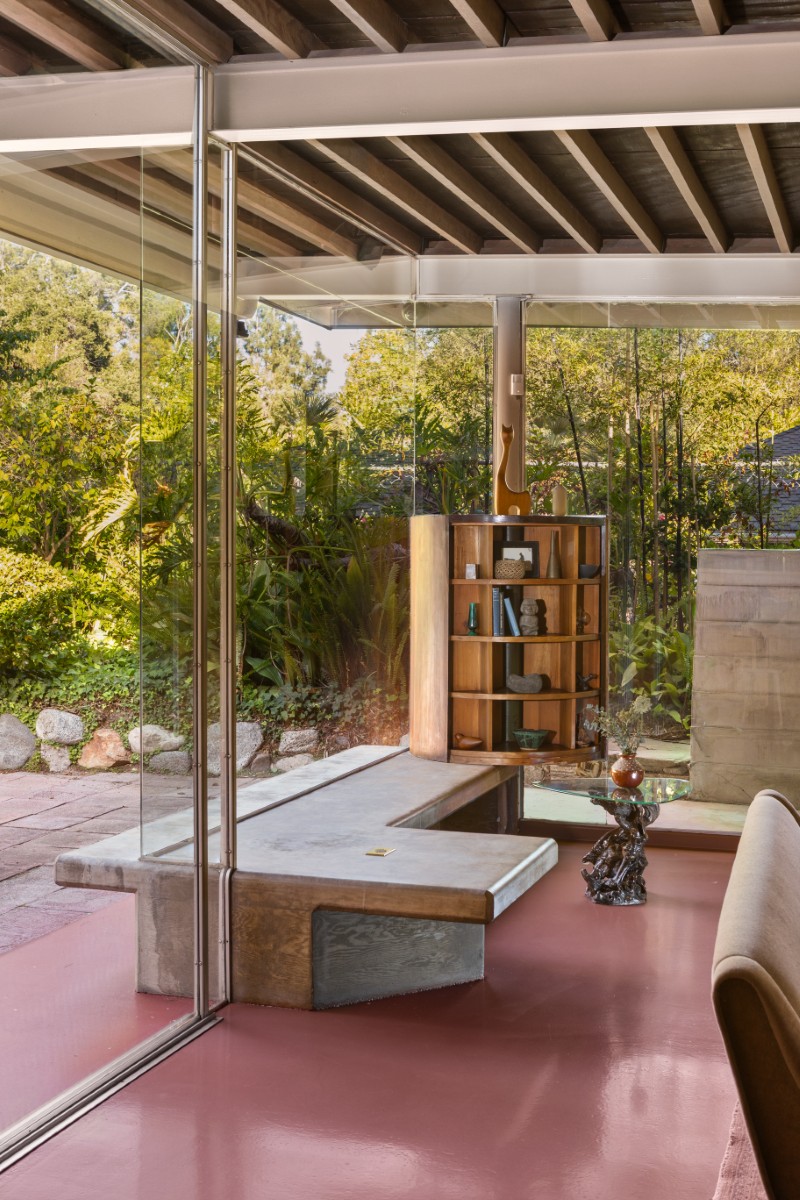
That circular geometry isn’t confined to the fireplace.
A cylindrical built-in bookshelf occupies a corner of the glass wall, positioned behind a rounded concrete bench that appears to pass directly through the glazing.
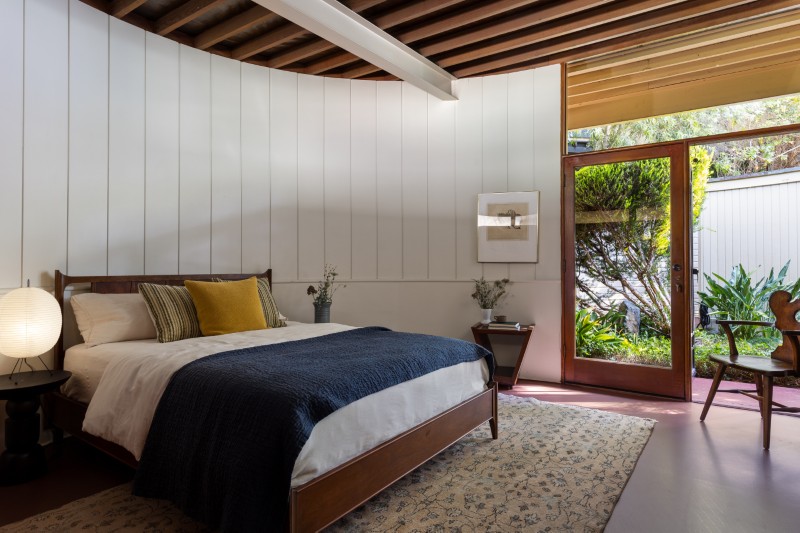
Curved walls continue into the primary bedroom, which takes on a semicircular shape created partly by the wood-paneled hallway.
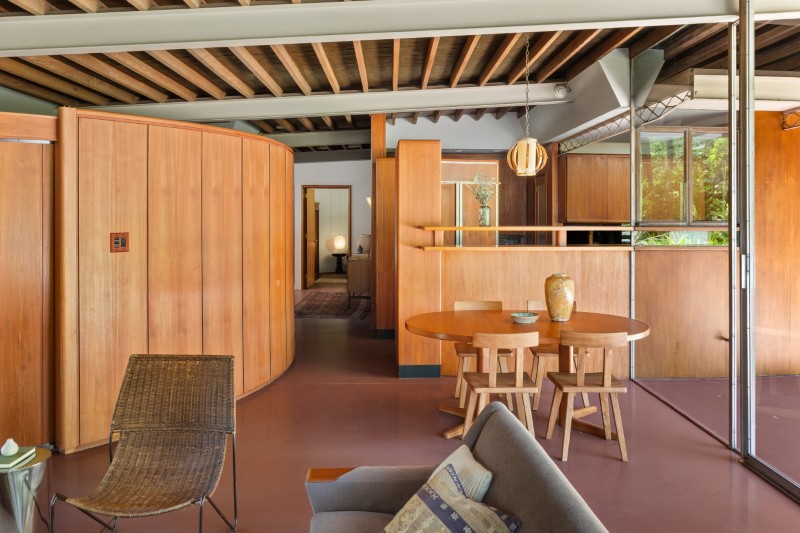
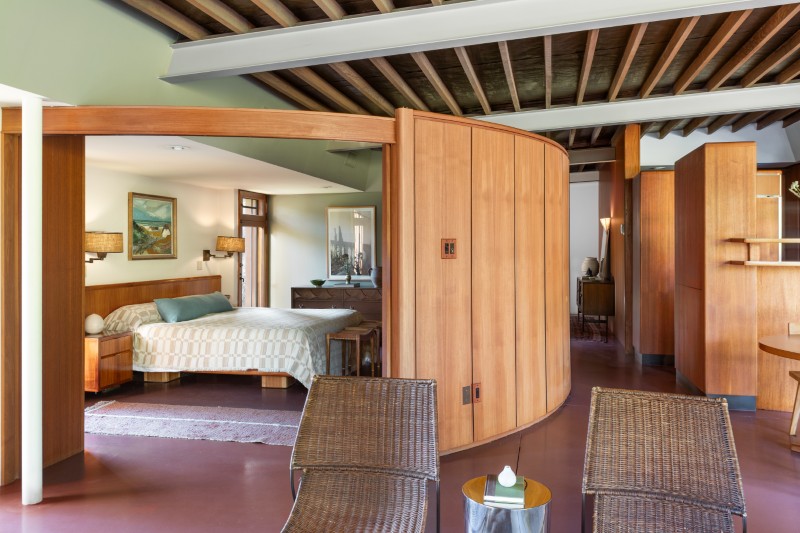
Then there’s the bedroom wall itself.
It slides open directly to the living room, allowing the primary suite to borrow views of the fireplace and gardens and making the home’s compact footprint feel considerably more fluid.
It’s an early example of an idea that would become fundamental to Lautner’s work: rooms weren’t necessarily meant to function as isolated boxes. Spaces could shift, overlap and respond to one another.
The same thinking extends outdoors.
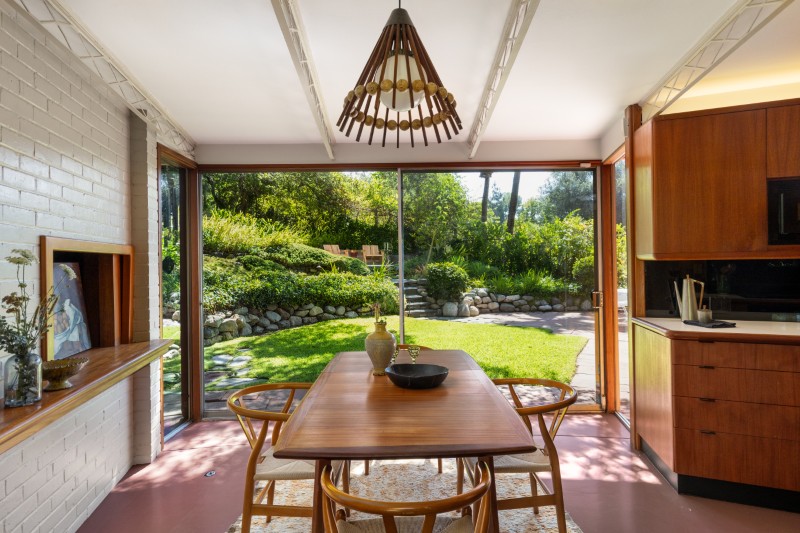
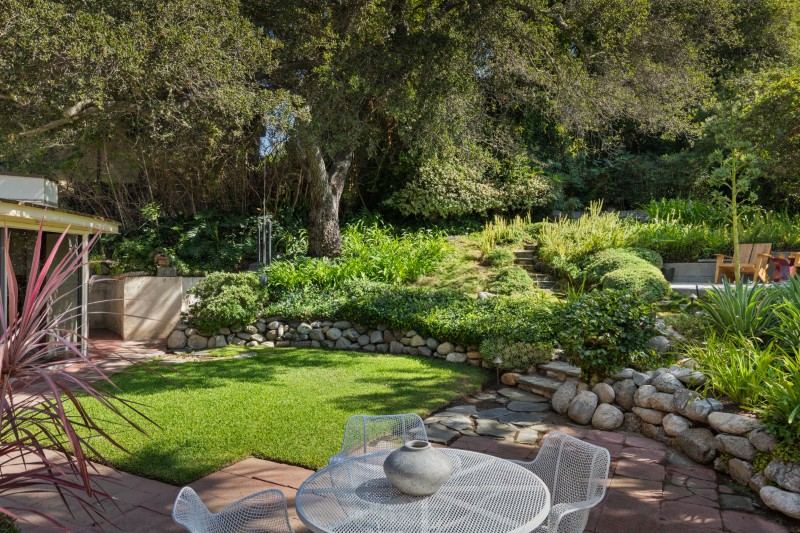
Large expanses of glass maintain a visual connection with the landscaping, while much of the house has direct access to private exterior spaces.
Japanese-inspired gardens provide privacy from Laguna Road, with mature plantings surrounding the residence and a massive stone pine standing above the entrance.
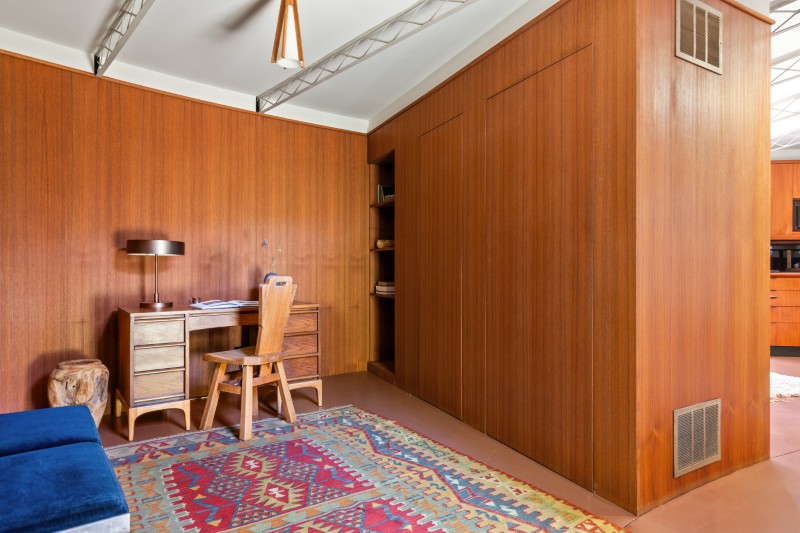
From the living room, the open floor plan continues toward a generously sized kitchen and a teak-walled office beyond.
And despite the architectural experimentation, the house includes some surprisingly practical concessions for a residence built in the late 1940s.
Storage is plentiful throughout, an amenity not always associated with architecturally significant homes of the period.
Both bedrooms have en suite bathrooms, and the kitchen is substantial enough to support everyday use rather than functioning as an undersized remnant of another era.
That livability is particularly noteworthy given how little the house appears to have strayed from its original architectural identity.
Instead of being comprehensively remodeled to follow successive generations of design trends, the Dahlstrom House retains the wood, concrete, glass, built-ins and unusual geometries that made it distinctive in the first place.
Its relatively modest size also sets it apart from the monumental residences now most closely associated with Lautner.
Later commissions would send concrete roofs soaring over Los Angeles, perch houses dramatically above hillsides and turn swimming pools into architectural centerpieces. Here, the experimentation happens on a quieter scale.
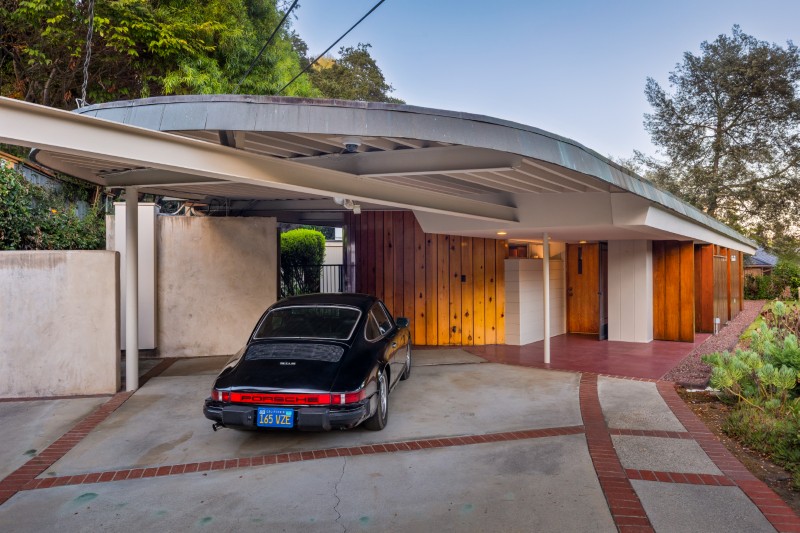
The curves are tighter. The materials are warmer. And rather than trying to dominate a dramatic site, the house seems content to disappear into its gardens.
That makes the Dahlstrom House an intriguing look at Lautner before some of his most famous architectural ideas became much bigger — literally.
More than seven decades after its completion, Pasadena’s only Lautner-designed residence remains remarkably close to the house the architect conceived in 1949.
The Dahlstrom House at 780 Laguna Road is listed for $2.675 million with Robert Moore of Compass.
More stories
The Chemosphere House and 6 other striking John Lautner-designed homes
Fashion designer Trina Turk lists “long-lost” John Lautner home in L.A.’s Echo Park
22 Frank Lloyd Wright homes you’ve probably never heard of
The post The only John Lautner-designed home in Pasadena hits the market for $2.675M appeared first on Fancy Pants Homes.

 English