


Some homes feel solid, considered, and quietly expensive the moment you step inside. There’s no single “wow” feature pulling focus, no oversized chandelier or dramatic statement wall.
And yet, everything seems to sit just right.
That impression usually comes from details that don’t announce themselves.
Real quality tends to show up in subtle ways: how things align, how materials meet, how a door closes, how light moves through a room.
These are the choices that rarely make it into listing descriptions, but they shape the entire experience of a home.
Once you start noticing them (or after you first tour homes for sale), it becomes much easier to tell the difference between something that’s simply expensive and something that’s genuinely well done.
Full-height doors that shift the proportions of a room
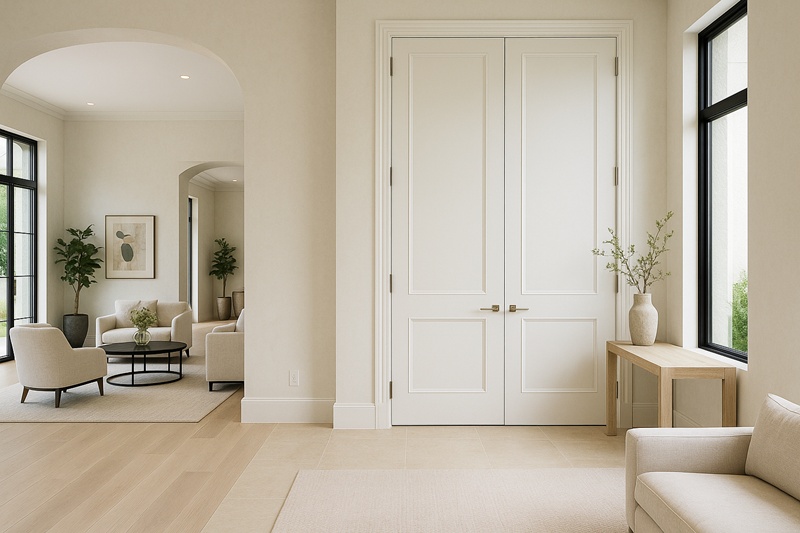
Standard doors tend to cap out at around 80 inches. Taller doors (often 8 feet or more) unmistakably change how a space feels.
They draw the eye upward, emphasize ceiling height, and give rooms a more vertical, balanced proportion. It’s a subtle adjustment, but one that immediately elevates the overall look.
Flush baseboards that create clean, uninterrupted lines
Instead of protruding trim, flush baseboards sit level with the wall.
The result is a cleaner, more modern transition between surfaces. It removes visual clutter and allows the architecture to feel more intentional, especially in contemporary spaces.
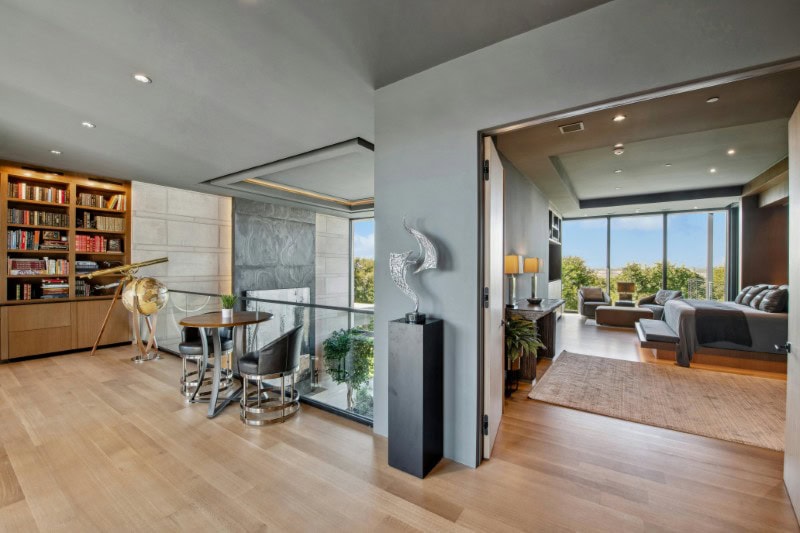
Consistent flooring that runs throughout the home
Switching materials from room to room can break visual flow.
Higher-quality homes often use a single flooring material across large areas, creating continuity and making the space feel larger and more cohesive.
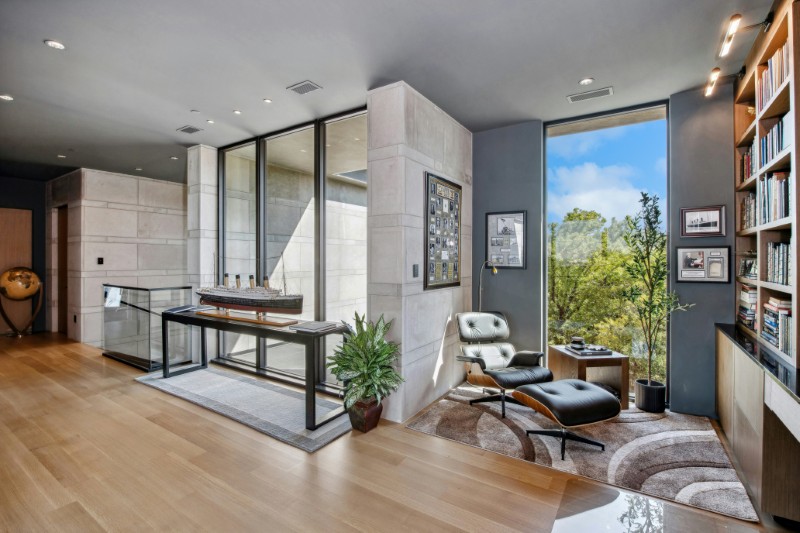
Even transitions between rooms become less noticeable.
Cabinetry that reaches the ceiling
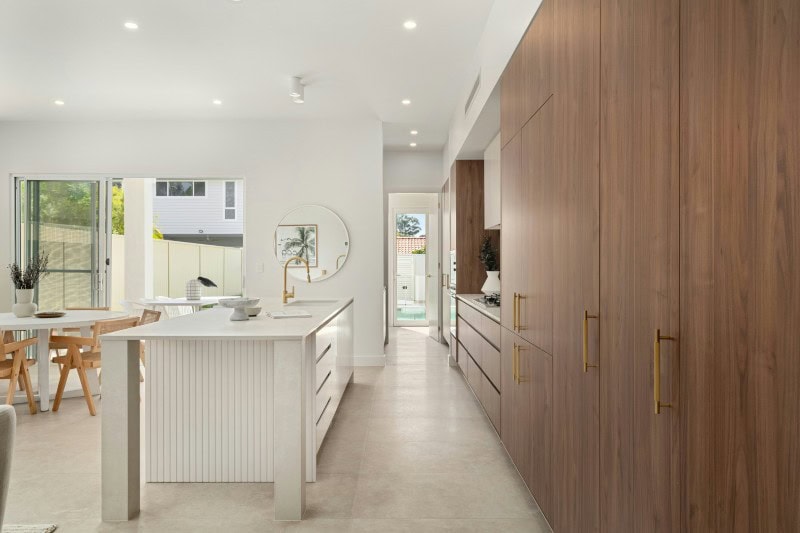
Upper cabinets that stop short of the ceiling tend to leave an awkward gap.
Bringing cabinetry all the way up creates a more finished look. It also emphasizes height and eliminates the need for filler space that often collects dust or visual clutter.
Solid-core doors with real weight
It’s something you feel more than see.
Solid-core doors have a noticeable heft when opened and closed, along with better sound insulation.
Compared to hollow doors, they immediately signal a higher level of construction quality.
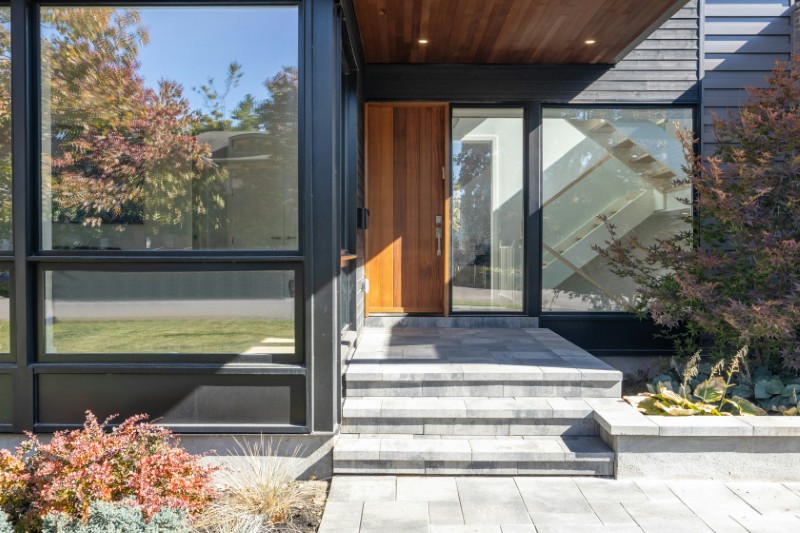
Hardware that feels substantial in the hand
Handles, knobs, and pulls are small elements, but they’re used constantly.
Heavier, well-made hardware adds a sense of durability and intention. Lightweight or flimsy pieces, even if they look good, tend to undermine the overall feel.
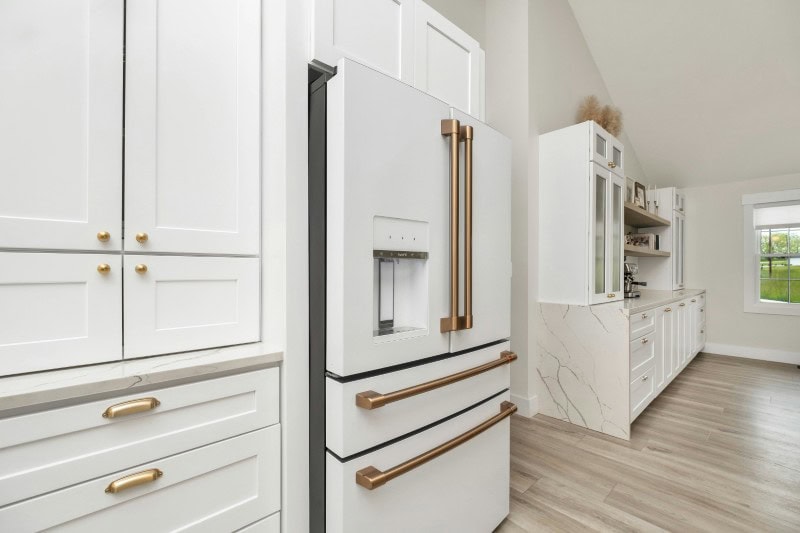
Stone slabs with visible variation, not repetition
Natural materials rarely look perfectly uniform.
Stone with depth, veining, and variation tends to feel more authentic than highly repetitive patterns. Even when subtle, that irregularity signals that the material is real.
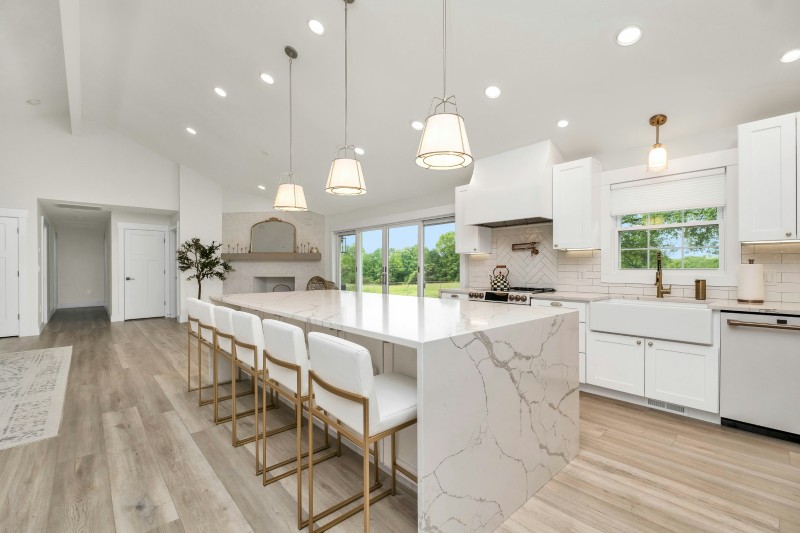
Thoughtful alignment across every surface
This is one of the clearest indicators of quality (and one of the easiest to miss, honestly).
Edges line up. Cabinet fronts align. Tile grout lines carry cleanly across surfaces. Nothing feels even slightly off.
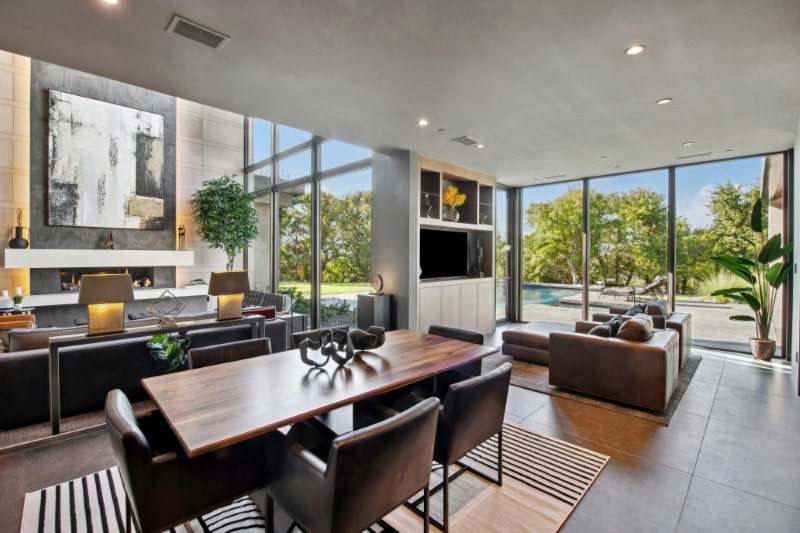
That level of precision takes planning, and it shows.
Lighting that’s layered, not singular
A single overhead fixture rarely does a space justice.
Homes that feel well-designed tend to combine multiple light sources: ambient lighting for overall brightness, task lighting for function, and accent lighting for depth.
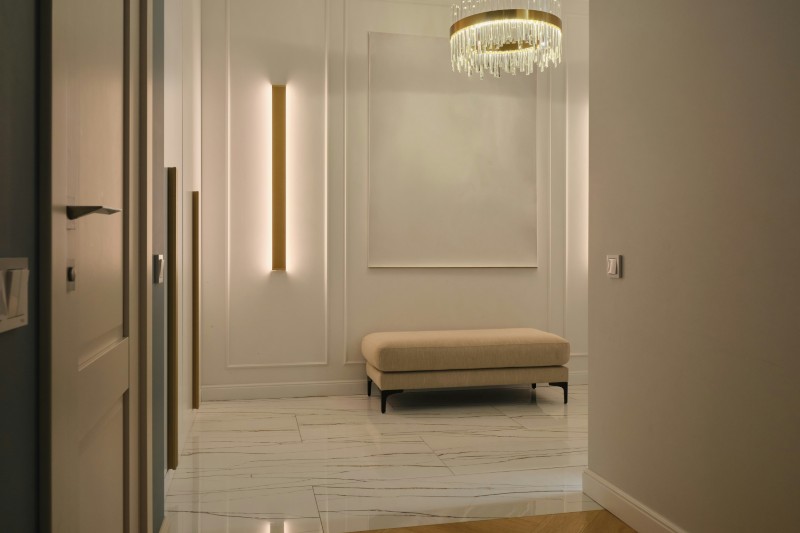
The result is a more balanced and comfortable environment.
Windows placed for symmetry and balance
It’s not just about how big the windows are. It’s about where they sit.
Well-placed windows create rhythm and symmetry, both inside and out. They frame views, distribute light evenly, and help the architecture feel more resolved.
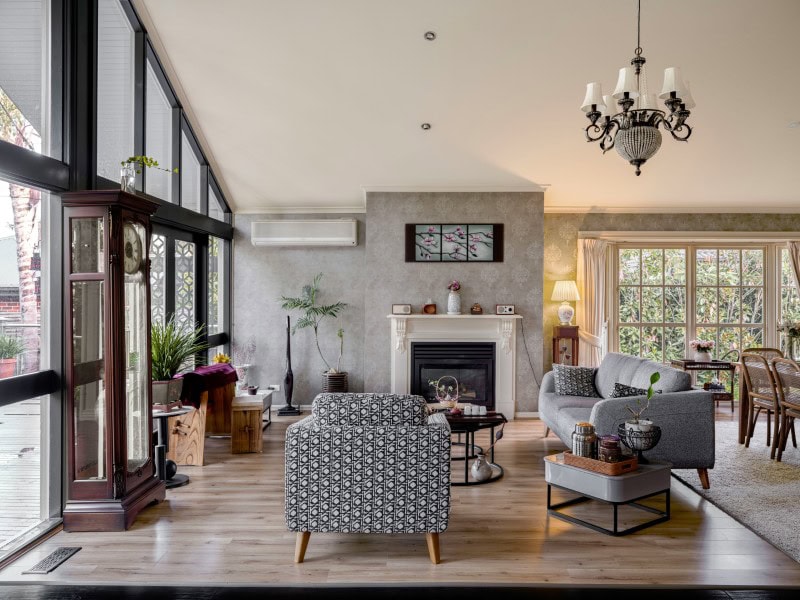
Minimal transitions between materials
Every time materials change, there’s an opportunity for disruption.
High-quality homes tend to reduce unnecessary transitions or handle them cleanly when they’re needed. The fewer visual interruptions, the more seamless the space feels.
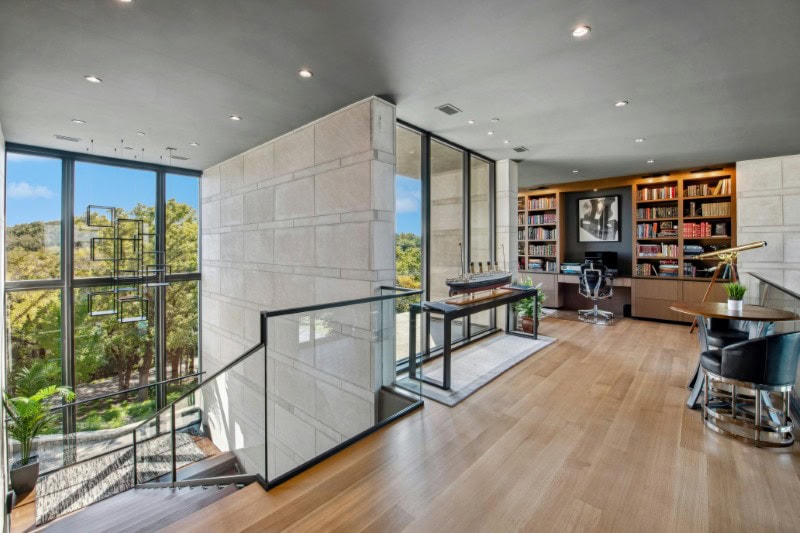
Built-ins that look like part of the architecture
Shelving, storage, and cabinetry that feel integrated — not added later — make a world of a difference.
They fit the proportions of the room, align with surrounding elements, and often use the same materials. The effect is subtle but cohesive.
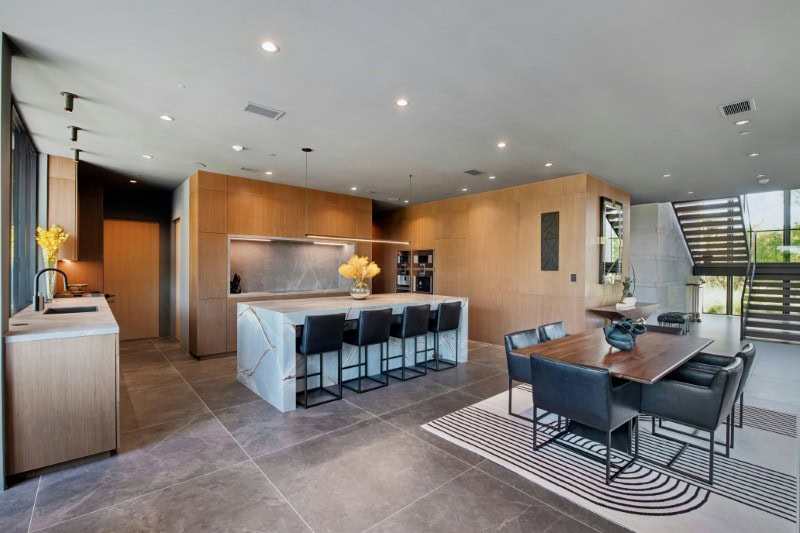
Walls that actually look flat
It sounds basic, but it’s not always a given.
Smooth, well-finished walls without visible seams, uneven patches, or texture inconsistencies create a cleaner backdrop for everything else. It’s one of those details that disappears when done well.
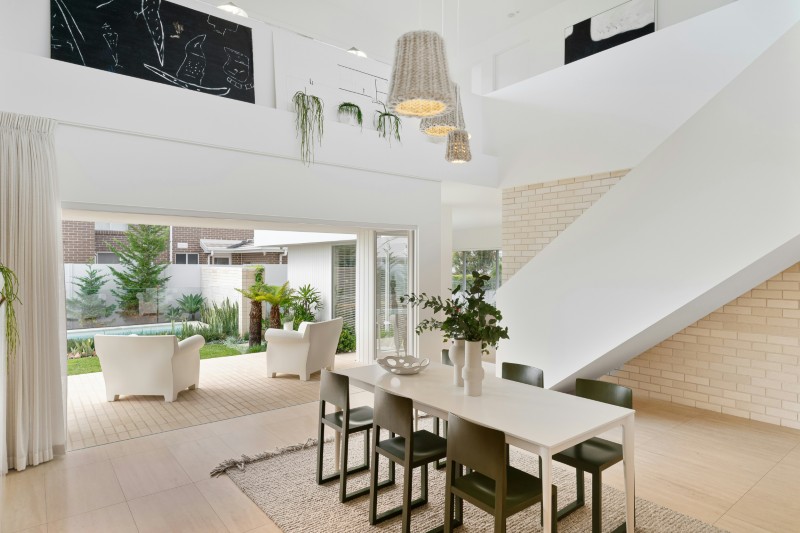
Doors and drawers that close quietly and smoothly
Soft-close mechanisms aren’t new, but their execution matters.
Drawers that glide without resistance and doors that shut cleanly contribute to a sense of precision. Small moments of interaction like this shape how a home feels over time.
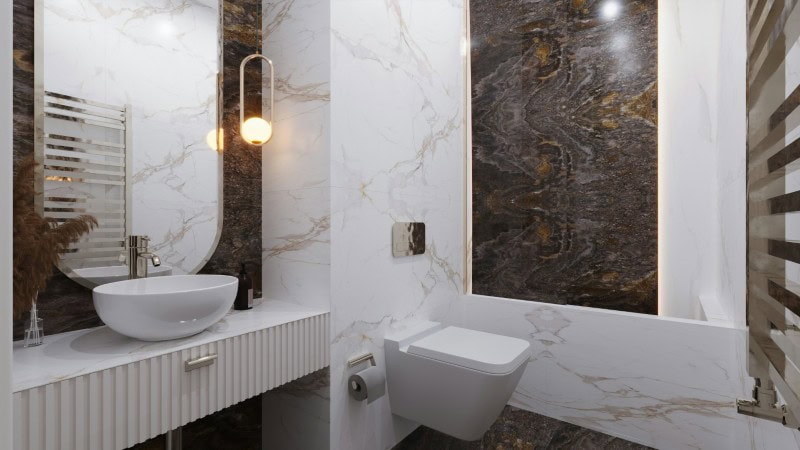
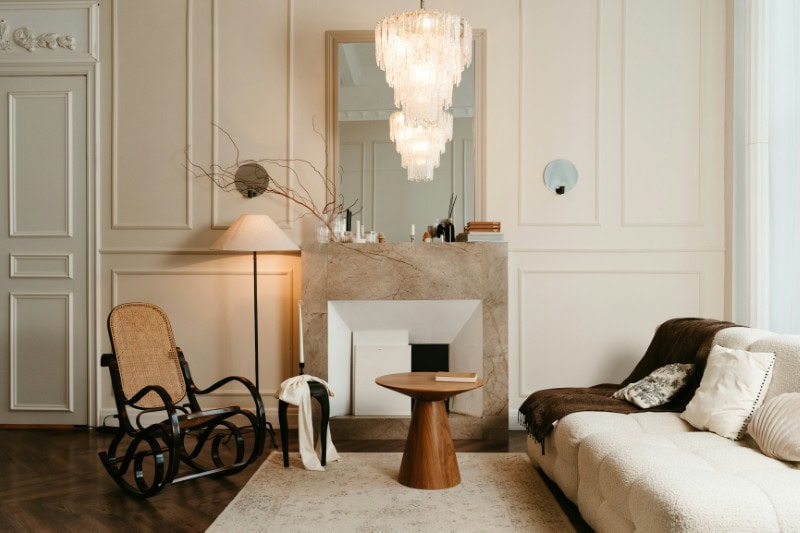
Trim, millwork, or paneling that feel intentional, not decorative
Trim isn’t just there to fill space.
In higher-quality homes, millwork is proportionate, consistent, and aligned with the overall design. It supports the architecture rather than competing with it.
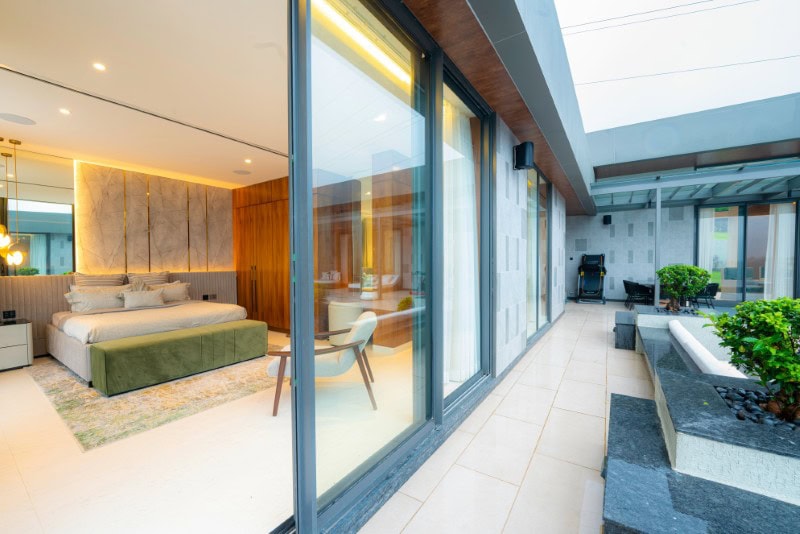
Outdoor spaces that connect seamlessly to the interior
The transition between inside and outside can either feel abrupt or continuous.
Aligned flooring levels, wide openings, and consistent materials help outdoor areas feel like an extension of the home, rather than a separate zone.
A sense of restraint that ties everything together
Perhaps the most defining characteristic of real quality isn’t any single detail, it’s the absence of excess.
There’s a clear point of view, a limited palette, and a sense that every decision has been edited rather than added. Nothing feels like it’s trying too hard.
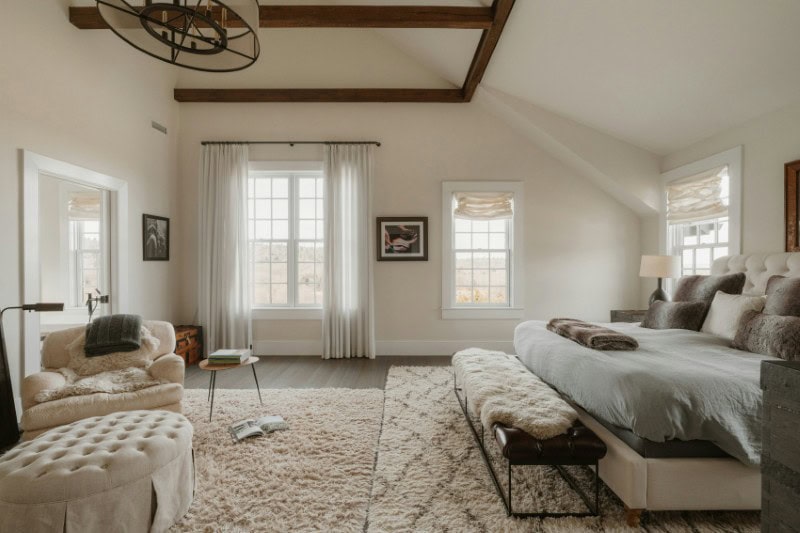
That restraint is what allows all the other details to come through.
What all of these details add up to
Individually, none of these choices are dramatic. Many of them go unnoticed at first glance.
But together, they create a home that feels composed, balanced, and quietly confident. A place where the quality isn’t shouted, it’s built into the experience.
And once you’ve seen it, it’s hard to mistake it for anything else.
Больше историй
12 home upgrades that scream custom (not contractor special)
15 Luxury outdoor features that look simple but cost a fortune
16 Design features that make a house feel thoughtfully built
Пост 17 quiet design choices that signal real quality впервые появился на Дома с модными брюками.

 English