


Some houses are expensive. Some are beautiful. And then there are a select few that actually changed the way America builds, designs, and thinks about homes.
These are the mansions and iconic residences that introduced new ideas — open floor plans, indoor-outdoor living, minimalist design, modern materials, and bold architectural experiments that went on to influence everything from suburban homes to luxury estates.
From Frank Lloyd Wright masterpieces to glass-walled modern icons, these famous properties didn’t just look different — they reshaped American architecture.
Cantilevered over a waterfall, Frank Lloyd Wright rewrote the rules of modern living with Fallingwater
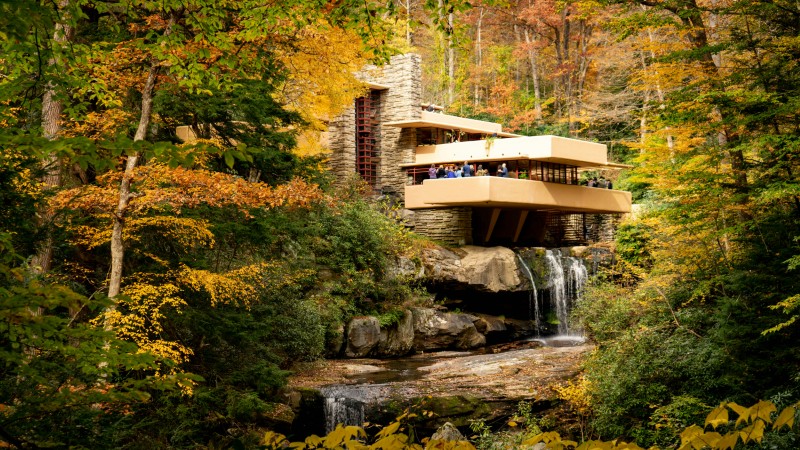
Built in 1935, Fallingwater became one of the most influential homes in the world almost overnight. Instead of placing the house near the waterfall for views, Wright stacked dramatic concrete terraces directly over the rushing water.
The result was a radical idea at the time — architecture as part of the landscape, not separate from it. The home’s flowing spaces, natural stone, and strong horizontal lines became a blueprint for modern organic design across the U.S.
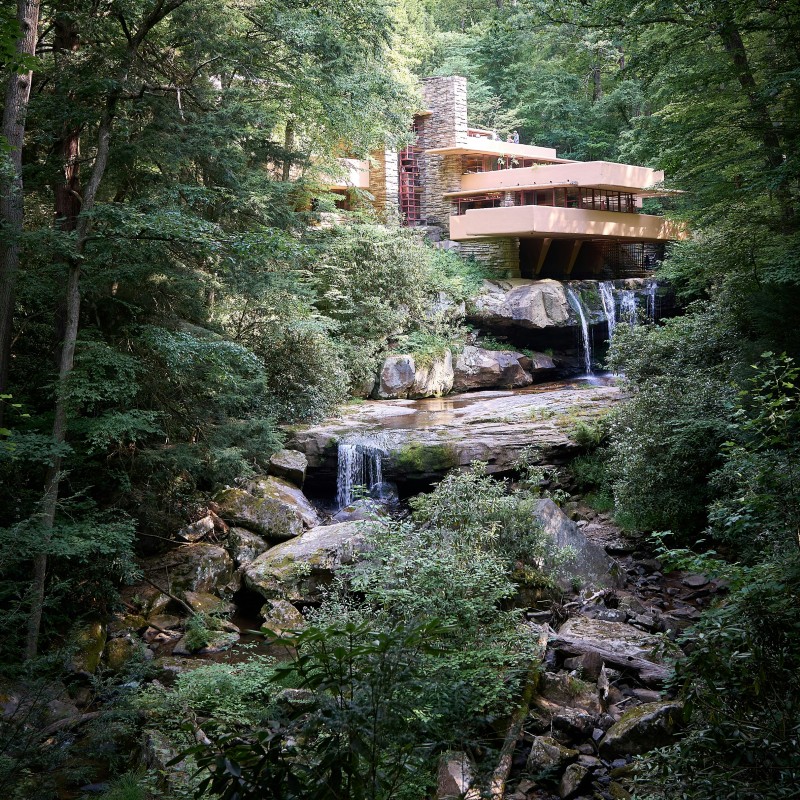
Even today, it’s considered the most famous house in America, and is not only a National Landmark, but has also been designated a UNESCO World Heritage Site status starting in 2019.
Set in southwestern Pennsylvania, Fallingwater is now a museum open to the public
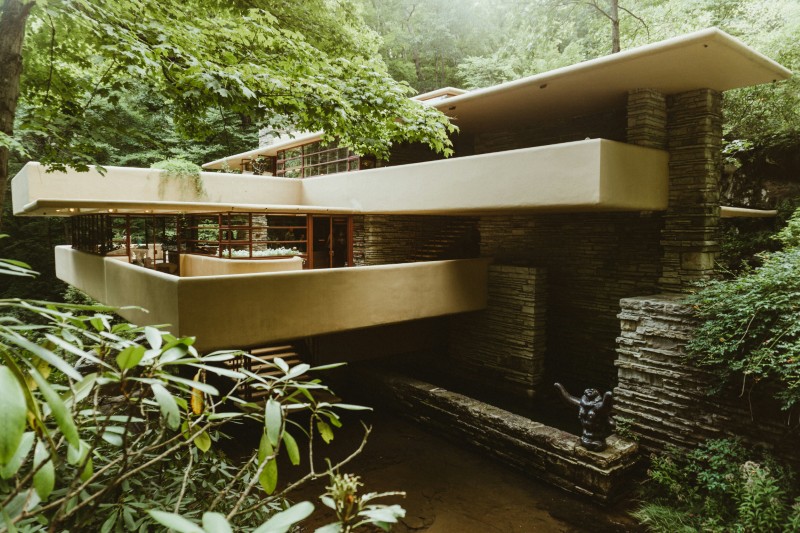
Built in rural southwestern Pennsylvania near Mill Run, Fallingwater was designed in the 1930s as a private weekend home for the Kaufmann family, owners of a Pittsburgh department store empire.
Today, it’s preserved as a museum and architectural landmark, drawing visitors from around the world who come to tour the house and its dramatic waterfall setting.
Floor-to-ceiling glass made modern minimalism mainstream at The Glass House
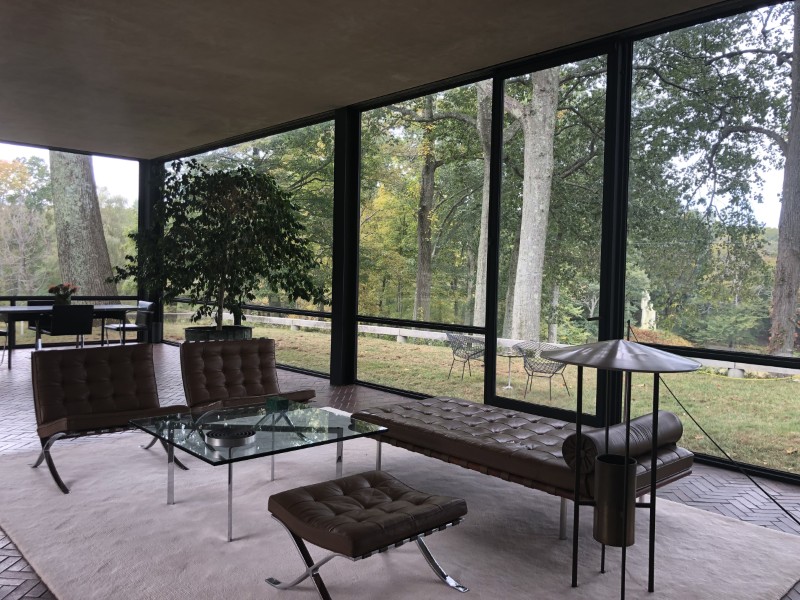
When architect Philip Johnson completed The Glass House in 1949, it shocked the architectural world.
With transparent walls on all sides, a wide-open interior, and almost no traditional rooms, it introduced radical simplicity to American residential design. There were no heavy walls, no formal layouts — just space, light, and clean lines.
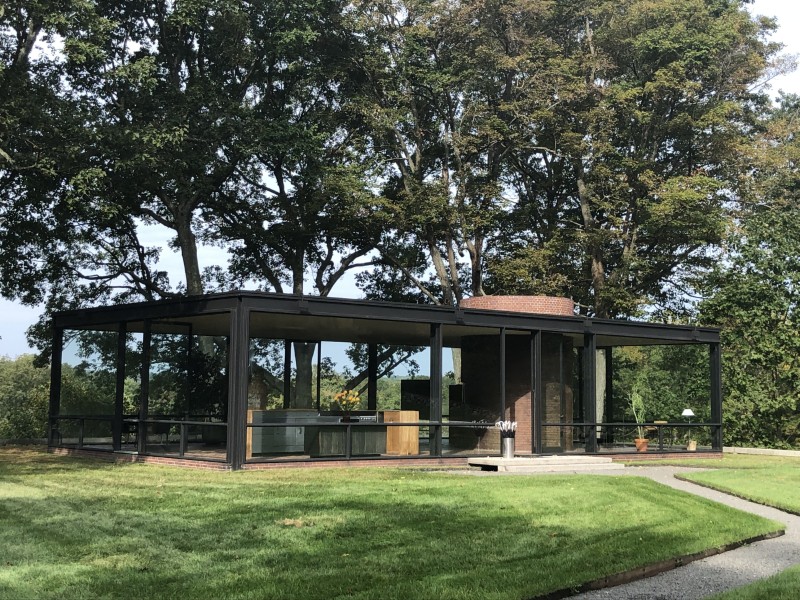
The home helped push modernism into the mainstream and influenced decades of minimalist houses, open floor plans, and glass-heavy architecture that followed.
The Glass House is now a public historic site in New Canaan, Connecticut
Located in New Canaan, Connecticut, The Glass House was architect Philip Johnson’s personal residence, completed in 1949 on a sprawling rural estate about an hour from New York City.
The property is no longer privately occupied and now operates as a historic site, with guided tours that showcase Johnson’s groundbreaking modernist vision.
The Arts and Crafts movement found its American masterpiece at Gamble House
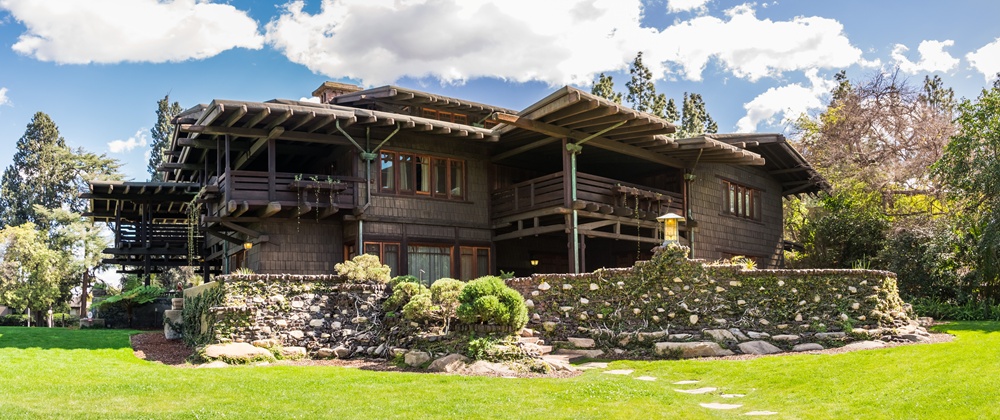
Completed in 1908, the Gamble House in California helped define the American Craftsman style.
Built with exposed beams, handcrafted woodwork, low-pitched roofs, and deep porches, it rejected the overly ornate Victorian homes that came before it. Instead, it celebrated natural materials, craftsmanship, and functional beauty.
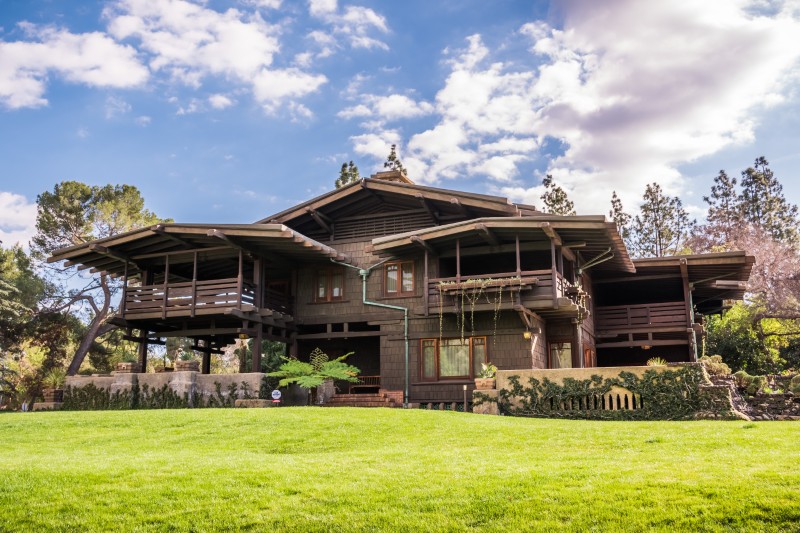
Its influence spread rapidly across California and the country, shaping everything from modest bungalows to upscale estates — many of which still echo its design principles today.
The Gamble House in Pasadena, California, is now open for tours
Sitting in a quiet residential neighborhood in Pasadena, the Gamble House was built in 1908 as a winter home for the Gamble family of Procter & Gamble fame.
While it was once a private mansion, it’s now owned by the City of Pasadena and operated as a museum, with public tours highlighting its craftsmanship and architectural influence.
Fun fact: this house is also a pop culture landmark
If the Gamble House looks familiar, that’s because it is (at least to us, millennials): it was used as the exterior of Dr. Emmett Brown’s mansion in the opening of Back to the Future.
In the film’s early scenes, the Gamble House stands in for Doc Brown’s lavish, old-family estate, the home where Marty skates up to deliver the famous time-machine video tapes. The production chose it because its grand Craftsman design instantly signaled “old money inventor genius” without needing explanation.

Inside scenes were filmed elsewhere, but the recognizable exterior is 100% the real Gamble House.
America’s love affair with midcentury modern living took off at Stahl House
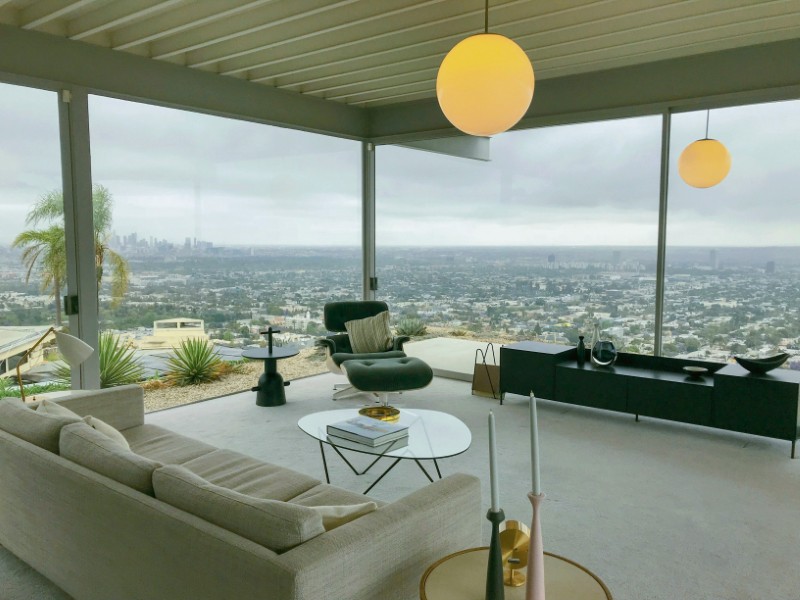
Perched high above Los Angeles and completed in 1960, the Stahl House became the ultimate symbol of midcentury modern design.
Its steel frame, glass walls, and open living spaces erased the boundary between indoors and outdoors. The home’s dramatic city views and minimalist style captured the postwar dream of modern California living.
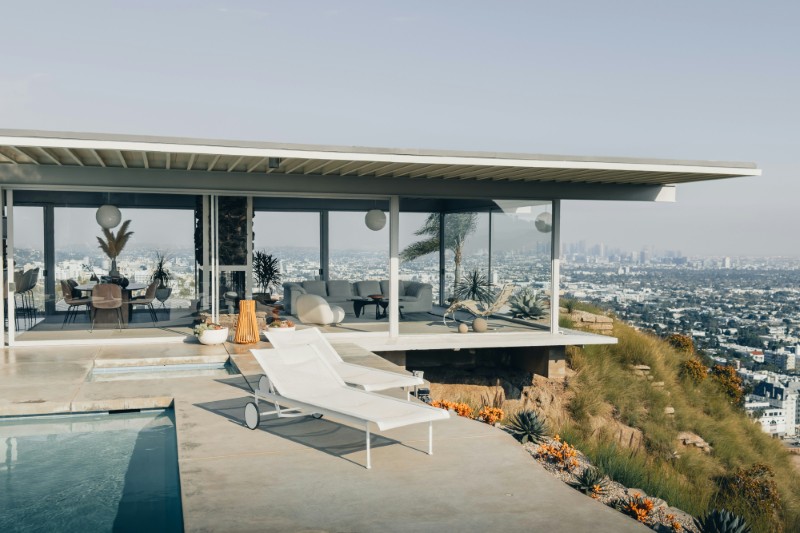
It helped popularize flat roofs, open layouts, and expansive windows — features that quickly spread through suburban America and luxury architecture alike.
Set in the Hollywood Hills in L.A., the Stahl House is privately owned
Perched in the Hollywood Hills above Los Angeles, the Stahl House was completed in 1960 as part of the Case Study House program exploring affordable modern living.
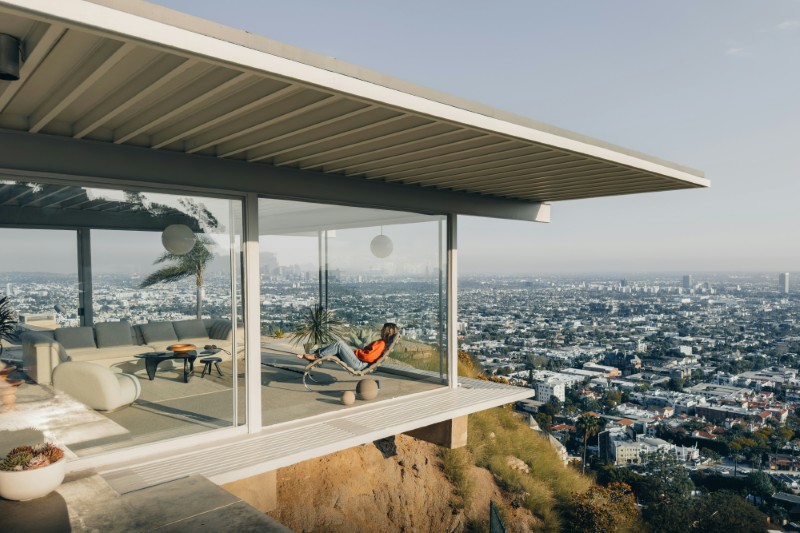
The home remains privately owned today, though architecture fans can tour it by reservation and attend special evening viewings overlooking the city skyline.
European grandeur met American ambition at Biltmore Estate
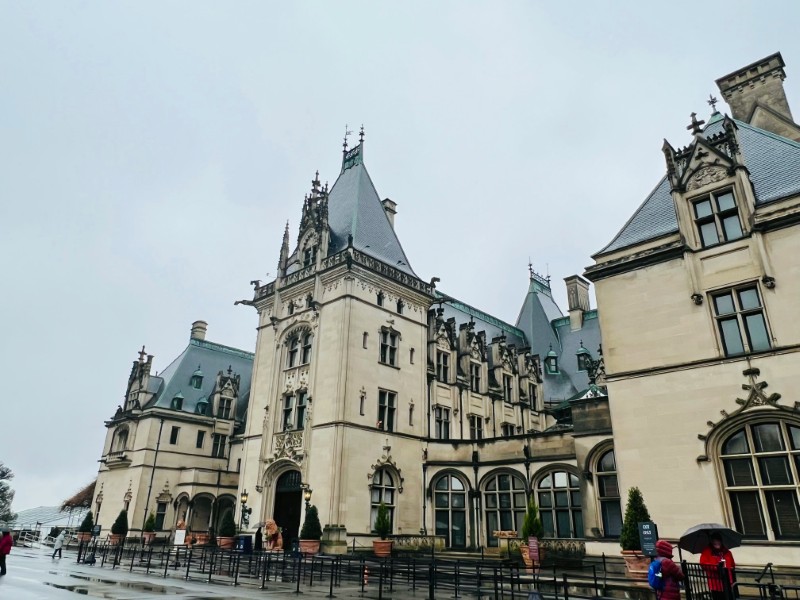
When George Vanderbilt built the Biltmore Estate in the 1890s, he wasn’t just creating a larger-than-life home for himself, he was introducing European château-style grandeur on a scale America had never seen.
With 250 rooms, soaring ceilings, and lavish stonework, the mansion established the blueprint for America’s Gilded Age estates. It showed just how massive, ornate, and architecturally ambitious private homes could become.
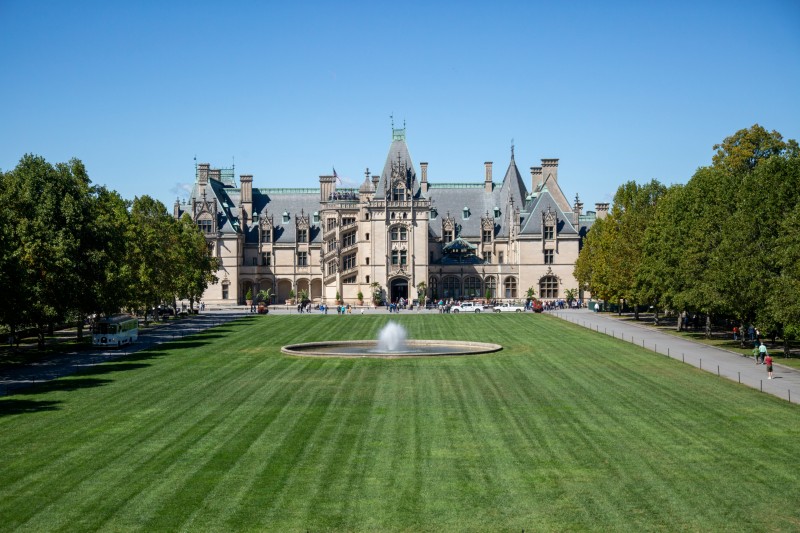
Its influence shaped generations of luxury mansions across the country.
The Biltmore is open to the public in Asheville, North Carolina
Located in Asheville, North Carolina, the Biltmore Estate was built in the late 1800s as George Vanderbilt’s massive private country home.
It’s no longer a residence and now operates as one of America’s most visited historic attractions, with tours of the mansion, gardens, and sprawling grounds.
And you’ve surely caught in on-screen too, as the iconic mansion was featured in several movies, including serving as Ritchie Ritch’s unforgettable house in the 1994 movie starring Macaulay Culkin.
Frank Lloyd Wright’s concrete-block experiment reshaped Los Angeles at Ennis House
Built in 1924, the Ennis House introduced Wright’s experimental “textile block” system — concrete blocks with intricate geometric patterns stacked like masonry fabric.
The design blended modern construction with ancient Mayan-inspired forms, creating something entirely new for American homes. It influenced later modular construction, decorative concrete design, and modernist experimentation across Southern California.
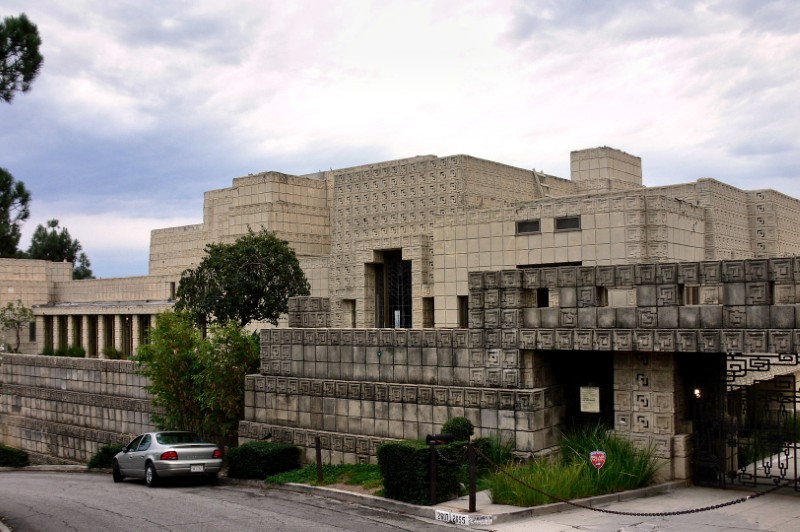
Also known as the Blade Runner House, the Los Angeles home is privately owned
The unique structure also became a favorite filming location, cementing its place in architectural pop culture.
Wight’s Ennis House was famously featured in the 1982 cult classic Бегущий по лезвию, where it served as Rick Deckard’s apartment building, playing a key role in achieving the striking visual effect the movie became known for.
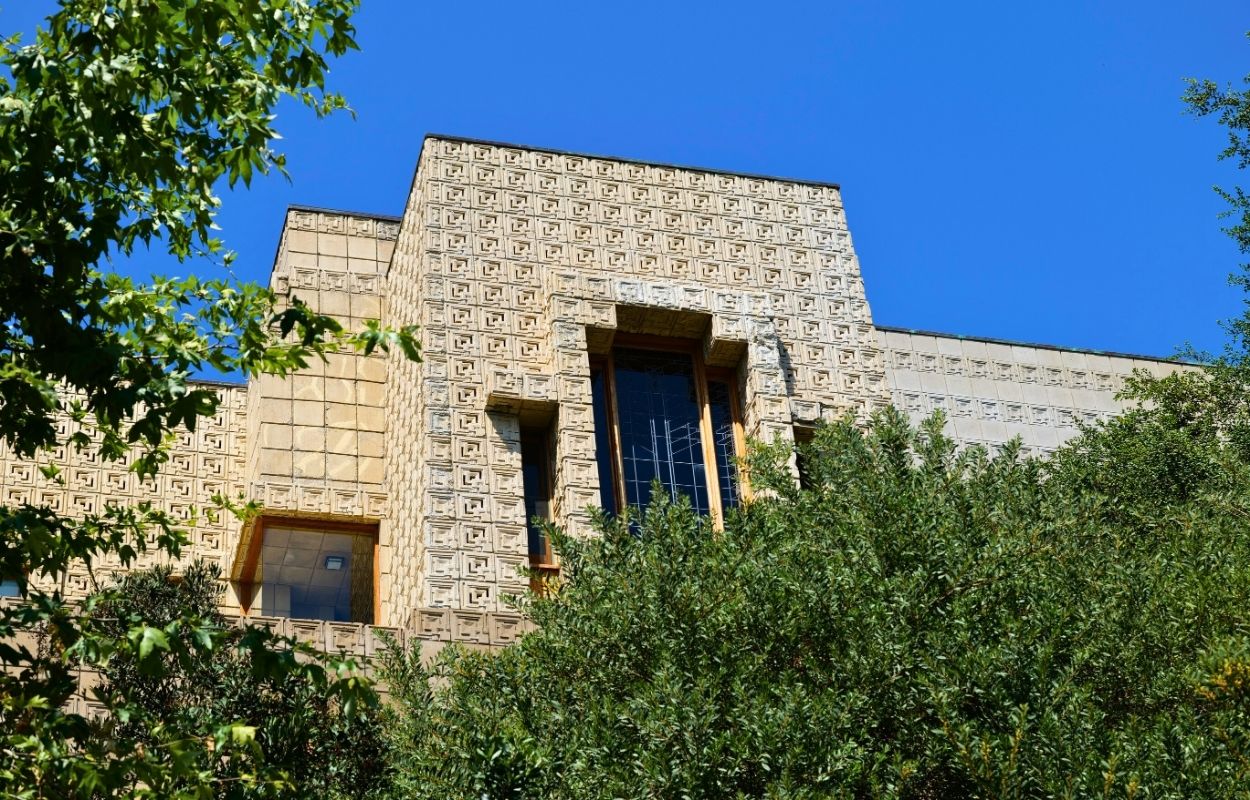
The actual location was reportedly only used in the scene in which Deckard drives up to the motor court, but the Ennis House definitely became famous after making its appearance in the 1982 movie.
Set high in the hills above Los Angeles in the Los Feliz area, the Ennis House was completed in 1924 as a private residence and remains privately owned today.
Indoor-outdoor luxury living became the California standard at Hearst Castle
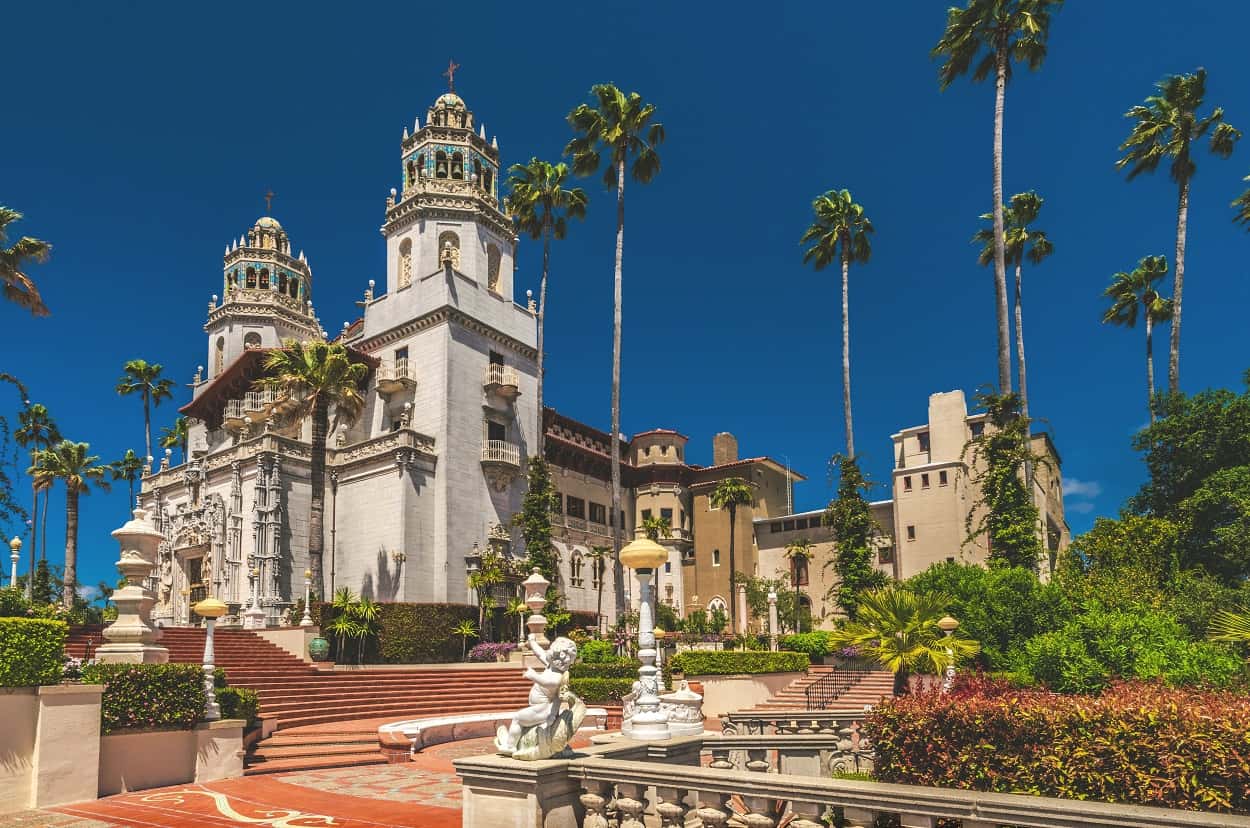
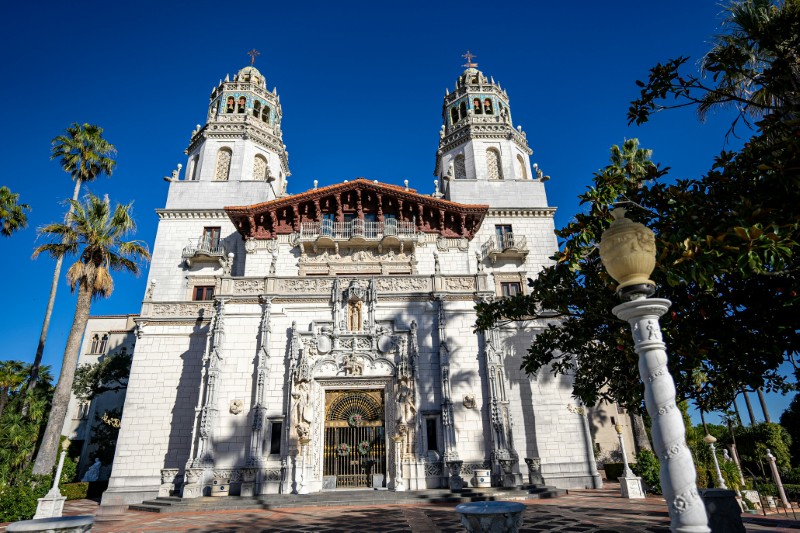
Completed over several decades in the early 20th century, Hearst Castle blended Mediterranean Revival architecture with sprawling outdoor spaces, terraces, and dramatic views.
The estate popularized the idea of luxury homes built around outdoor living — pools, courtyards, gardens, and scenic backdrops becoming just as important as the interiors.
That lifestyle-driven design approach still dominates California mansions today.
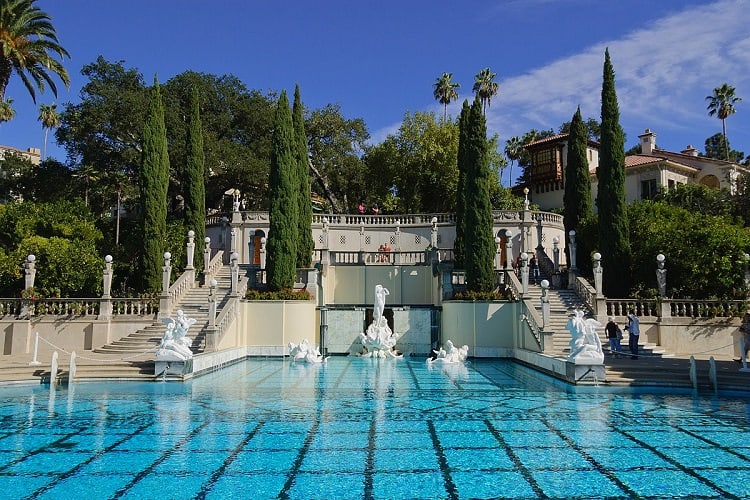
Hearst Castle in San Simeon, California, is open to the public
Overlooking California’s Central Coast near San Simeon, Hearst Castle was built as newspaper magnate William Randolph Hearst’s private estate beginning in the early 1900s. After Hearst’s death in 1951, his longtime lover, Marion Davies (who was excluded from his funeral) was forced to move out.
In 1958, the Hearst Corporation donated Hearst Castle — including the gardens and most of its contents — to the state of California.
The massive property is now a state historic park, with guided tours that allow visitors to explore the mansion, pools, terraces, and guest houses.
Modern desert architecture found its identity at Kaufmann House
Designed by Richard Neutra in 1946, the Kaufmann House became the defining image of desert modernism.
With flat roofs, sliding glass walls, shaded overhangs, and strong indoor-outdoor flow, it showed how modern architecture could respond to climate while staying sleek and livable.
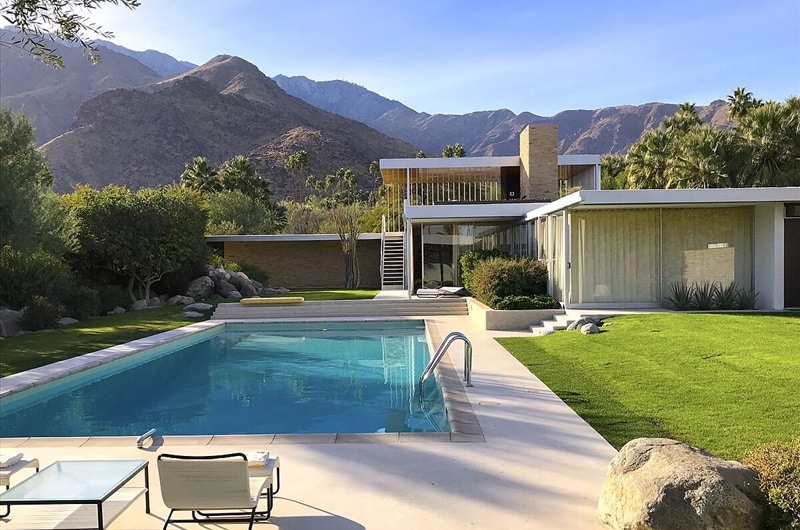
Its influence turned Palm Springs into a midcentury design capital and shaped warm-weather modern homes nationwide.
The Kaufmann House is a privately owned residence in Palm Springs, California
Located in Palm Springs, the Kaufmann House was designed by Neutra in 1946 as a desert retreat for department store owner Edgar J. Kaufmann Sr., the same client behind Fallingwater, the first house on our list.
The house remains a private residence today, though it’s widely photographed and often referenced as one of the most important midcentury modern homes in the country.
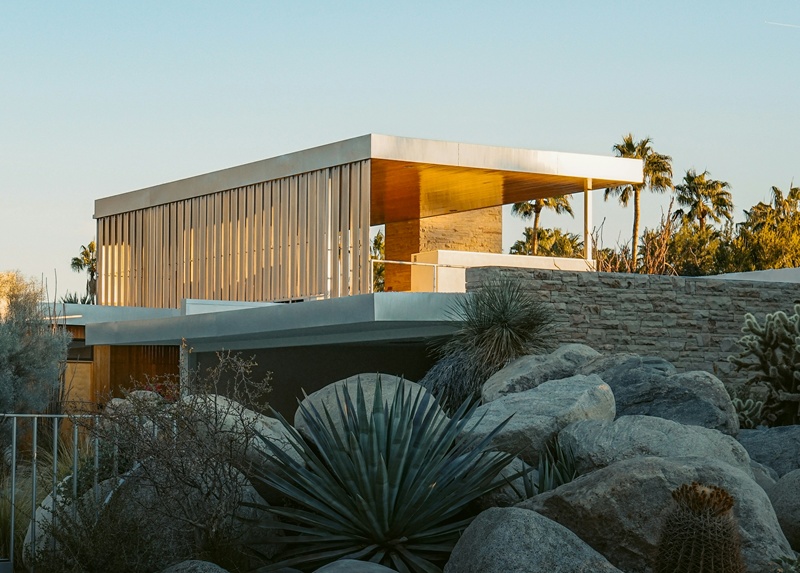
It’s also a regular feature in hit Hollywood movies looking to depict Palm Springs’ idyllic midcentury modern vibe, including Olivia Wilde’s Don’t Worry Darling.
The American open floor plan traces back to early modern estates like Taliesin West
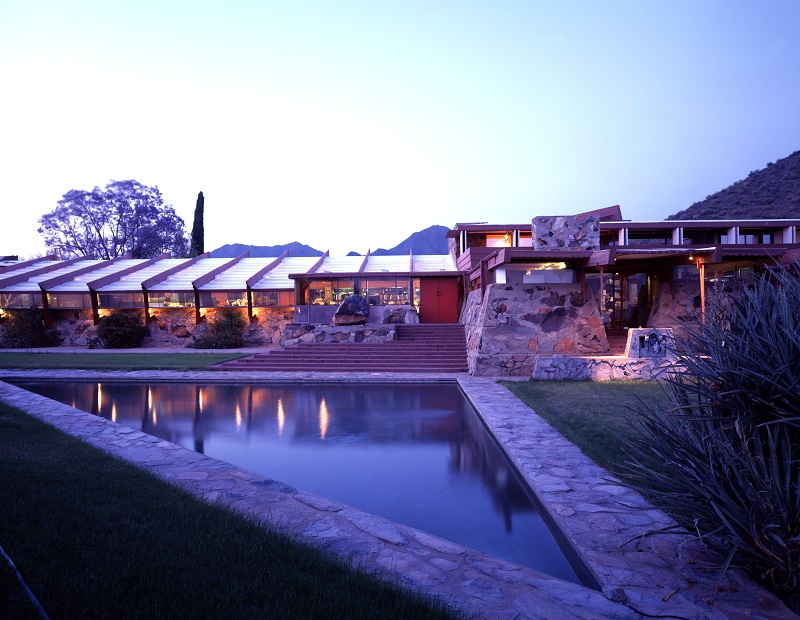
Built as Wright’s winter home and studio beginning in 1937, Taliesin West pushed flexible living spaces, flowing interiors, and strong connections to the surrounding environment.
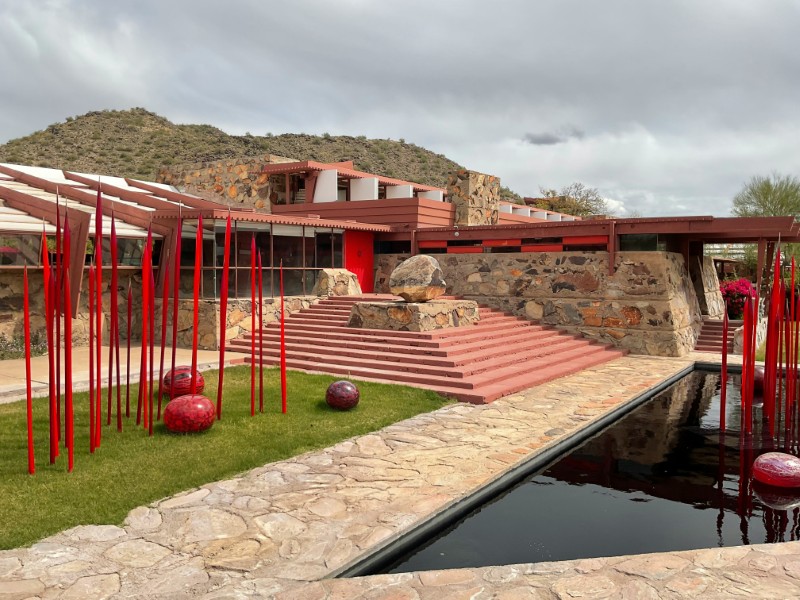
Instead of boxed-in rooms, the complex used open layouts, movable partitions, and natural light — concepts that later became staples of modern American homes.
Today’s open-concept living spaces owe a lot to experiments like this.
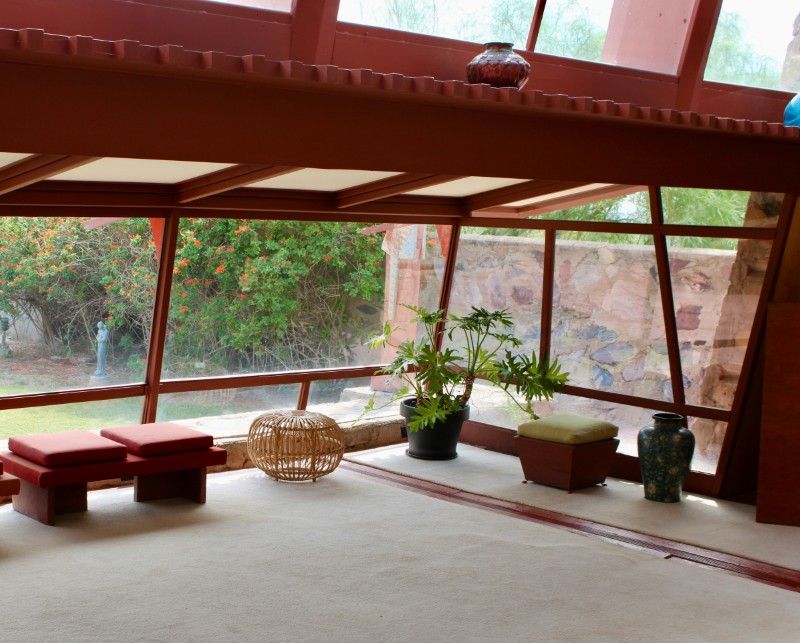
Taliesin West is open to the public in Scottsdale, Arizona
Situated in the desert foothills of Scottsdale, Arizona, Taliesin West served as Frank Lloyd Wright’s winter home, architectural studio, and educational campus beginning in the late 1930s.
It’s no longer residential in the traditional sense and now functions as a museum and school of architecture, with daily tours available.
Больше историй
The Chemosphere House and 6 other striking John Lautner-designed homes
22 дома Фрэнка Ллойда Райта, о которых вы, вероятно, никогда не слышали
Смелый дизайн: 19 домов, которые совсем не похожи на обычные
Пост 9 знаменитых домов, навсегда изменивших американскую архитектуру впервые появился на Дома с модными брюками.

 English